
Moving to a new home is exciting — but packing everything up can feel overwhelming. Whether you’re moving across town or across the country, knowing how to pack moving boxes correctly can protect your belongings, save money, and make unpacking far easier.
This guide covers everything you need to know about packing moving boxes, from gathering supplies to labeling and creating an inventory.
What Packing Supplies Do You Need for Moving?
Before you pack a single box, make sure you have the right materials on hand. Running out mid-pack wastes time and adds stress.
Essential packing supplies include:
- Cardboard boxes in a variety of sizes
- Packing paper or newspaper
- Bubble wrap
- Packing tape
- Scissors or a box cutter
- Black markers for labeling boxes
Pro tip: If you’ve kept the original packaging for small appliances or electronics, reusing it is the safest way to pack those items.
How to Get Free Moving Boxes and Supplies
You don’t have to buy everything new. Websites and apps like BuyNothing and Nextdoor often have users giving away unused boxes, bubble wrap, and cushioning materials for free. Taking advantage of these resources can meaningfully reduce your moving costs.
How to Pack Moving Boxes: Step-by-Step
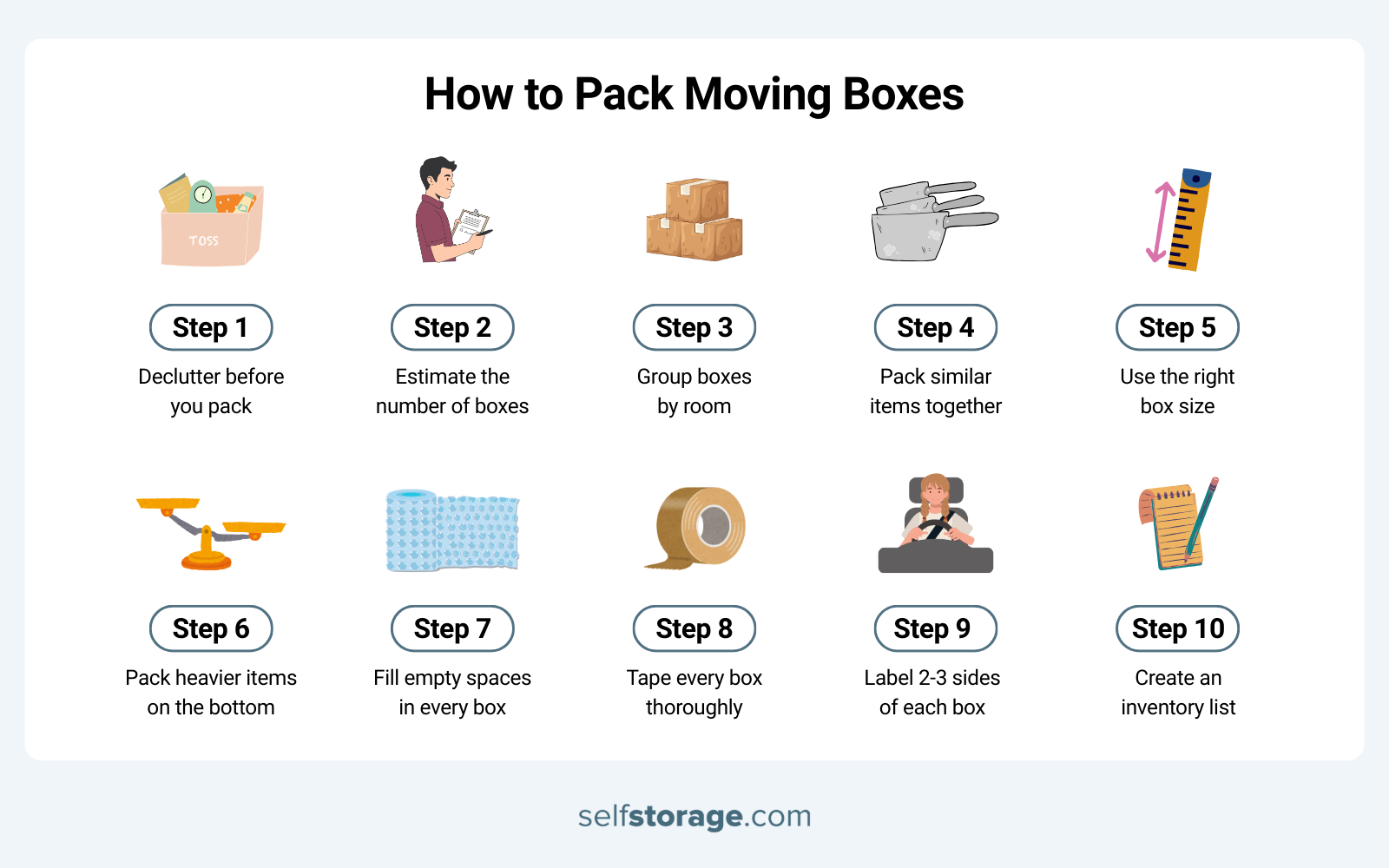
1. Declutter Before You Pack
The fewer items you move, the easier and cheaper the process will be. Sort your belongings into four piles: keep, sell, donate, and recycle. Handle the last three before you start boxing anything up.
2. Estimate How Many Boxes You Need
Take stock of everything you’re moving and calculate the approximate space your belongings will occupy. Buying the right quantity upfront prevents last-minute supply runs — and stops you from spending money on boxes you don’t use.
3. Group Boxes by Room
As you pack, keep boxes together based on which room their contents came from — or will go into. Clearly label each box so nothing gets mixed up in transit.
4. Pack Similar Items Together
Grouping like items — pots and pans with bakeware, for example — makes unpacking and organizing your new home much faster and more intuitive.
5. Use the Right Box Size for Each Item Type
Box size matters more than most people realize:
- Heavy items (like books): Use smaller boxes so they stay manageable to lift.
- Fragile items (like glassware and porcelain): Pack in smaller boxes with plenty of cushioning so nothing shifts.
- Light, bulky items (like linens and towels): These are ideal for larger boxes.
6. Pack Heavier Items on the Bottom
When a single box holds items of varying weights, always place heavier items at the bottom. This keeps the box balanced and prevents lighter or fragile items from being crushed. Avoid overpacking — a box that’s too heavy is difficult to move and more likely to be dropped.
7. Fill Empty Spaces in Every Box
An underpacked box allows items to shift and slide during transport, leading to disorganization or breakage. Use packing paper, bubble wrap, or even towels and linens to fill any gaps. Packing soft items this way also reduces the total number of boxes you need.
8. Tape Every Box Thoroughly
Once a box is filled, secure it with packing tape. Cover the seams along the top and bottom, then reinforce the sides and corners — these are the weakest points of any cardboard box. When it comes to tape, more is better.
9. Label Two to Three Sides of Each Box
Label multiple sides of every box with:
- The destination room
- A brief description of the contents
This makes it easy to sort boxes immediately upon arrival, even when they’re stacked.
10. Number Your Boxes and Create an Inventory List
Assign each box a unique number and record its contents in a notebook or digital spreadsheet. Number-based inventory tracking makes it easy to spot a missing box and quickly locate specific items after the move. Taking photos of box contents also provides a record for insurance purposes.
Special Packing Considerations
How to Pack Clothes for a Move
Invest in tall wardrobe boxes to move your closet with minimal disruption. Clothes hang inside just as they do at home, and the space beneath is perfect for shoes, hats, and accessories.
What About Specialty or High-Value Items?
For items like pianos, large mirrors, or expensive artwork, hiring a specialty moving service is worth the added cost. The risk of damage when moving these items without professional equipment and training far outweighs the expense.
Don’t Forget Your Essentials Box
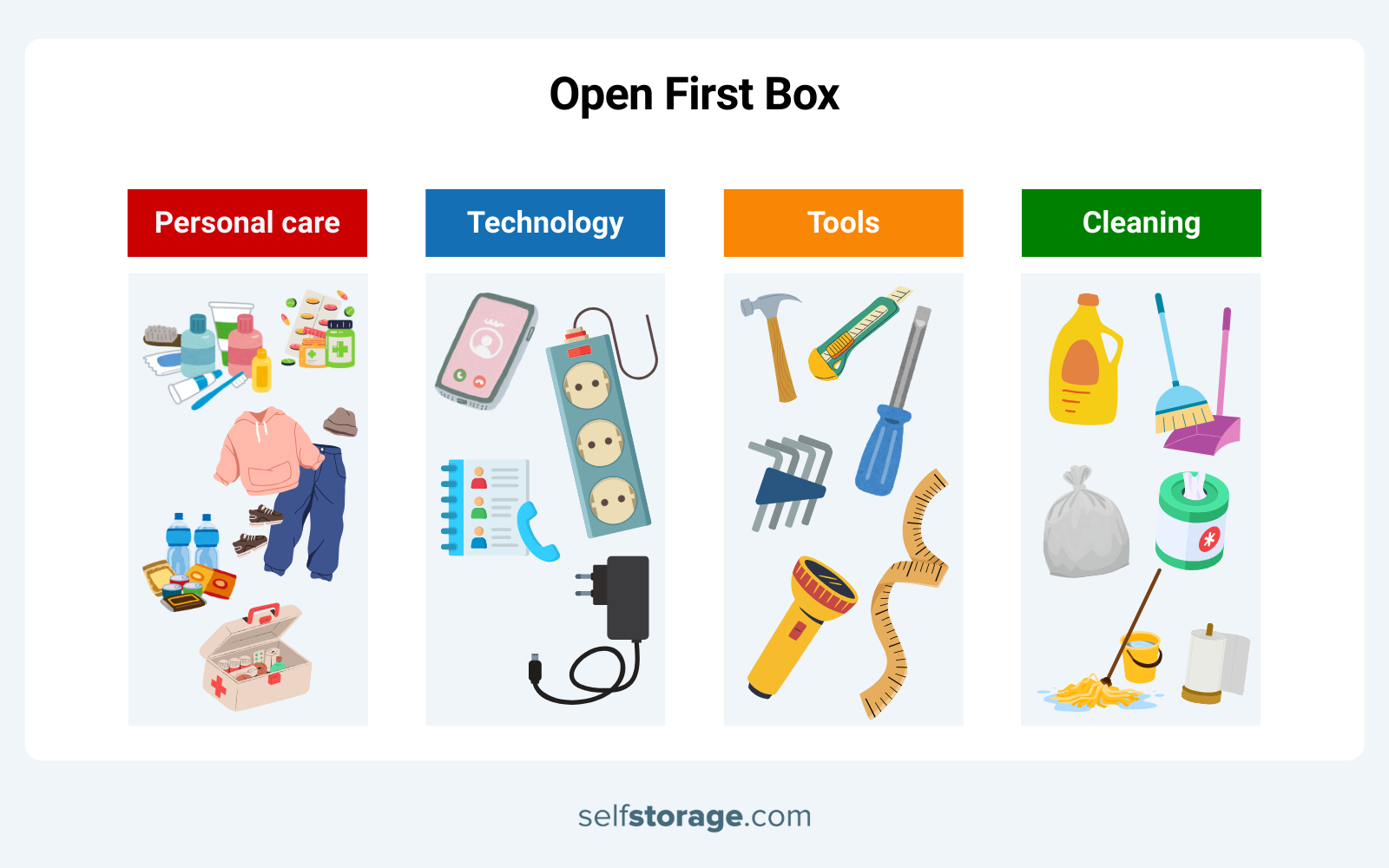
Now that you know what to pack first, let’s talk about what comes next. Pack one box last — and load it into the vehicle where it’s most accessible. This “open first” box should include everything your household needs for the first 24 hours without digging through other boxes:
- Clean clothes for the next day
- Toilet paper and paper towels
- Toiletries and medications
- Towels and a shower curtain
- Bedding (pillows and sheets)
- Snacks
- Disposable utensils and dinnerware
If you have young children or pets, pack their essentials separately so you can quickly access food, comfort items, and medications without rummaging. A small backpack or tote works well for keeping these items within arm’s reach during the drive.
FAQs
Following these steps will keep your belongings safe and your move organized from start to finish. And if the job turns out to be bigger than a straightforward point-A-to-point-B move, a storage unit can give you the breathing room you need.