
Article takeaways
- Subletting lets you keep your apartment and avoid breaking your lease when you need to be away temporarily.
- Getting your landlord’s written approval upfront makes the entire process smoother and protects your tenancy.
- Taking time to screen potential subtenants carefully helps ensure you find someone reliable who will take good care of your place.
- A clear written agreement prevents misunderstandings by spelling out rent, duration, and responsibilities for everyone involved.
- Documenting your apartment’s condition with photos before and after the sublet makes the move-out process straightforward.
Got a six-month work assignment in another city, but your lease runs for another year? Heading abroad for a semester? Need to relocate temporarily without breaking your lease?
Subletting could be the perfect solution. When done properly, it lets you keep your apartment while someone else covers the rent during your absence. The key is understanding the legal requirements, finding the right person, and protecting yourself throughout the process.
This guide walks through everything you need to know about subletting your apartment, from getting landlord approval to screening potential tenants to making sure your belongings stay safe.
What is Subletting, Actually?
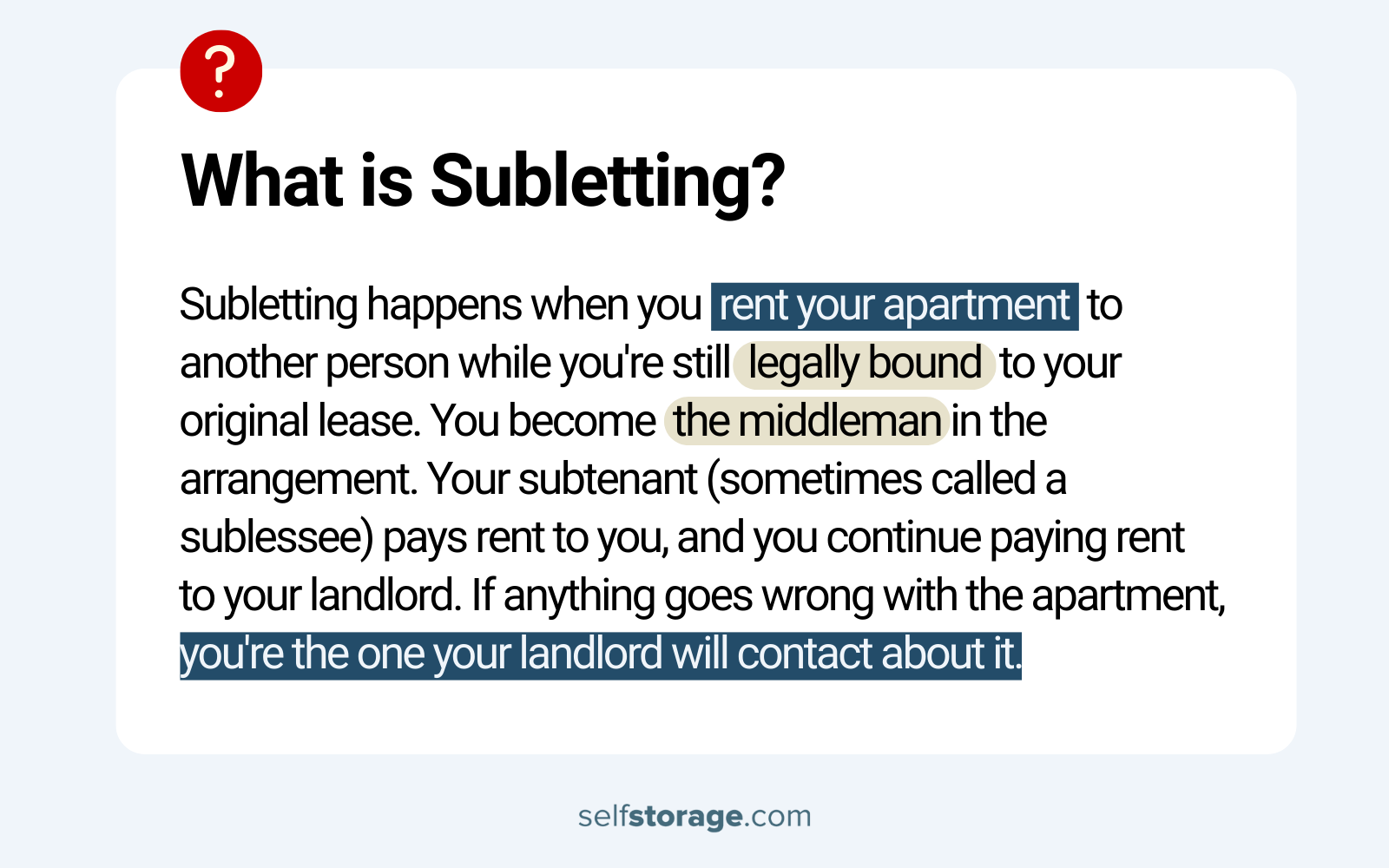
Subletting happens when you rent your apartment to another person while you’re still legally bound to your original lease. You become the middleman in the arrangement. Your subtenant (sometimes called a sublessee) pays rent to you, and you continue paying rent to your landlord. If anything goes wrong with the apartment or the rent doesn’t get paid, you’re the one your landlord will contact about it.
Your landlord’s relationship remains with you, not with the person living in your apartment. From their perspective, you’re still the tenant responsible for everything that happens in that unit.
Subletting vs. Assigning Your Lease
These two options often get confused, but they work quite differently. With subletting, you stay on the lease and keep all the responsibility. With a lease assignment, you transfer the entire lease to someone new who takes over your spot completely. Once a lease assignment is approved and finalized, you’re no longer involved.
Choose subletting if you plan to return to your apartment. Consider a lease assignment if you’re moving away permanently and don’t need the apartment anymore.
Why People Sublet
People sublet for all sorts of reasons. Work assignments that last several months are common, as are study abroad programs and summer internships in different cities. Some people need to care for family members temporarily or relocate for seasonal employment.
Financial circumstances drive many subletting decisions, too. When rent becomes difficult to afford but breaking the lease would mean hefty penalties and losing your security deposit, finding someone to cover the rent makes more sense. With housing costs rising and space getting tighter, subletting can provide the breathing room you need while you get back on your feet.
Life changes also play a role. Extended travel, relationship transitions, or unexpected opportunities might make subletting the right choice for a period of time.
Sublet durations vary widely. Some last just a month or two, while others extend close to a full year. Keep in mind that most leases limit subletting to the length of your remaining lease term. If you have six months left, you can sublet for up to six months.
Is Subletting Even Legal?
Subletting IS legal, but it depends on your location and what your lease says.
In New York City, tenants actually have certain subletting rights built into housing law, although you still need to follow proper procedures. In other places, landlords can write lease terms that completely prohibit subletting. Most cities fall somewhere between these extremes, allowing subletting with specific regulations and requirements.
The Legal Landscape of Subleasing
Major cities like San Francisco, Los Angeles, Chicago, and Boston generally permit subletting but attach various regulations. Areas with rent control often cap how much you can charge a subtenant, usually limiting it to your actual rent amount. Some cities require you to register your sublet with housing authorities or obtain permits before proceeding.
Taking five minutes to check your city’s housing authority website or call them directly can save you months of legal headaches down the road.
Your Lease is the Starting Point
Pull out your lease and find the section about subletting. It will typically say one of three things: subletting is allowed outright (rare but wonderful), subletting requires landlord approval (most common), or subletting is completely prohibited (less common, but it happens).
Even if your lease includes a no-subletting clause, don’t give up immediately. In some jurisdictions, landlords cannot unreasonably withhold permission to sublet. If you’ve been a reliable tenant who pays on time and takes care of the property, having a conversation with your landlord is worth the effort.
Getting Your Landlord on Board
Getting written permission from your landlord is absolutely essential and worth emphasizing. Subletting without proper approval can result in eviction proceedings, and evictions create a permanent record that makes renting in the future extremely difficult.
Start by sending an email or letter that explains your situation. Be clear about why you need to sublet, how long you’ll be gone, and that you plan to find a responsible person. Emphasize that you’ll remain on the lease and stay responsible for everything.
When you’ve identified potential subtenants, share their information with your landlord. Include employment details, background check results, and references. Showing your landlord that you’re taking this seriously and not bringing in someone questionable goes a long way.
Make absolutely certain you get approval in writing. A verbal okay or text message doesn’t provide adequate protection for you. You need an email or a signed document that clearly states your landlord approves the subletting arrangement.
Some landlords charge subletting fees or want to meet the subtenant before giving final approval. While this adds extra steps, these requests are reasonable. Working cooperatively with your landlord increases the chances of getting the yes you need.
How to Sublet Your Apartment: The Step-by-Step Process
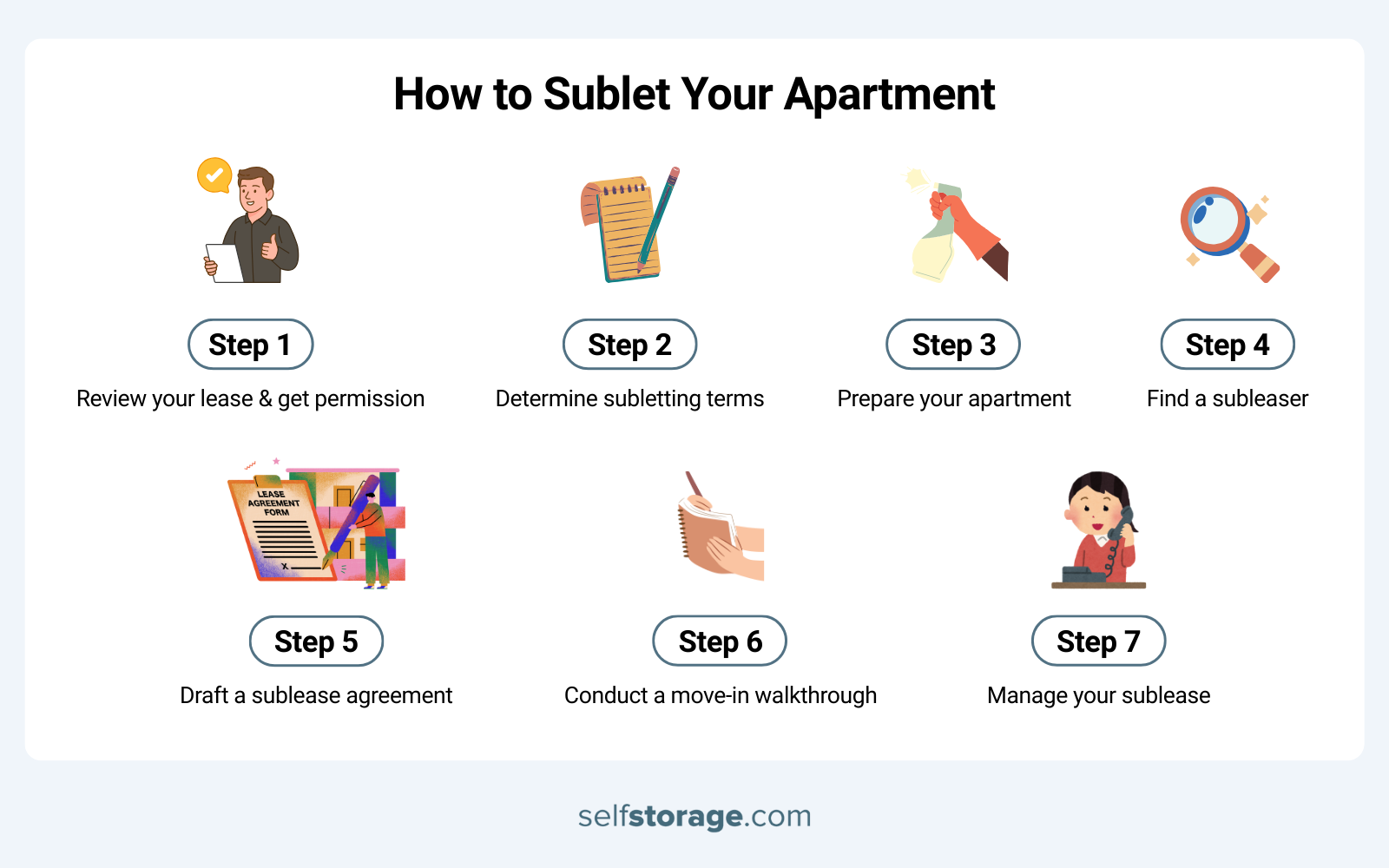
Step 1: Review Your Lease and Get Permission
Before doing anything else, read through your entire lease carefully. Look for subletting clauses, notification requirements, restrictions on duration, and any associated fees.
Once you understand what your lease says, contact your landlord or property management company right away. Don’t wait until two weeks before you need to leave. Give them plenty of notice, explain your situation clearly, and ask what information they need from you to approve the sublet.
Step 2: Determine Subletting Terms
Setting the rent: In many places with rent control, you legally cannot charge more than your actual rent. Even in areas without such restrictions, charging more than you pay creates potential problems. Set your sublet rent at what you currently pay, or perhaps slightly less to attract good candidates quickly. If you’re providing a furnished apartment or including utilities in the rent, you can adjust the price modestly to reflect those extras, but keep the amount fair and transparent.
Deciding on duration: Be realistic about how long you’ll actually be gone, and consider building in a small buffer. Ending a sublet early is much easier than trying to extend it if your plans change.
Establishing house rules: Decide now what rules apply. Can the subtenant have overnight guests? Are pets allowed if your lease permits them? Which areas of the apartment, if any, are off-limits? Clear communication from the start prevents misunderstandings later.
Handling utilities: Determine whether utilities will be included in the rent or if the subtenant needs to set up their own accounts for electric, gas, water, and internet. Make this arrangement explicit in your sublease agreement so there’s no confusion about who pays what.
Step 3: Prepare Your Apartment
Getting your apartment ready for a subtenant takes some effort, but makes a significant difference.
Deep cleaning: Give the entire apartment a thorough cleaning. Don’t just tidy up the visible surfaces. The cleaner and more welcoming your space looks, the easier it will be to find someone reliable who wants to live there.
Handling repairs: Fix anything that’s obviously broken or not working properly. Take care of dripping faucets, windows that stick, light fixtures that don’t work, and any other maintenance issues. Addressing these problems now prevents complaints from your subtenant and avoids bigger issues with your landlord later.
Documenting condition: Take detailed photos and videos of every room in your apartment. Get close-ups of any existing damage, stains, or wear. Make sure these photos are dated. This documentation becomes invaluable if there’s any dispute about damages when the sublet ends.
What to Do With Your Stuff
Here’s something many people overlook until the last minute: what happens to your valuable belongings while someone else is living in your apartment?
You’re essentially moving out temporarily, which means you need a plan for your important possessions. This is where self-storage becomes incredibly helpful.
A storage unit protects your valuables during the sublease period. Electronics, jewelry, family heirlooms, and important documents all stay secure behind locks and security systems instead of remaining in an apartment with someone you’ve only recently met.
Removing some of your personal items also creates a more neutral space for your subtenant. When the apartment contains fewer of your personal belongings, it feels more like their own space. People tend to take better care of a place when it feels like theirs rather than feeling like they’re living surrounded by someone else’s things.
You’ll also have flexibility for items you don’t need during your time away. Seasonal clothing, furniture you’d prefer nobody else use, or that antique piece from your parents can all go into storage. Since most facilities offer month-to-month rental terms, you can extend or end your storage agreement as your plans change without worrying about long-term commitments.
For temperature-sensitive belongings like electronics, wood furniture, musical instruments, or important papers, consider a climate-controlled storage unit. These maintain consistent temperature and humidity levels year-round, preventing warping, mold, and other damage.
The cost of a small storage unit for a few months is typically far less than replacing damaged or stolen belongings. Storage unit prices vary by location and size, but you’re generally looking at somewhere between $50 and $150 per month for a 5×5 or 5×10 unit. Compare that to the cost of replacing a laptop, television, or irreplaceable family heirloom.
Step 4: Find a Subleaser Who Won’t Ruin Your Life
Finding the right subtenant is arguably the most important part of this entire process. This person will be living in your home, and you remain responsible for everything they do, so taking the time to find someone reliable is worth the investment.
Where to advertise your sublet:
Start with the obvious online platforms: Craigslist, Apartments.com, and Sublet.com all have active audiences looking for temporary housing. Facebook Marketplace and local housing groups often have good reach, too. Don’t overlook your personal network. Post in your social media feeds, email coworkers, and reach out to alumni groups. If you’re near a college or university, check their housing boards since students frequently need short-term housing for internships or study periods.
Personal referrals from people you trust are particularly valuable. When someone you know vouches for a potential subtenant, it adds a layer of confidence to the arrangement. (If you’re not sure how to navigate Craigslist safely, spend a few minutes reviewing the basics since they apply to subletting too.)
The screening process:
This step is absolutely not one to rush or skip. Run a background check through services like TransUnion, which typically cost around $30. Look for criminal history, past evictions, or legal issues that should raise concerns.
Pull their credit report to see whether they pay bills on time and handle financial responsibilities well. A credit report tells you a lot about someone’s reliability.
Verify their employment by asking for recent pay stubs or calling their employer directly. You need confirmation that they can actually afford the rent you’re charging.
Actually call their references instead of just collecting names and moving on. Talk to previous landlords and former roommates. Ask directly whether they would rent to this person again and whether there were any problems during their previous tenancy.
Red flags to watch for:
Be cautious if someone refuses to provide documentation or references. If they pressure you to skip the screening process with reassurances that you should just trust them, that’s a warning sign. Pay attention if their story changes between conversations or if previous landlords express concerns. Trust your instincts during the interview process. If something feels off, it probably is.
If you get an uncomfortable feeling about someone, keep looking. There are plenty of people who need short-term housing and will be excellent subtenants.
Questions to ask potential subtenants:
Ask them why they’re looking for a sublet instead of signing a traditional lease. Find out how long they need housing and what their work situation is. Make sure they can provide proof of income. Request landlord references from their most recent rental and let them know you will actually call those references. If your lease allows pets, ask whether they have any. Learn about their lifestyle and habits to see if they’ll be a good fit for your building and neighbors.
Step 5: Draft a Sublease Agreement
A comprehensive written sublease agreement protects both you and your subtenant by clearly outlining everyone’s rights and responsibilities.
Your sublease agreement should include the names and contact information for you, the subtenant, and your landlord. List the property address and describe the apartment. Specify the exact start and end dates of the sublease. State the monthly rent amount and the date it’s due each month.
Include details about the security deposit: how much it is, what it covers, and the conditions for returning it at the end of the sublet. Clarify who pays which utilities. List all furniture and items included with the apartment.
Outline rules about guests, pets, smoking, and noise. Specify who handles maintenance and repairs for different types of issues. Include details about parking spaces and any storage areas that come with the apartment.
Add a clause about how either party can terminate the agreement early if needed. Make it clear that the sublease is subject to all the terms of your original lease with your landlord.
You can find sublease agreement templates online to use as a starting point. For longer sublets or situations involving significant amounts of money, having an attorney review the agreement is a smart investment. Some cities require you to provide your subtenant with a copy of your original lease along with the sublease agreement, so check your local requirements.
Be very specific about when rent is due, how payment should be made (check, Venmo, direct deposit, etc.), and what happens if payment is late.
Regarding the security deposit, state exactly how much you’re collecting (typically one month’s rent), what situations would result in deductions, and how quickly you’ll return it after the sublet ends. Keep this deposit in a separate bank account rather than spending it so you can return it promptly when appropriate.
Step 6: Conduct a Move-In Walkthrough
Before your subtenant officially moves in, walk through the entire apartment together. This is your opportunity to document the exact condition of everything and go over important information.
Document the condition of every room together. Take photos or videos with your subtenant present so you both have the same visual record. Create a written move-in inspection report that lists the condition of walls, floors, appliances, fixtures, and furniture. Have both of you sign this document.
Hand over all necessary keys: apartment keys, mailbox keys, building entrance keys, and keys to any storage areas. Consider having extra sets made so you still have access if needed.
Prepare a welcome packet with important information. Include building rules and quiet hours, instructions for trash and recycling, how to use appliances, utility account information if they’re setting up their own, emergency contact numbers (building management, maintenance, and your contact information), the WiFi password if applicable, and locations of nearby essentials like grocery stores, laundromats, and public transit stops.
Discuss communication expectations clearly. How often will you check in? Should they contact you first about issues or go straight to the landlord? What’s the best way to reach each other? Establishing these guidelines now prevents confusion later.
Step 7: Managing Your Sublease
Your responsibilities don’t end once your subtenant moves in. You’ll need to stay involved throughout the sublease period.
Check in with your subtenant every few weeks with a quick text or email. A simple “How’s everything going?” can catch small problems before they become major issues.
Set up a reliable system for rent collection. Digital payment platforms like Venmo, Zelle, or PayPal work well because they automatically create records of every transaction. Keep track of all payments carefully and send receipts to confirm you’ve received each month’s rent.
When maintenance issues arise (and they will), you typically serve as the coordinator. Your subtenant reports the problem to you, and you report it to your landlord or building management. Make sure your subtenant knows to contact you promptly about any issues.
Remember that you remain the primary tenant in your landlord’s eyes. This means you’re responsible for paying rent to your landlord every month, regardless of whether your subtenant pays you. You need to make sure the apartment is maintained properly and be available to handle emergencies. You’re responsible for ensuring all lease rules get followed and for coordinating any needed repairs or inspections with your landlord.
Subletting Best Practices and Tips
A few things will help make your subletting experience go smoothly:
- Maintain consistent communication: Regular check-ins with both your landlord and your subtenant prevent most problems before they start. Brief messages showing you’re engaged and taking the arrangement seriously go a long way.
- Keep your renters insurance active: Don’t cancel your renters insurance while you’re subletting. Consider increasing your coverage since you’ll have someone else living in your space. Check whether your policy includes any special provisions for subletting situations. Require your subtenant to get their own renters’ insurance policy as well.
- Use payment systems that track everything: Digital payment platforms that automatically record who paid what and when make managing rent collection much easier. Set up payment reminders so rent doesn’t get forgotten, and send receipts to confirm you received each payment.
- Create a detailed inventory: Make a comprehensive list of everything you’re leaving in the apartment. Include furniture, kitchen items, electronics, linens, and even wall art. Take photos of each item. Share this inventory with your subtenant so they know exactly what’s supposed to be there. This protects you if items go missing or get damaged.
Storage Makes Everything Easier
Balancing the needs of creating a livable space for your subtenant while protecting your expensive belongings can feel tricky. Storage units help solve this equation.
You’re not just protecting valuables. You’re making strategic decisions about what a temporary occupant should and shouldn’t have access to. That leather couch you saved up for, the dining set your parents gave you, or expensive camera equipment all belong somewhere secure rather than in an apartment with someone you’ve known for a short time.
Dealing with temporary housing situations requires flexibility. Month-to-month storage means that when your plans change (your work assignment gets extended or you return earlier than expected), you can adapt without worrying about penalties or long-term commitments.
Choose your storage facility based on how often you’ll need access. If you’re staying in the local area, pick somewhere close with convenient hours. If you’re relocating far away, prioritize security features over proximity. Many facilities offer 24-hour access, which helps when unexpected needs arise.
Common Subletting Mistakes to Avoid
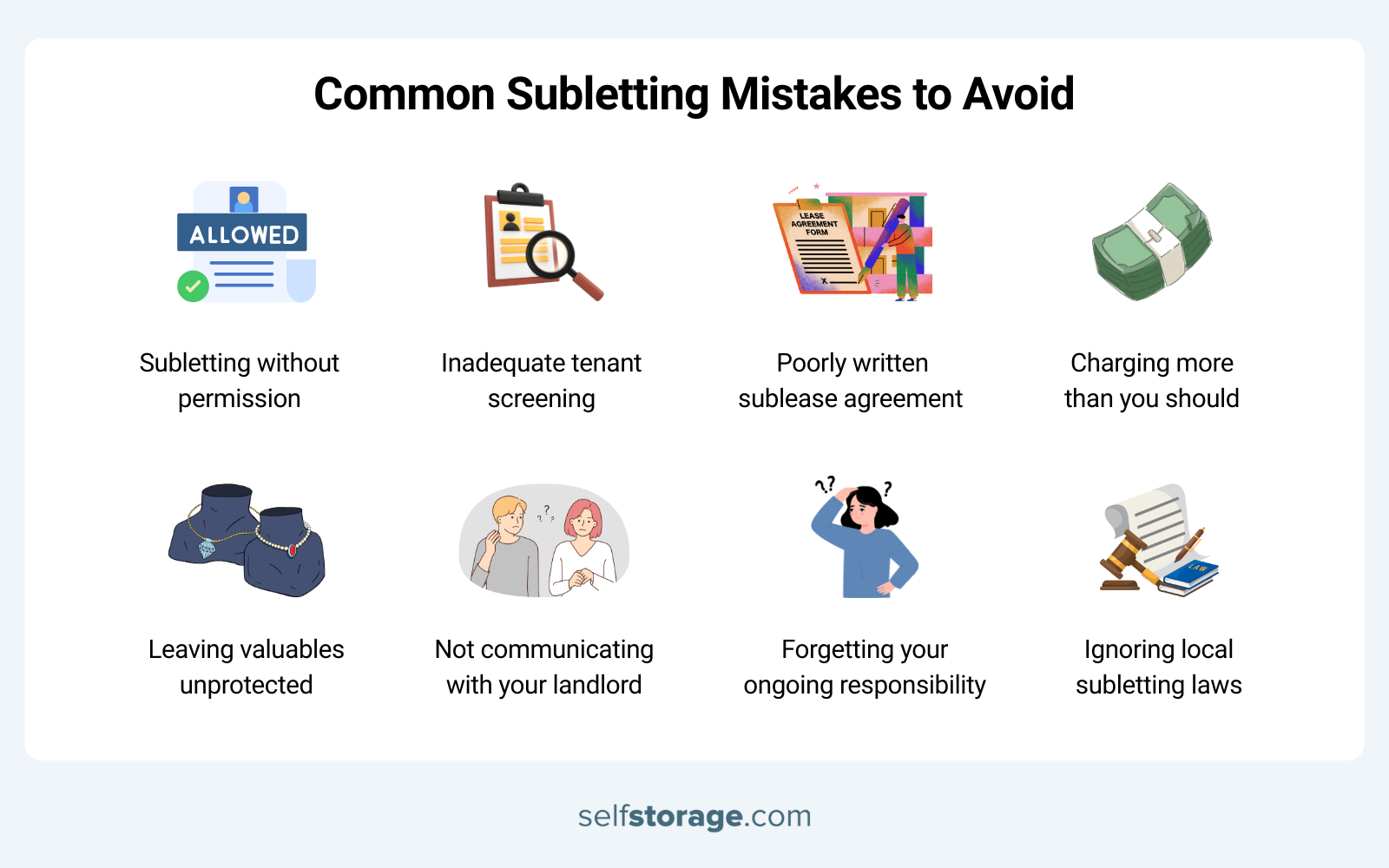
Avoid these common mistakes, and you could save yourself significant time, money, and stress.
- Subletting without permission – This creates serious legal risk. Evictions become part of your permanent rental history and make finding housing in the future extremely difficult. Always get written approval from your landlord before proceeding.
- Inadequate tenant screening – When you’re feeling pressure to find someone quickly, the temptation to accept the first interested person can be strong. Someone who seems pleasant during a 20-minute conversation might turn into a serious problem over several months. Invest the time to do thorough background checks, make the reference calls, and ask the hard questions.
- Missing or poorly written sublease agreement – Verbal agreements and casual text exchanges don’t hold up when problems occur. Get a comprehensive sublease agreement in writing. Use a proper template as your starting point and have it reviewed by an attorney for longer sublets.
- Charging more than you should – Areas with rent control specifically prohibit charging more than your actual rent. Even where it’s legal, significantly marking up the rent creates problems. Your subtenant might feel taken advantage of, your landlord might object, and it can poison the entire relationship. Keep your pricing fair and transparent.
- Leaving valuables unprotected – Keeping your laptop, jewelry, and important documents in the apartment with someone you don’t know well is risky. Even trustworthy people can have accidents. Things get broken, misplaced, or stolen. Use a storage unit, keep items in a locked closet, or take your most valuable possessions with you. If you’re signing a lease somewhere else temporarily, bring your most important items to your new place.
- Not communicating with your landlord – Your landlord should never learn about subletting issues from your subtenant, neighbors, or building staff. Keep your landlord informed about everything relevant. If maintenance problems come up, communicate through proper channels. Consistent, professional communication maintains trust and protects your relationship.
- Forgetting your ongoing responsibility – Even when a subtenant is paying you rent and living in your apartment, you remain 100% responsible to your landlord. If they don’t pay, you still owe rent. If they cause damage, you’re responsible for repairs. If they violate lease terms, you’re the one facing potential eviction. Keep this reality in mind throughout every decision you make about subletting.
- Ignoring local subletting laws – Every city has different regulations. Some require registration with housing authorities. Others have specific notice periods or rental caps. Failing to research and follow local laws can result in fines, legal problems, or conflicts with your landlord. Check with your local housing authority before listing your apartment.
Alternatives to Subletting
Subletting isn’t always the right answer for every situation. Depending on your circumstances, one of these alternatives might work better.
Lease Assignment
With a lease assignment, you transfer your entire lease to a new tenant who takes over your position completely. Once the landlord approves the assignment and all paperwork is signed, you’re no longer involved in any way.
This works well if you’re moving permanently and won’t be returning to the apartment. You’re released from all responsibilities, and the new tenant deals directly with your landlord going forward.
However, you lose your apartment permanently. If your plans change and you want to return, you’d need to find a new place to live. Many landlords also charge assignment fees, and they maintain the right to approve or reject the person you propose as your replacement.
Early Lease Termination Negotiation
Another option is asking your landlord to let you out of your lease early. Some landlords will agree to this, especially if you approach them professionally and give adequate notice.
This creates a clean break with no ongoing obligations. You can move on without worrying about a subtenant or continued rent payments.
The downside is that most landlords charge an early termination fee, typically equivalent to two months’ rent. You might also lose your security deposit. It can be expensive, but sometimes it’s the simplest solution if you need to relocate permanently and quickly.
Finding a Replacement Tenant Through Your Landlord
Some landlords prefer to handle tenant turnover themselves rather than dealing with sublets. They might agree to release you from your lease early if you help them find a qualified new tenant to take your place.
This approach means your landlord takes over the responsibility of screening and signing a new lease with the replacement tenant. You might avoid early termination penalties if you provide suitable candidates who get approved.
The challenge is that you typically need to continue paying rent until the new tenant moves in. Your landlord also has final say over whether they accept the people you suggest, and the process might take longer than you’d prefer.
Month-to-Month Arrangement
If your lease is ending soon anyway, consider asking your landlord to switch you to a month-to-month rental agreement before you leave.
This offers maximum flexibility. You can leave whenever you’re ready by giving 30 days’ notice (or whatever your local laws require). No need to find a subtenant or deal with sublease agreements.
However, month-to-month rent is almost always higher than lease rates, sometimes significantly so. Not all landlords offer month-to-month arrangements, either, especially in competitive rental markets where they can easily find new tenants willing to sign standard leases.
Each option comes with different financial implications and levels of complexity. Consider how long you’ll be gone, whether you plan to return, your relationship with your landlord, and your financial situation when deciding which path makes the most sense.
Successfully Subletting Your Apartment: Final Thoughts

Subletting your apartment can save you thousands of dollars and keep your living situation intact when you need to be away temporarily. Success comes from understanding the requirements, following proper procedures, and protecting yourself throughout the process.
Get written permission from your landlord before you start looking for subtenants. Screen potential subtenants thoroughly using background checks, credit reports, employment verification, and reference calls. Create a comprehensive written sublease agreement that protects both you and your subtenant. Store your valuable belongings somewhere secure rather than leaving them in the apartment. Document everything with photos, signed agreements, and dated records. Stay involved and communicate regularly even after your subtenant moves in.
Consider renting a storage unit for your important belongings. The peace of mind that comes from knowing your valuables are secure makes the modest monthly cost worthwhile. Find storage units near you and get your important items secured before someone else moves into your space.
If you’re getting ready to move and need to organize everything, check out this pre-move checklist for guidance on what needs to get done.
Whether you’re relocating for work, dealing with limited space somewhere else temporarily, or simply need housing flexibility, subletting can work well when you approach it thoughtfully and follow the right steps.
Take your time with the screening process. Don’t cut corners on the paperwork. Get your landlord’s approval in writing. Protect your belongings appropriately.
When done properly, subletting works out well for everyone involved. When done carelessly, it creates problems that can take months or years to resolve. The difference comes down to how seriously you take the process.
FAQs
Subletting without permission can lead to eviction proceedings, and evictions become part of your permanent rental record. Future landlords will see this when they run background checks, making it much more difficult to rent apartments going forward. You could also lose your security deposit and face legal liability.
Most leases explicitly require landlord approval for subletting. Even if your lease doesn’t specifically address it, landlords have the right to know who is living in their property.
The temporary convenience of skipping this step simply isn’t worth the long-term consequences. Talk to your landlord, explain your situation clearly, and get their approval in writing before proceeding.
Many cities with rent control laws specifically prohibit charging subtenants more than your actual rent. Even in areas without such regulations, charging significantly more than you pay creates several problems. Your subtenant might back out when they discover the markup. Your landlord might object to you profiting from their property. The practice can feel exploitative and create bad feelings all around.
If you’re providing a furnished apartment or including utilities in the rent, you can adjust the price modestly to reflect those extras. Keep any adjustments reasonable and be transparent about the pricing.
When you rent an apartment directly, you sign a lease with the landlord or property owner. You pay them directly each month. They’re responsible for maintaining the property and addressing your concerns as a tenant. You have legal protections under landlord-tenant law.
With subletting, you’re renting from another tenant who remains on the original lease. You pay them rather than the landlord. They remain responsible to the landlord for everything that happens in the apartment, including your rent payments and any damages. Your legal agreement is with another renter rather than the property owner, which typically means fewer protections.
Subletting also tends to be shorter-term, ranging from a few weeks to several months. Traditional rental leases usually run for six months to a year or longer.
You continue to be legally and financially responsible to your landlord for rent, property damage, and lease violations regardless of what your subtenant does. If your subtenant stops paying you, you still owe rent to your landlord. If your subtenant damages the apartment, you’re responsible for paying for repairs. If your subtenant violates lease rules, you’re the one your landlord will hold accountable.
From your landlord’s perspective, nothing has changed. You’re still the tenant listed on the lease. Your sublease agreement with your subtenant is a separate arrangement between you and them. It doesn’t release you from any obligations under your original lease.
This is exactly why thorough screening of potential subtenants is so critical. You need to find someone reliable who will pay rent on time and take care of the property.
If your lease prohibits subletting and you proceed anyway, your landlord has grounds to begin eviction proceedings. If your lease allows subletting but requires approval and you skip getting that written approval, eviction is also a possibility. Even if you get approval but then violate specific requirements (like subletting for longer than permitted or charging more than allowed), your landlord might have grounds for eviction.
On the other hand, if you follow all the proper procedures, obtain written landlord approval, and ensure your subtenant follows all lease rules, your landlord cannot legally evict you simply for subletting. In some jurisdictions, laws actually require landlords to allow subletting under certain conditions and prohibit them from unreasonably withholding permission.
As a general rule, you cannot sublet for longer than your remaining lease term. If you have eight months left on your lease, you can sublet for up to eight months. Some leases or local laws impose shorter restrictions, perhaps limiting sublets to three or six months at a time.
In rent-controlled areas like New York City, specific regulations govern subletting duration. For example, you might not be allowed to sublet for more than two years within any four-year period. These rules vary significantly by city and sometimes by building type.
Check both your lease agreement and your local housing regulations to understand your specific limitations. Also, keep in mind that some landlords feel more comfortable approving shorter sublets since they perceive less risk in temporary arrangements.
A written agreement protects both you and your subtenant by clearly documenting everyone’s rights and responsibilities. It should cover the rent amount, payment schedule, utilities, duration of the sublet, security deposit terms, maintenance obligations, and rules for the apartment.
Without a written agreement, you have very limited legal recourse if problems arise. If your subtenant stops paying rent, causes damage, refuses to leave at the agreed time, or breaks important rules, a verbal agreement or casual text conversation won’t hold up in any formal dispute resolution.
Even if you’re subletting to a friend or someone you trust, get the agreement in writing. Consider it insurance against misunderstandings and serious problems. You can find sublease agreement templates online to use as a starting point. For longer sublets or situations involving substantial sums of money, having an attorney review your agreement before signing is a wise investment.
Many people leave most of their furniture in place since this makes the apartment easier to sublet (furnished apartments are generally more attractive) and saves you from having to move everything twice. However, you should remove or store any pieces that are particularly valuable, sentimental, or fragile.
A self-storage unit works well for protecting items you’re not comfortable with someone else using. You can store anything from a single antique chair to several rooms’ worth of furniture, depending on your needs. If you want to leave the apartment furnished but protect your nicest pieces, consider moving your expensive furniture to storage and replacing it with inexpensive basics from thrift stores or secondhand sources.
Another option is to store everything and sublet the apartment unfurnished, though this generally makes your sublet harder to fill since most people seeking short-term housing prefer furnished options.
Whatever you decide, photograph everything you leave in the apartment and create a detailed inventory that both you and your subtenant sign. This documentation protects you if items go missing or get damaged during the sublet period.
In New York City, tenants in rent-controlled and rent-stabilized apartments have the right to sublet their apartments with landlord permission. However, you cannot charge your subtenant more than your actual rent. Other cities with rent control, like San Francisco, Los Angeles, and Washington, DC have similar protections for subletting rights along with their own specific requirements and limitations.
You typically need to provide written notice to your landlord in advance (often 30 days or more), supply information about your proposed subtenant, and follow any local registration or reporting requirements. Your landlord can deny permission only for legitimate reasons, such as your proposed subtenant failing a background check. They cannot deny permission arbitrarily.
There may also be restrictions on how long or how frequently you can sublet. These rules vary significantly depending on your city, and sometimes even the specific type of building you live in. Check with your local rent control board or housing authority for the specific regulations that apply to your situation.
Your landlord’s relationship remains with you as the tenant. If your subtenant causes damage to the property, your landlord will come to you (not your subtenant) for payment and to ensure repairs get completed properly.
This is why taking detailed photographs before the sublet begins is so important. These photos help you prove what damage existed before your subtenant moved in versus what they caused during their stay.
Ideally, you collected a security deposit from your subtenant at the start, which you can use toward covering repair costs. If damages exceed the security deposit amount, you’ll need to pay the difference yourself and then attempt to collect the additional money from your subtenant. This might require small claims court if they refuse to pay voluntarily.
Your renters’ insurance policy might cover certain types of damage depending on your specific coverage and the nature of the damage. Check with your insurance provider to understand what’s covered.
To minimize risk, screen subtenants carefully before letting them move in. Maintain regular check-ins throughout the sublet period so you can address small issues before they become bigger problems. When the sublet ends, conduct a thorough walkthrough with your subtenant to document any damage and have a clear conversation about repair responsibility.