Article takeaways
- Small house organization starts with decluttering by applying the “does this earn its place?” rule to eliminate items that just take up space without serving your daily life.
- Smart storage systems maximize every inch by using vertical wall space, under-bed storage, and multi-functional furniture to create organized solutions that actually work.
- Small house decorating with light colors and strategically placed mirrors reflects light and creates the illusion of more space.
- Small house interior design principles like the 60-30-10 color rule, proper furniture scale, and clear traffic flow make rooms feel larger and more functional.
- Strategic off-site storage creates breathing room by storing seasonal items and sentimental pieces elsewhere to help your small house feel spacious.
Your house feels like it’s shrinking. Every time you turn around, there’s another pile of something in your way, and you can’t seem to find a clear surface anywhere. You’ve probably started wondering if you need to move to a bigger place just to breathe again.
Before you start house hunting, consider this: most homes that feel impossibly small aren’t actually lacking square footage. They’re struggling with how that space is being used. The difference between a cramped 1,200 square foot house and a spacious one often has nothing to do with the actual measurements and everything to do with what’s inside those walls – or what opportunities await in the backyard. By utilizing smart backyard privacy ideas, you can transform an exposed lawn into a secluded ‘outdoor room,’ effectively expanding your home’s living footprint without a major renovation.
Your home probably has more room than you realize. The challenge is learning to see past all the stuff that’s accumulated over time and discovering the space that’s been hiding underneath.
Why Small Homes Feel Even Smaller
Walk into any home that feels cramped, and you can probably spot the same handful of culprits within minutes. The sectional that looked perfect in the furniture showroom now dominates the living room, forcing everyone to squeeze around it like they’re navigating an obstacle course. That’s the first sign that the furniture scale in your home has gone wrong.
Then there’s the lighting situation. Rooms lit by a single overhead fixture feel flat and cave-like, especially when heavy curtains block whatever natural light might be trying to get in. Dark walls might look sophisticated in magazine photos, but in a small space, with the wrong lighting, they absorb light and make the walls feel like they’re closing in.
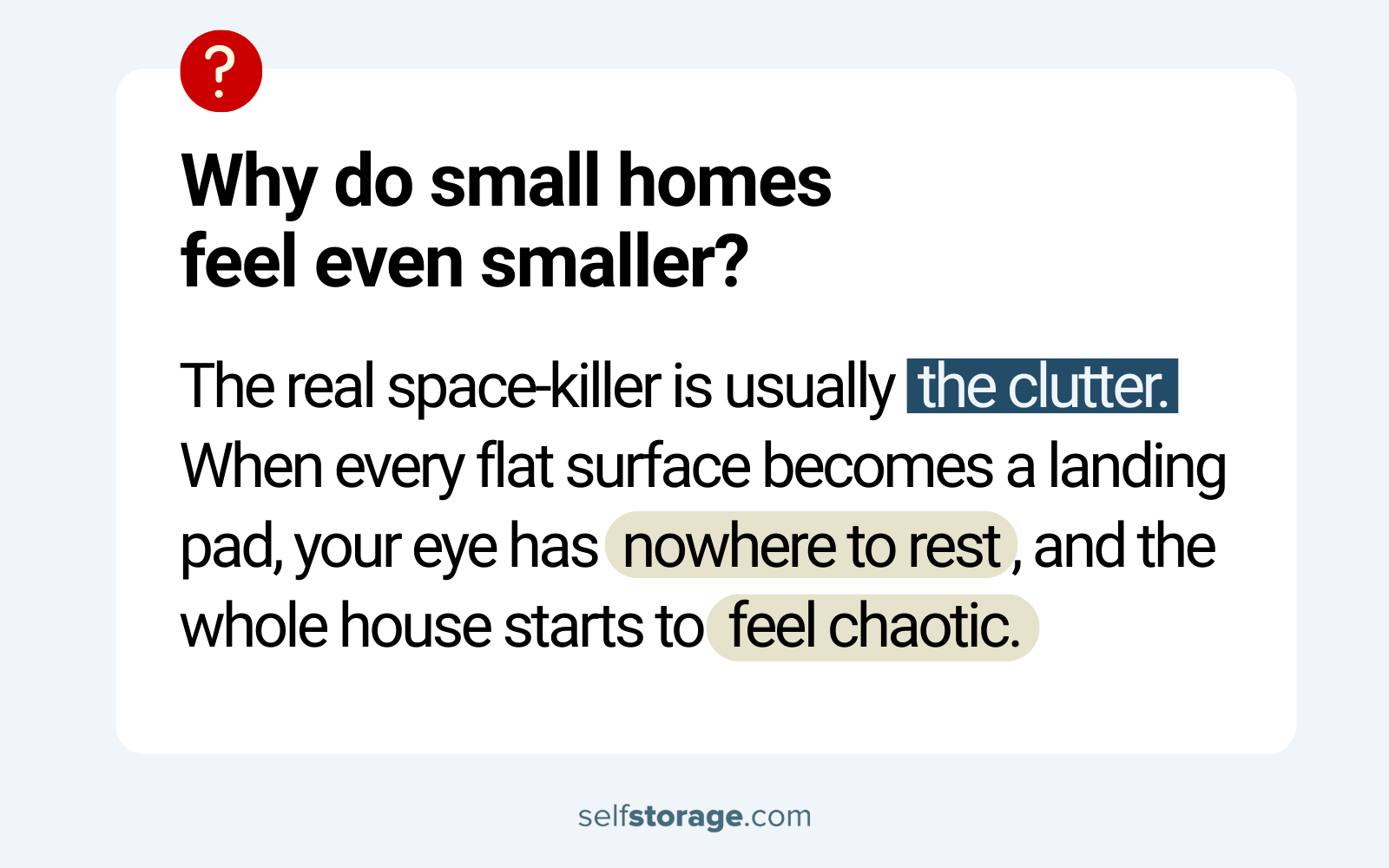
But the real space-killer is usually the clutter. Kitchen counters disappear under small appliances that get used twice a year. Coffee tables become catch-alls for mail, magazines, and whatever didn’t have an obvious home. Dresser tops collect jewelry, loose change, and random items that somehow migrated from other rooms. When every flat surface becomes a landing pad, your eye has nowhere to rest, and the whole house starts to feel chaotic.
The problem gets worse when rooms have to serve multiple purposes without any real plan. The dining table becomes a home office, craft station, and mail sorting center all at once. Bedrooms turn into storage units for out-of-season clothes, exercise equipment, and work files. These multi-purpose arrangements can work beautifully when they’re thoughtfully planned, but when they just happen by accident, they create visual and functional chaos.
Even your storage systems might be working against you. When storage is hard to access, boxes stacked so high you can’t reach the top ones, closets packed so tight you can’t see what’s in back, it stops being useful. Everything that should be stored away ends up sitting on surfaces instead, adding to the visual clutter.
The Power of Decluttering Your Small House
The solution starts with being honest about what you actually need in your daily life. This isn’t about living like a minimalist monk or getting rid of things you love. It’s about making sure everything in your home earns the space it takes up.
Start in the kitchen, where the accumulation problem is usually worst. Most people discover they own three coffee makers, six spatulas, and that bread maker they used exactly twice before storing it in the Cabinet of Good Intentions. Keep one high-quality version of each tool you actually use regularly. Everything else is just taking up valuable real estate.
The same principle applies throughout the house, though the specifics change room by room. In living areas, look at all those decorative items first. You don’t need every photo, candle, and knick-knack you’ve ever owned on display simultaneously. Choose your favorites and store the rest – you can always rotate them seasonally if you want variety.
Bedrooms tend to become dumping grounds for items that don’t have clear homes elsewhere. Be ruthless about clothes you haven’t worn in over a year, books you’ll never read again, and magazines from 2019. If something doesn’t fit well or doesn’t make you feel good when you wear it, why is it taking up space in your closet?
Bathrooms are often the worst offenders for accumulating useless items. Expired makeup, lotions you hated, hotel shampoo samples, bathrooms collect more junk per square foot than almost any other room! Keep what you actually use and toss everything else.
For items you’re not quite ready to part with but don’t need cluttering your daily life, seasonal decorations, family heirlooms, maybe-someday items, storage solutions can bridge the gap. The goal isn’t to store everything, but to be strategic about what deserves to be in your immediate living space versus what can be safely stored elsewhere.
Small House Organization That Actually Works
Once you’ve cleared out the excess stuff, the next step is organizing what remains so it actually serves your life instead of complicating it. The key is creating smart systems for every room that make your daily routines easier, not more complicated.
Kitchen Organization
Take advantage of all your wall space in the kitchen. Magnetic strips can hold knives and spice containers right where you need them. Cabinet doors can hold cutting boards, baking sheets, and cleaning supplies. Wall-mounted racks keep frequently used items within reach without cluttering your counters. The goal is functional storage that doesn’t create visual chaos.
Stop fighting with cabinets and drawers that force you to dig around for what you need. Pull-out shelves bring everything to eye level. Drawer dividers prevent utensils from becoming a tangled mess. Clear containers let you see what you have at a glance, which prevents those duplicate buying habits that lead to cabinet overflow in the first place.
Bedroom Organization
Most people completely waste the space under their beds. Rolling storage boxes or vacuum bags can hold seasonal clothes, extra bedding, or anything you don’t need daily access to. Just make sure whatever system you choose allows you to actually retrieve things without throwing out your back in the process.
Closet organization can literally double your storage capacity without any major renovation. Double-hanging rods maximize vertical space. Shelf dividers keep folded stacks neat. Over-the-door organizers corral shoes, accessories, and small items that otherwise get lost in the shuffle.
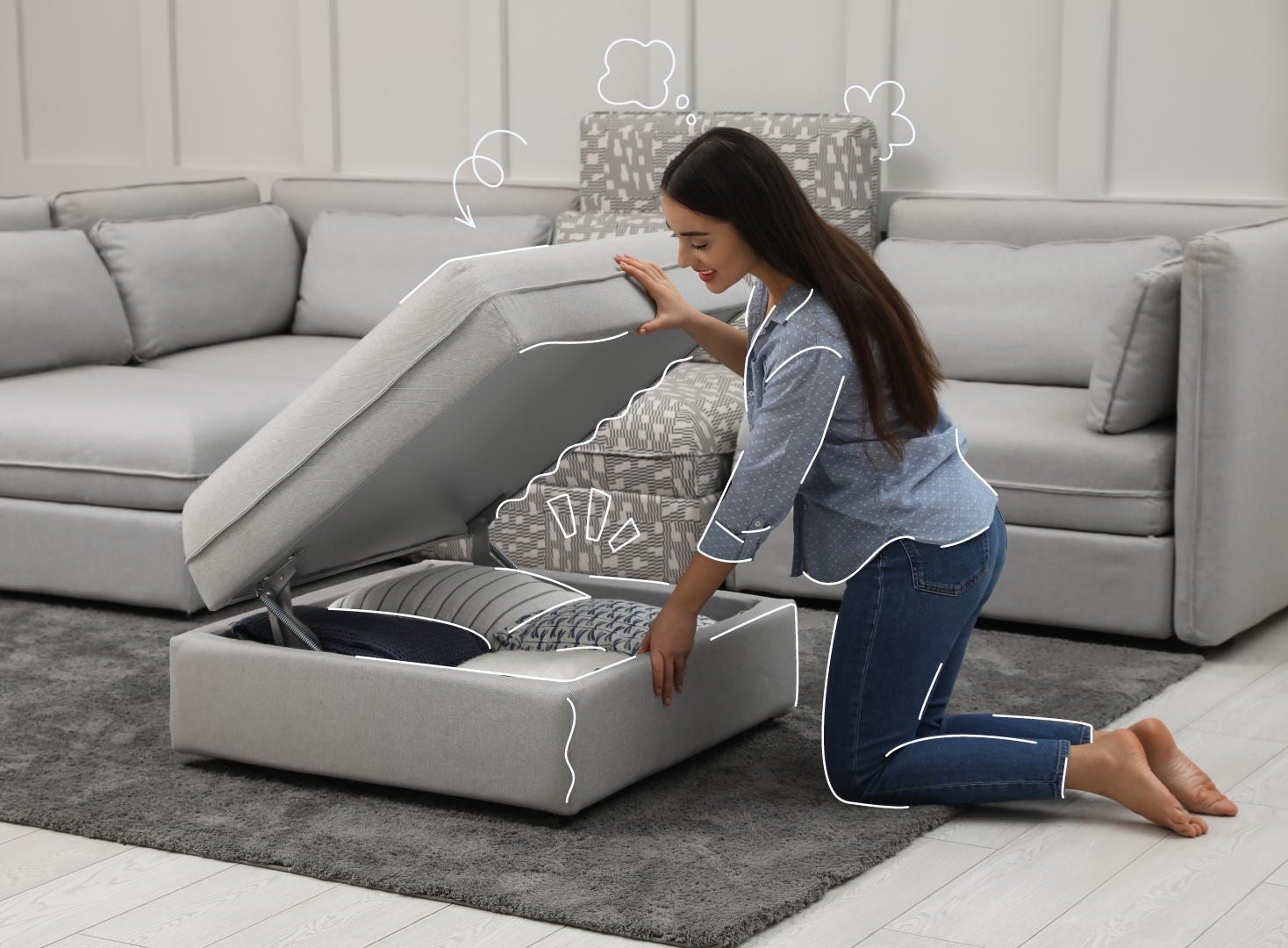
When you’re choosing new furniture, prioritize pieces that work double duty. Storage ottomans hide blankets while providing extra seating. Bed frames with built-in drawers eliminate the need for a separate dresser. Consider nightstand alternatives like floating shelves or small tables with storage underneath to keep bedside essentials organized without overwhelming the space.
Living Room Organization
In living rooms, consider using vertical elements like wall-mounted shelves and floating storage, which draw the eye upward while freeing up floor space. Even simple DIY built-ins can create substantial storage while looking intentional and custom.
Coffee tables with hidden storage keep living room necessities accessible but out of sight. Ottoman-style coffee tables provide storage plus extra seating when guests come over. Wall-mounted entertainment centers free up floor space and create a cleaner look for your TV and components.
Choose baskets and bin systems that complement your decor so storage becomes part of the design rather than an eyesore you’re trying to hide.
Bathroom Organization
The bathroom offers surprising storage opportunities if you look beyond the obvious spots. That space above the toilet is perfect for shelving that holds towels and toiletries without taking up floor space. Hanging a shower caddy will keep products contained so your shower doesn’t look like a bottle graveyard.
Vanity drawer organization with dividers turns bathroom drawers from junk collectors into actually useful storage. Give your medicine cabinet a makeover by organizing it with small containers or magnetic strips to hold tweezers, nail clippers, and other small items that tend to get lost.
Small House Design Decorating Ideas That Create Space
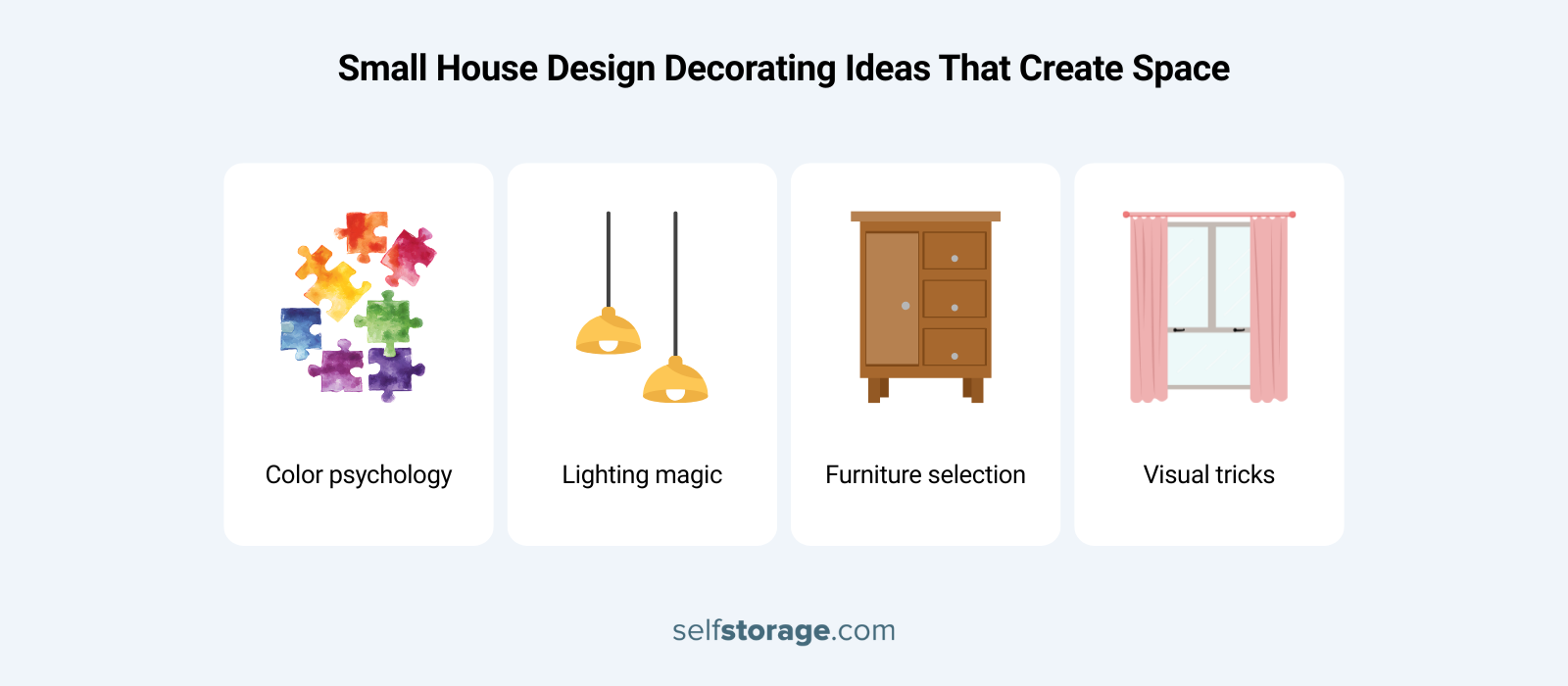
Smart decorating decisions can completely transform how your space feels, often without spending much money. These design tricks work with how your eyes and brain naturally perceive space instead of fighting against it.
Color Psychology
Light colors reflect light instead of absorbing it, which immediately makes rooms feel brighter and more open. You don’t have to paint everything stark white; warm grays, soft blues, and creamy whites all create that airy feeling while still having personality. Save darker colors for accent pieces rather than entire walls.
One strategically placed dark accent wall can actually make a room feel larger by creating visual depth. Choose the wall farthest from the entrance, or highlight a wall with interesting architectural features like a fireplace.
White walls don’t have to feel cold or sterile. Layer in textures with rugs, throw pillows, and blankets. Mix warm whites with cool whites to add depth. Bring in natural elements like wood or plants to warm up an all-white palette.
Lighting Magic
Lighting makes a huge difference in how spacious a room feels. Relying on a single overhead fixture makes rooms feel flat and small. Instead, layer different types of lighting: ambient lighting for overall illumination, task lighting for specific activities, and accent lighting to create visual interest. This layering creates depth and makes rooms feel more dynamic.
Mirrors are probably the most cost-effective way to make any space feel larger. Place them opposite windows to bounce natural light around the room. Large mirrors can literally double the apparent size of a space, while even small mirrors in dark corners help eliminate the shadows that make rooms feel cramped.
Heavy curtains block precious natural light, so switch to sheer panels or light-filtering blinds that maintain privacy without darkening the room. Position lighting strategically in corners to eliminate dark spots. Floor lamps that direct light upward make ceilings feel higher, while table lamps create cozy zones that add depth to the overall lighting scheme.
Furniture Selection
When choosing furniture, scale matters more than style. A few well-chosen pieces that fit the room properly will always look and feel better than many smaller items crammed together.
Furniture with visible legs makes rooms feel less heavy because you can see the floor space underneath – a simple trick that works surprisingly well. This creates the illusion of more floor space compared to pieces that sit directly on the ground.
Glass and acrylic furniture provide all the functions you need without adding visual weight. A glass coffee table or lucite chair takes up the same physical space as a solid wood piece, but your eye perceives much more openness.
Every piece of furniture should earn its place by serving multiple purposes. Sofa beds handle overnight guests. Nesting tables can be tucked away when not needed. Storage ottomans provide seating, storage, and table space as needed.
Visual Tricks
Create visual height with vertical elements like tall bookcases and artwork hung high on the walls. Vertical stripes or paneling can also draw the eye upward and make ceilings feel higher.
Hang curtains close to the ceiling and extend the rods beyond the window frame to make windows appear larger and ceilings higher. This works even with simple, inexpensive curtains.
One large piece of art typically works better than a gallery wall in small spaces, creating a focal point without visual clutter. Keep flooring consistent throughout your home to create a visual flow that makes the entire space feel larger and more connected.
The Edit
Remember that even empty space has value. Don’t feel compelled to fill every corner and surface. Strategic empty space gives your eyes places to rest and makes everything else feel more intentional.
Choose decorative items intentionally instead of collecting and displaying everything you own. A few carefully chosen pieces have more impact than many items scattered around. Curate your displays rather than simply accumulating them over time.
Negative space works as a design element in small homes. Sometimes the best decorating choice is knowing when to stop adding things.
Interior Design Principles for Small Houses (That Make a BIG Difference)
You don’t need formal design training to apply the principles that professionals use to make small spaces work better. These small house interior design concepts are intuitive once you understand the reasoning behind them.
Professional Strategies for Your Space
When rooms need to serve multiple purposes, create distinct zones using area rugs, furniture arrangement, and different lighting rather than trying to make everything blend. This gives each area its own identity while maintaining the open feeling of a larger space.
The 60-30-10 color rule provides a foolproof formula for creating cohesive rooms: use one dominant color for 60% of the space (walls and major furniture), a secondary color for 30% (upholstery and curtains), and a pop of accent color for 10% (pillows and artwork). This creates visual harmony without being boring.
Pay attention to proportion and scale. Furniture should relate to each other in size. A tiny coffee table with an oversized sofa looks wrong and makes both pieces seem off. Similarly, artwork should fit the wall it’s on rather than overwhelming the wall or getting lost in the space.
Plan clear paths through your rooms. People should be able to move comfortably without squeezing between furniture or navigating around obstacles. Good traffic flow makes any space feel larger and more functional.
Give each room one clear focal point. This might be a fireplace, piece of artwork, or accent wall to anchor the space and prevent it from feeling scattered. In small house interior design, texture often works better than busy patterns for creating visual interest without overwhelming the eye.
When Off-Site Storage Makes Perfect Sense
Sometimes the smartest approach is acknowledging that not everything needs to live in your daily space. This isn’t about becoming a storage unit hoarder; it’s about being strategic with your square footage.
Holiday decorations, winter clothes during summer months, pool accessories in December, and camping gear that comes out twice a year. These seasonal items can consume enormous amounts of space when they’re not being used. Climate-controlled storage keeps these items in perfect condition while freeing up your closets for things you actually need right now.
Family heirlooms, childhood keepsakes, and collections that took years to build have value that goes beyond their practical use, but they don’t all need to be displayed simultaneously. Quality storage can preserve these items until you have more space or want to rotate what’s on display. Sometimes it’s actually nice to rediscover things you’ve stored away.
If you run any kind of business from home, inventory and supplies can quickly overwhelm your living space and make your house feel more like a warehouse than a home. Storage units with electricity can accommodate business needs while preserving the boundary between work and personal space.
Hobby equipment, sports gear, musical instruments you play occasionally, and exercise equipment that’s seasonal all deserve to be kept, but they don’t need to dominate your living space when they’re not in active use.
Well-organized storage works like an extension of your home, particularly useful during moves, renovations, or major life changes when you need temporary space for items that will eventually return to your house.
Most people rent storage units that are too large for their actual needs. A 5×5 unit holds about one room’s worth of belongings, while a 10×10 can accommodate furniture and boxes from a two-bedroom apartment. Start smaller than you think you’ll need (you can always upgrade if necessary, but downsizing is much more complicated).
Transform Your Small House Into a Spacious Home
Your house doesn’t need more square footage to feel spacious and comfortable. It needs to be used more intelligently. The transformation starts with being honest about what you actually need in your daily life and creating systems that support your routines instead of complicating them.
Pick one room this weekend, ideally the one that bothers you most, and work through it systematically. Clear out what doesn’t belong, organize what stays using principles that make sense for how you actually live, and make a few design choices that open up the space visually.
This isn’t about achieving magazine perfection or following design rules that don’t fit your lifestyle. It’s about creating a home that works for your real life. Some of the most comfortable, livable spaces are small homes that have been thoughtfully organized and designed with their occupants’ actual needs in mind.
Start with your bedroom if that’s where the problem feels most overwhelming, or focus on your living room if that’s where you spend most of your time. The changes don’t require major expense or disruption; sometimes, just clearing surfaces and adding strategic lighting can completely change how a room feels.
For items you want to keep but don’t need in your immediate living space, find storage solutions that work within your budget and location. Good storage isn’t about hiding things away and forgetting them. It’s about being intentional with your space, so your home can actually serve your life rather than overwhelming it.
You can make your house feel bigger so quickly! The only thing standing between you and a more spacious, organized home is deciding to begin. Even fifteen minutes of focused effort this evening will start moving things in the right direction.