Article takeaways
- Cleaning, drying, oiling, and re-seasoning your cast-iron cookware before packing, moving, and storing it is crucial to prevent rust and maintain the seasoning layer.
- Using storage solutions like hanging racks or vertical cookware organizers helps you make the most of vertical space, ensuring airflow and avoiding metal-on-metal contact, which helps maintain the integrity of the cookware.
- Keeping cast iron cookware in a climate-controlled storage unit helps protect against rust and damage caused by temperature fluctuations and humidity, especially during long-term storage.
- Avoid storing cast iron cookware when damp, wrapped in plastic, or stacked without protection between pieces to protect it against rust, chips, and cracking.
- Climate-controlled self-storage units are an ideal option for a long-term cast-iron storage solution.
Cooking with cast iron cookware touches something ancestral inside of us. Maybe it’s the smell of iron on a fire, or maybe it’s the meditative practice of cleaning them out with salt and wiping them down with oil when we’re done.
And then there’s the fulfilment we gain from their exceptional longevity and ability to retain heat if we take care of them.
From sizzling cast iron skillets to robust Dutch ovens, cooks of all calibers celebrate cast iron cookware as a culinary workhorse by professional chefs and home cooks alike.
But the resilient iron, hefty weight, and unique seasoning layer that make these beloved pans so special also make them hard to pack and move—never mind finding kitchen storage solutions.
And to make matters more challenging, storing cast iron cookware incorrectly can shorten its lifespan and reduce its level of performance.
This helpful guide explores how to store cast iron pans. We’ll cover packing preparation and how to store cast iron for moving.
We’ll also reveal how important finding a climate-controlled storage environment equipped with air flow and humidity control is for cast iron pans, and how to use our signature SelfStorage.com search tool to find a self-storage solution with all the amenities you need.
Preparing Cast Iron Pans for Storage
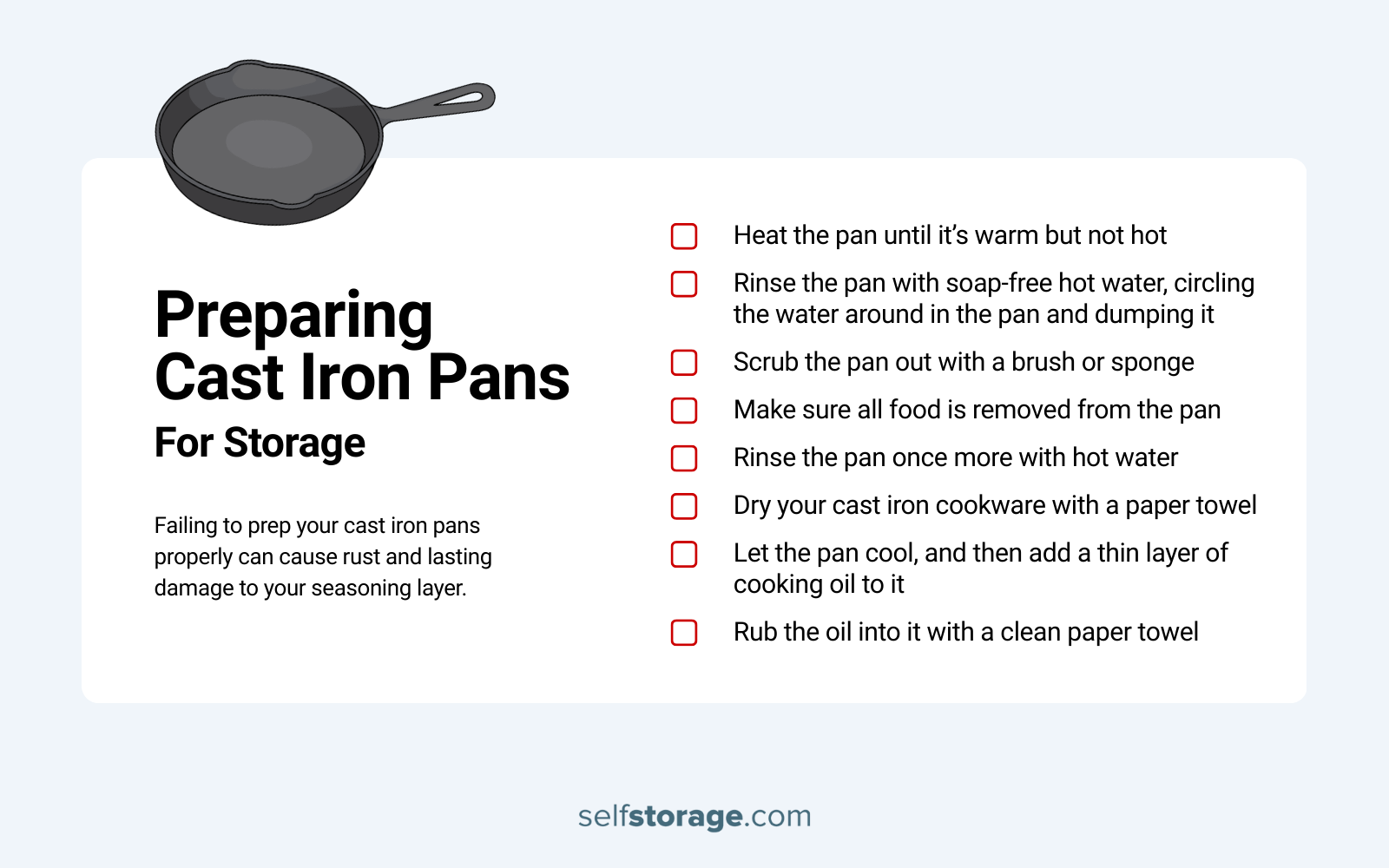
Before we can talk about how to store cast iron cookware, let’s review preparation. Failing to prep your cast iron pans properly can cause rust, lasting damage to your seasoning layer, even if you’re using all the right storage techniques.
- Start with a thorough cleaning session. Heat the pan until it’s warm but not hot.
- Rinse the pan with soap-free hot water, circling the water around in the pan and dumping it. Don’t leave standing water in the pan. And don’t use soap!
- Scrub the pan out with a brush or sponge–make sure there’s no soap residue on whatever you use to scrub the pan.
- Focus on any places in the pan where there’s food stuck. If you can’t get the food residue off with the brush, add some salt to the pan, which will help to erode the food particles until they release their grip on the pan.
- Rinse the pan once more with hot water, making sure all the food is gone. This step is crucial because food residue can degrade, become rancid, and attract pests.
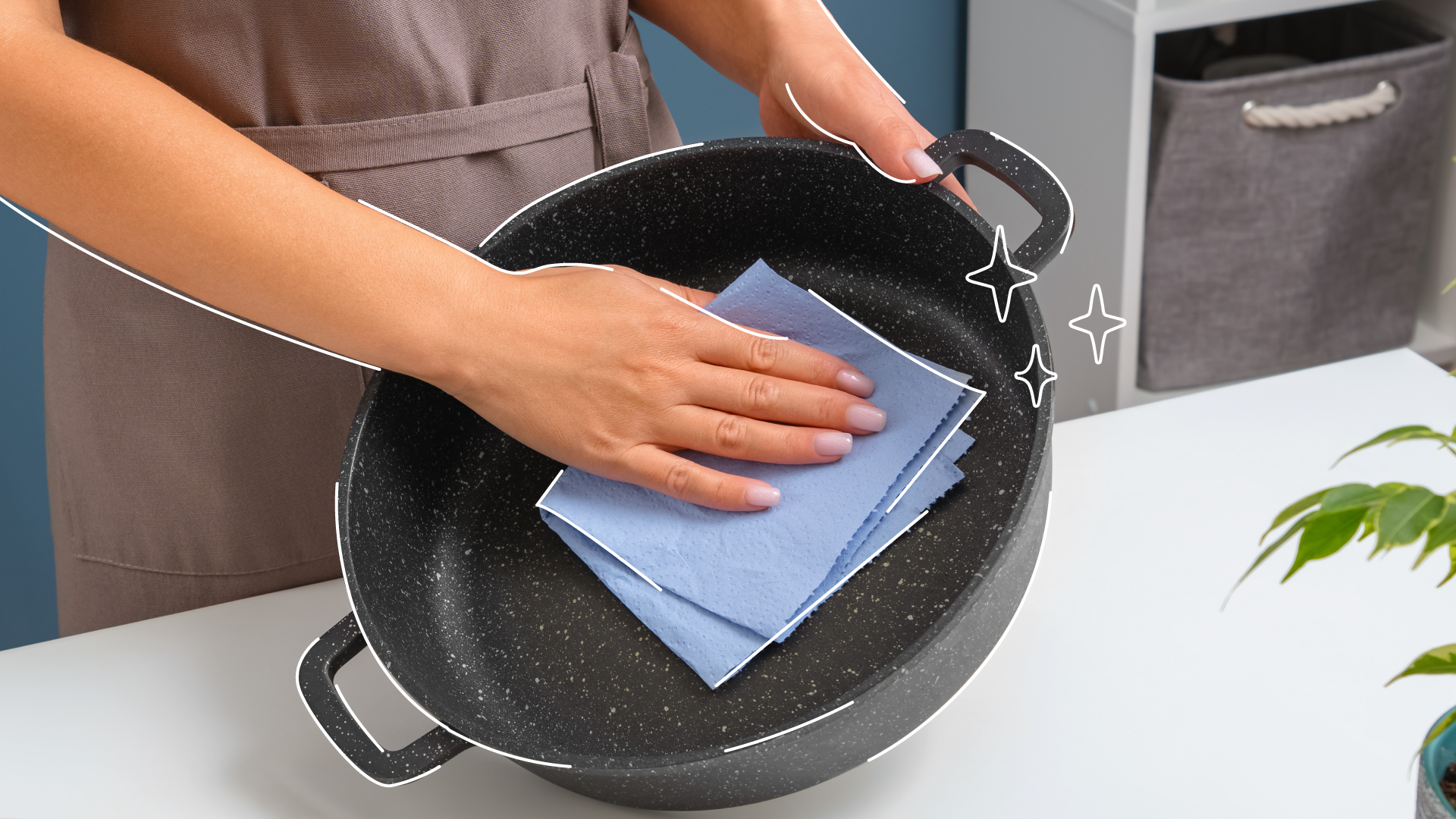
- Dry your cast iron cookware with a paper towel, then place the clean pan on low heat until all the water has evaporated.
- Let the pan cool, and then add a thin layer of cooking oil to it–any type of vegetable oil. Olive oil, avocado oil, flax oil, or vegetable shortening all work well.
- Rub the oil into it with a clean paper towel. You don’t want any sitting pools of oil on the surface of the pan, to dump out any excess oil, and wipe it with a paper towel until all that’s left is a subtle protective layer.
This oil barrier helps to prevent rust and maintain the seasoning layer.
If you aim to put your pans into long-term storage, we suggest employing a light re-seasoning process for extra protection. To re-season cast iron cookware:
- Follow the cleaning steps above, ensuring all food residue is cleaned off the pan, and that you’ve applied oil to the pan and rubbed it in.
- Bake the pan in the oven at a moderate temperature (around 350-400°F or 175-200°C) for an hour.
- Allow it to cool completely.
Re-seasoning the pan before storage reinforces the seasoning and provides an extra layer of protection against humidity, moisture, and rust.
And remember, all the oil should rub into the pan’s surface. Excessive oil will become rancid just like food if it sits for too long, and your pan will attract pests and get funky.
If you’re like me, you use your primary cast iron pan once a day, cleaning it as soon as you’re done cooking.
When it comes to properly storing your daily driver, keeping the pan within reach, preventing moisture buildup, allowing airflow, and maintaining the seasoning layer are your primary four priorities.
The best cast iron storage solution often depends on your available storage space and how frequently you use each piece.
Most cast irons copy the popular Lodge cast iron pan design, with a hole in the handle for hanging the pan. Here are some stylish storage solutions for the cast-iron skillets you use all the time:
- Hang the pans on wall hooks above the oven to free up cabinet and pantry space and ensure your pans are getting the airflow they need.
- A sturdy hanging cookware rack, whether mounted on a wall or suspended from the ceiling, not only keeps your pans readily accessible but also adds a rustic charm to your kitchen.
- If you’re going for a post-modern industrial aesthetic, consider a setup using industrial-style black iron piping and floor flange brackets mounted on a wooden panel or barn wood attached to the wall.
- If minimalism is more your vibe, hang some S hooks from a commercial grid wall or display walls nd run the hook through the handle of your pan.
A lack of hanging options may tempt you to stack your cast-iron pans on top of each other. But metal-on-metal contact can scratch your pans and ruin their seasoning layer. If you have the storage space, install a vertical cookware organizer or storage tower in one of your cabinets to take advantage of vertical storage space.
If stacking your pans is your only option, put a thick layer of paper towels on each pan, and store the stack somewhere that gets airflow. The paper towel layer needs to be thick enough to do the double duty of padding the pans and absorbing moisture.
If you cook with your Dutch oven often, we suggest storing it so the inside of the Dutch oven is exposed to airflow. If your Dutch oven has a lid, use a lid protector that lifts the lid and leaves an opening gap so the inside of the Dutch oven isn’t sealed off.
We suggest avoiding enclosed, damp environments like under a sink or in an unventilated cabinet, even if you use the pan every day.
How to Store Cast Iron Cookware Long-Term
When it comes to long-term cast iron storage, airflow, preventing moisture buildup, and protecting the seasoning layer are just as important. But accessibility is less of a factor, since you’re obviously not using the pan every day.
And since kitchen storage space is often limited, you probably don’t want to keep the pan you’re storing long-term shoved in a cabinet, where it’s both taking up valuable storage space and is removed from the airflow.
We suggest finding a dry, off-site environment with humidity and temperature control for long-term storage of cast iron cookware.
You still need to clean your cast iron thoroughly, ensure there’s no food residue, lightly oil it with vegetable oil or flax oil, and conduct the full re-seasoning process described earlier.
If you’re stacking multiple pans for storage, use our thick paper towel layer trick, but NEVER wrap them in plastic. Paper towels are porous and allow air flow. Plastic wrap cuts the pan off from airflow, traps moisture, and causes mold and rust growth. We even suggest avoiding plastic bags.
If you don’t think a paper towel layer will last, you can use a clean, breathable cotton cloth, which works well to protect the surface and absorb any trace moisture.
The ideal storage location for cast iron pans is a climate-controlled storage unit.
Climate-controlled means more than just consistent temperatures of 55-80 degrees year-round. A climate-controlled storage unit also employs humidity monitoring and management technology, so the humidity levels stay in the ideal range where mold and rust can’t form.
Some people opt to store their cast iron cookware long-term in their basement, attic, or garage. If you go this route, be extra vigilant about temperature fluctuations and humidity, as these spaces aren’t always climate-controlled. Use fans, space heaters, and humidifiers/de-humidifiers to keep the room’s conditions consistent and safe during extreme weather changes.
How to Pack Cast Iron for Moving
When you’re packing cast iron pans for moving, you’ll want to start with all the same preparation steps we outlined above–clean the pan, dry it, oil it lightly, and season it for extra protection.
Then, you’ll want to wrap your cast iron skillets in paper towels or packing paper. You can put a small piece of bubble wrap inside the pan for extra padding, but don’t wrap the pan in any type of plastic, including the bubble wrap. And, as soon as you’re moved into the new place, remove the bubble wrap and packing paper and let the pans air out.
If you see any rust, repeat all your preparation steps from the beginning to clean the rust out.
When you’re packing Dutch ovens for a move, ensure the lid is securely placed, with a lid protector between the lid and the pot to stop the lid from rattling and damaging the pan.
We suggest using sturdy, rugged boxes to transport your heavy pans, but avoid using air-tight containers. You’ll want to distribute the pan weight evenly to prevent the box from caving in.
Fill any empty spaces in the box with crumpled packing paper or old clothes and towels to stop the pans from shifting. Your goal is to prevent chipping, cracking, and rusting during the move. Your cat iron cookware may be heavy, but you still want to treat it like you’re packing fragile items.
Common Cast Iron Storage Mistakes
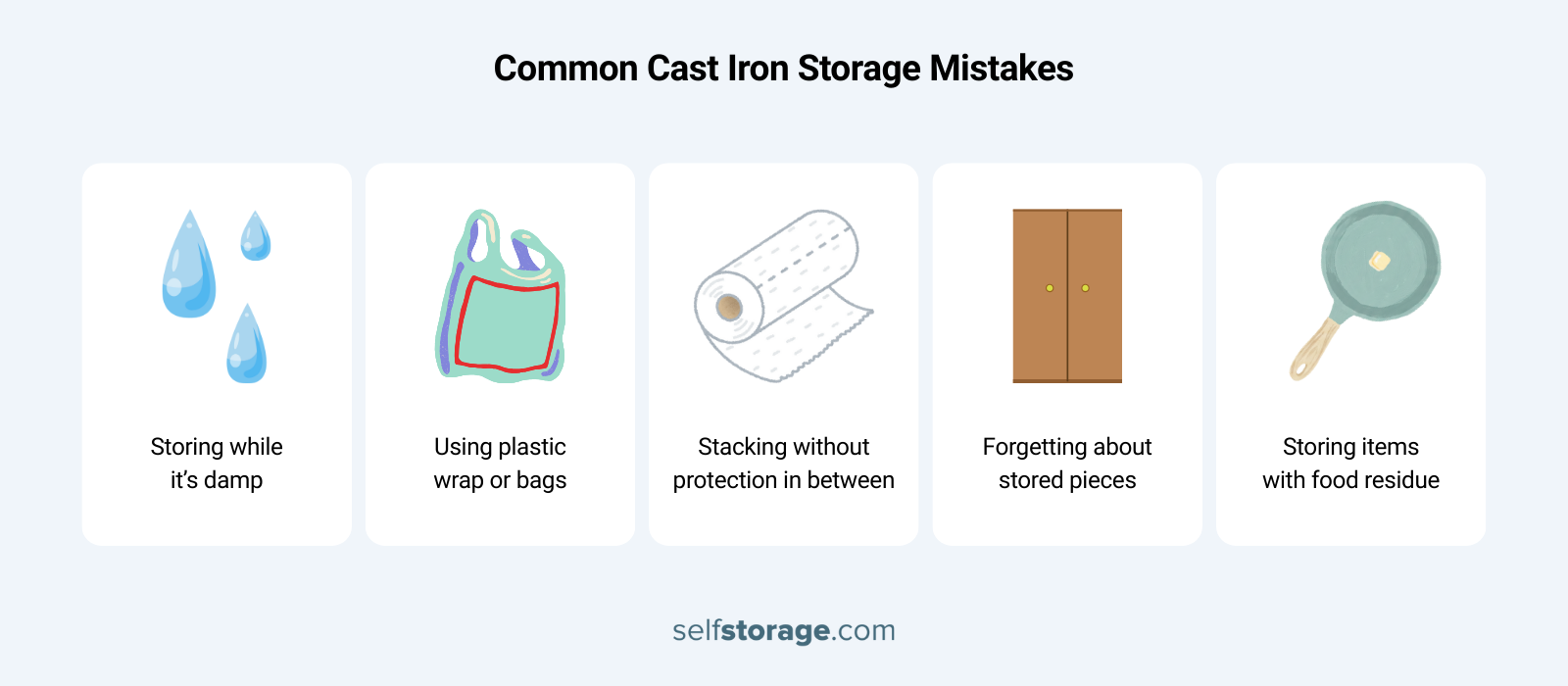
One of the most common mistakes is storing cast iron cookware while it’s damp. All it takes to rust a cast-iron pan is the slightest bit of moisture left on the surface. Rust is more than just unsightly and unappetizing. It can damage the seasoning layer. Always ensure your cast iron is bone dry before putting it away.
Another frequent cast iron storage mistake is using plastic wrap or bags to wrap them, especially for long-term storage. Plastic materials trap moisture, and trapping humidity in the pan promotes rust growth.
Another common cast iron storage mistake to be aware of is stacking cast iron cookware without protection in between. Placing cast iron pans directly on top of each other without a barrier, like paper towels, can lead to chips, scratches, and damage to the seasoning layer.
Forgetting about stored pieces of your cast iron cookware can lead to neglect. If you don’t clean and re-season your cast iron collection every so often, they can lose their protective layer, and rust will form, potentially allowing rust to form unnoticed.
And last but not least, storing items with food residue, including too much standing oil, can cause the food to turn rancid, attract pests, and lead to unpleasant odors and spoilage. This can both degrade the lifespan and have a negative impact on the pan’s functionality.
Self Storage Solutions That Work for Cast Iron Pans
From catering chefs to restaurant chefs, to home cooks, lots of culinarians have extensive collections of cast iron cookware in addition to their kitchen knives and cooking utensils. You may have Dutch ovens and cast Iron skillets of multiple sizes–some of which you’re only cooking with on special occasions.
Not every kitchen layout has the storage space to accommodate your entire collection. And if you’re downsizing your home or moving in with a friend or relative, kitchen cabinets can be precious real estate.
And attics, garages, basements, and sheds often lack the temperature, moisture, humidity, and climate control that will keep your pans safe from rust, oxidation, and pests.
Whether you’re looking for temporary, short-term storage or needing long-term storage for your cast iron pans, self-storage may be the solution you’re looking for. That said, not just any old storage unit will do.
For stters, you definitely want to opt for a climate-controlled self-storage unit. Theconsistent temperature and humidity levels climate-control technology maintains are a prime ingredient for preventing rust from forming on your precious cast iron collection. Climate control is particularly important for long-term storage or if you live in an area with extreme temperature fluctuations or high/low humidity.
When packing your cast iron cookware for storage, follow the same packing guidelines as for moving: clean, dry, lightly oil, run through the seasoning process, and wrap each piece individually with paper towels or breathable cloth.
Use sturdy boxes, bins, or crates, but leave them open so they’re getting the airflow they need.
Self storage comes in various unit sizes, with a ceiling height average of 8-10 feet tall. An even more ideal option for cast iron pan storage is to put a shelving system in your storage unit that takes advantage of the vertical storage space. You can store your pans on the shelves, ensuring they’re exposed to the climate-controlled airflow.
If you do decide to use boxes, crates, or bins, keep them on pallets and not directly on the floor, where they’re susceptible to moisture contact.
But how do you find a self storage unit that has the exact amenities you need and is the ideal size, but is also conveniently located by your home, restaurant, or catering commissary kitchen so you’re not running across town when you need that extra-large pan so you can cook for your dinner company?
That’s where we come in.
How To Store Cast Iron Pans Using SelfStorage.com
Whether you’re using hanging solutions, cookware organizers and storage towers, or aesthetic setups involving industrial-style black iron piping, the goal remains the same: to protect your investment from rust and damage.
And if you’ve got limited kitchen space to work with or ned to store your cast iron pans long term, climate-controlled storage is the way to go. Renting self storage may seem like a splurge, but it’s worth it for protecting your culinary and cast iron investments.
That’s where SelfStorage.com can swoop in and save the day.

Just punch your zip code into our easy-to-use storage search tool and select your ideal unit size and the security features and non-negotiable storage amenities. Our signature amenity filter will isolate the results to units in your area that have exactly what you need.
And if you need a little extra support, our helpful storage experts are standing by at (835) 534-5602. All you need to do is choose your ideal unit and your move-in day, and we’ll take care of the rest!