
Article takeaways
- St. Petersburg, FL is generally considered safe for tourists and new residents, especially in the downtown waterfront area, beach neighborhoods, and established residential districts.
- Like most mid-sized U.S. cities, St. Pete has neighborhoods that vary significantly in safety — understanding which areas to prioritize makes a big difference for people moving there or visiting.
- Crime statistics for St. Pete are close to or below the national average in many categories, though property crime in certain areas runs higher than average.
- Downtown St. Pete, St. Pete Beach, and Old Northeast are among the most frequently cited safe areas for visitors, renters, and families.
- People relocating to St. Pete often benefit from short-term self-storage while they sort out housing — especially if moving from out of state before a lease or closing date is confirmed.
St. Petersburg, Florida, which is affectionately known to locals as St. Pete, is considered a safe city for both visitors and residents. St. Pete boasts an active waterfront, a walkable downtown, and a growing reputation as one of the most livable mid-sized cities in the South. As with all cities, safety varies by neighborhood and time of day, so a little pre-planning and information-gathering will help you determine which parts of St. Pete best meet your needs for safety, security and amenities if you’re planning a visit or a move.
St. Pete has spent the past decade reshaping its reputation and is no longer overshadowed by neighboring Tampa. St. Pete has become a destination in its own right, thanks to a thriving arts scene that features the Salvador Dalí Museum, miles of waterfront parks, and a Central Avenue corridor packed with restaurants, breweries and local shops. The city’s downtown core enjoys plenty of foot traffic day and night, which contributes to a safety-in-numbers sense of security.
Crime statistics in the area are mixed, as is typical for most cities. Violent crime sits near or below national averages most years, while property crime runs higher than average in some parts of the city. The important context here is that city-level statistics include neighborhoods that are quite different from each other, and that should be considered when researching area neighborhoods.
In this guide, we’ll break down how safe St. Petersburg, FL is by neighborhood, presenting researched, current crime data in an honest context to provide practical tips for visitors and people actively planning a relocation. Whether you’re booking a long weekend at St. Pete Beach, apartment-hunting on Central Avenue or moving your entire household from out of state, here’s what you need to know.

How Safe Is St. Petersburg, FL?
Those planning a move or visit may be asking, “Is St. Petersburg safe?” Let’s dive into the data.
Crime Rate Context
St. Petersburg’s crime rates generally track close to or below national averages for violent crime, including assault, robbery, and homicide. Property crime categories like vehicle burglary and theft run higher in certain parts of the city.
What the Numbers Actually Mean
According to FBI Uniform Crime Reporting (UCR) data and the St. Petersburg Police Department’s public crime dashboard, violent crime in St. Pete has shown a favorable downward trend over the past several years. The city’s most recent official dynamic reporting from 2025 shows that total overall crime fell by 16%, thanks to significant drops across multiple offense categories. In 2025, St. Pete recorded 10 homicides, which marks the lowest total number of annual homicides the city has seen since 1967, when the city recorded 6 homicides.
Compared to other Florida cities, St. Pete often reports lower violent crime rates, and similar or slightly higher property crimes. If you are planning a visit, you should note that property crimes tend to be highest in areas close to tourist hubs.
Tampa, which sits just across the bay, has typically posted higher violent crime rates than St. Pete in most reporting years. Orlando’s general city-level stats tend to run significantly higher. Miami’s metro crime rates are considerably more elevated.
The key to navigating St. Pete safely and successfully is remembering that citywide stats comprise an average across all neighborhoods. To get an accurate picture of what you should expect, it’s important to research the specific areas you are considering for a visit or a move.
Is St. Pete Safe for Tourists?
Yes, St. Pete is a safe and welcoming destination for travelers and vacationers. The downtown waterfront area includes Straub Park, the Pier District, and Beach Drive, all of which contribute to an active, well-lit, and regularly patrolled locale teeming with foot traffic from morning to night. St. Pete Beach and Pass-a-Grille communities are so popular with tourists that they function as resort towns and see very low violent crime rates year-round.
However, standard big-city travel precautions still apply. Visitors should always exercise sound safety practices:
- Don’t leave valuables visible in parked cars. Vehicle break-ins represent one of the more common property crime categories in tourist zones.
- Protect personal property. Secure your phone and bag at the beach or in crowded outdoor areas during peak season, particularly on weekends when St. Pete Beach draws large crowds.
- Maintain situational awareness. Avoid poorly lit or isolated areas after midnight, especially away from the downtown core.
These precautions aren’t specific to St. Pete; they apply in virtually any U.S. city. Snowbirds and those new to the area should also be aware that the busy winter tourist season in Florida is when opportunistic property crime tends to trend upward.
Is St. Pete Safe for Families and New Residents?
Families relocating to St. Pete have their pick among an abundance of peaceful, safe communities. Old Northeast, Shore Acres, and Kenwood are established, well-maintained residential areas known for their cozy character and moderate crime profiles that compare favorably to the city average. Old Northeast has earned a reputation as one of the most family-friendly neighborhoods in Pinellas County, thanks to tree-lined streets, historic bungalows and its proximity to the waterfront.
School quality in St. Pete varies by district, and families with children planning a move should reference current data to make sure they have a solid understanding of the rankings and data. GreatSchools.org or Niche.com are school-ranking websites that maintain regularly updated ratings and parent reviews for St. Pete-area schools.
Cost of living in St. Pete has risen meaningfully in recent years alongside the city’s growing popularity. However, it still provides excellent value for renters and buyers, and offers similar walkability and quality of life found in the neighborhoods of larger cities like Miami and Orlando.
St. Petersburg, FL Neighborhood Safety Breakdown
Downtown St. Pete / Central Arts District
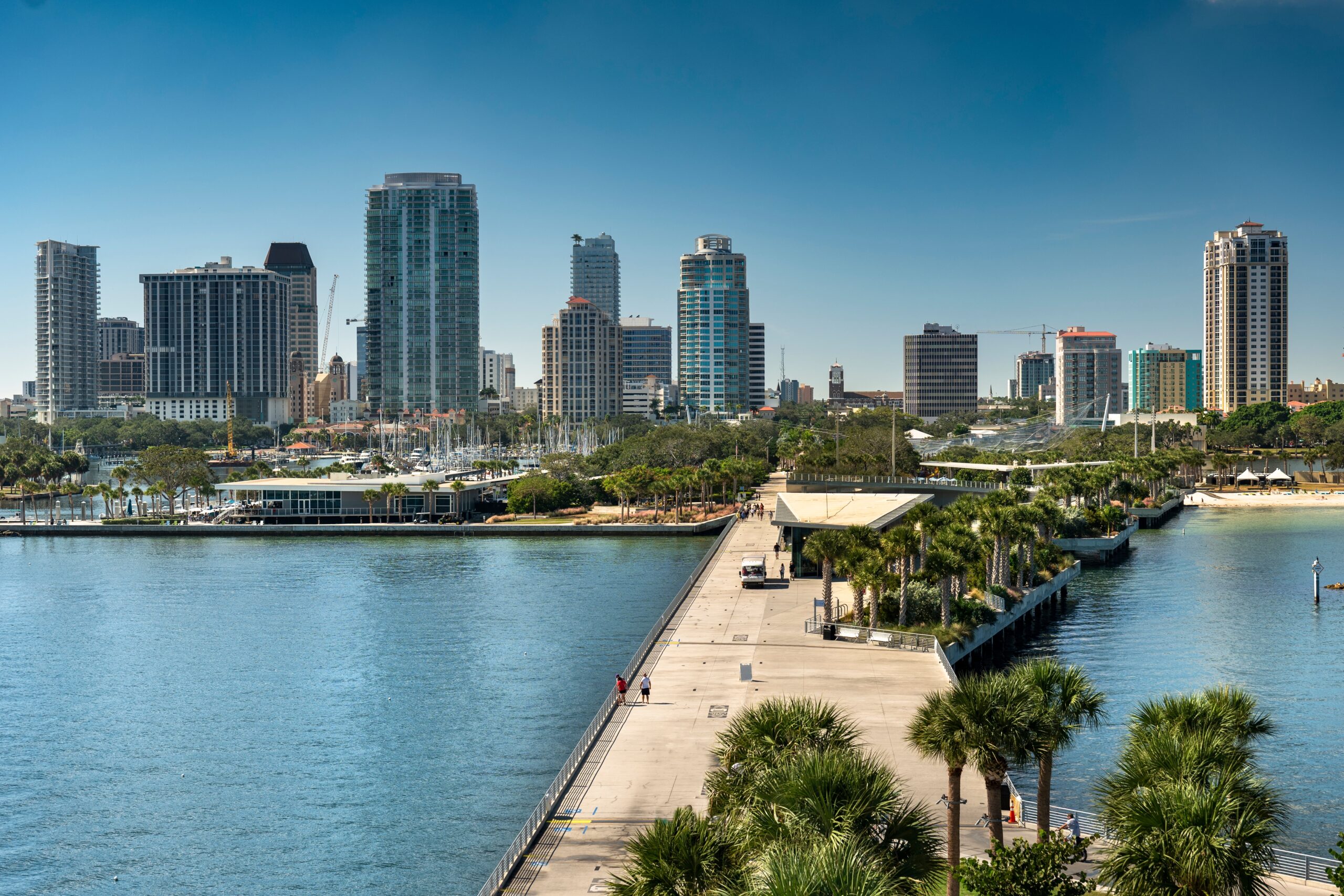
Those wondering “Is downtown St. Petersburg safe?” need not worry. Downtown St. Pete is the city’s most walkable, most-visited, and most economically vibrant neighborhood, which contributes to its strong safety track record for residents and visitors. Downtown St. Pete is among the most accessible and comfortable neighborhoods in the city for walking, dining and exploring. Visitors staying in the downtown area almost universally report feeling safe and comfortable throughout their stay, day and night.
The Central Arts District, the Pier District, and Beach Drive along the waterfront all benefit from steady foot traffic, active restaurant and bar scenes and regular police presence. These areas feel alive day and night, and the consistent activity creates one of the most reliable deterrents to opportunistic crime.
Central Avenue features a plethora of nightlife, and the unsurprising uptick in minor incidents typical of bustling entertainment hubs on weekend nights. Exercise normal awareness after midnight, particularly on blocks and streets that are off the well-lit commercial areas.
St. Pete Beach and Pass-a-Grille
St. Pete Beach is technically a separate municipality from the City of St. Petersburg, but it’s the primary beach destination for visitors to the region. The violent crime profile here is low; this is a resort-oriented community where visitor safety is both a cultural priority and an economic one. Pass-a-Grille, the quieter southern end of the barrier island, adds an even more laid-back vibe.
Property crime is the primary concern here, not violent incidents. Think stolen items that were left unattended on the beach, vehicle break-ins in parking lots and side streets, and occasional bag thefts at peak-season weekend gatherings. These happen most during the busiest summer and spring break weekends, which draw large crowds to a relatively small area and create plenty of opportunities for petty theft. Lock your car, don’t leave bags unattended on the beach and place your valuables in hotel safes.
Old Northeast
Old Northeast is one of the most highly recommended neighborhoods for families moving to St. Pete. It’s a historic residential district of early-20th-century craftsman bungalows, brick-lined streets and mature tree canopies sandwiched between downtown and the waterfront, without the bustle and traffic of commercial districts.
Old Northeast also benefits from strong police presence and active neighborhood associations that ensure its crime statistics run well below the city average.
Long-term residents, young families and professionals who want a quiet neighborhood coexist comfortably in Old Northeast. Families relocating to St. Pete with children or those who simply want an established, settled, safe neighborhood should take a close look at Old Northeast.
Kenwood / Grand Central
Kenwood and the Grand Central District represent St. Pete’s creative arts and cultural neighborhood hubs. This area is roughly centered on the Grand Central corridor west of downtown, and its gentrification over the past decade has attracted independent restaurants, galleries, design studios and a growing number of young renters and homeowners who want walkability without downtown rents. The overall safety profile here has improved because of those investments, though pockets along the edges of the gentrification zone still carry some higher rates of property crime.
Renters should take note: Kenwood offers one of the more appealing combinations of neighborhood character, walkability and affordability compared to downtown in St. Pete. Be conscious of your surroundings at night, particularly on blocks with less regular foot traffic. Exercise the same awareness you would in any transitional urban area, and you’ll find Kenwood to be a comfortable, lively place to live.
Midtown
Midtown is St. Pete’s most economically challenged neighborhood, and its crime rates reflect that. Violent crime and property crime both run higher than city averages in Midtown, though the area is evolving economically through community engagement and investments from the city and residents. It’s a neighborhood with deep local roots and active neighborhood associations.
Budget-conscious renters will find Midtown’s pricing appealing. Those interested in this area should talk to current residents and do their research to find the right block to meet their needs for safety. It’s also worth noting that the city’s ongoing investment in Midtown includes commercial corridor improvements and community programming, which have produced measurable progress in recent years.
Gulfport (Adjacent City)
Gulfport is not part of St. Pete proper, but it seamlessly borders the area and is technically its own city. Gulfport feels like a small beach town, with its low-key, artsy, walkability. It’s a village neighborhood rife with independent shops, galleries and restaurants clustered around a small marina. The crime profile is consistently low, which helps make Gulfport one of the most relaxed and approachable communities in the entire St. Pete area.
Gulfport is attractive to retirees, artists and anyone who wants a quieter, more intimate environment than St. Pete’s downtown, without sacrificing easy access to the city’s amenities. The tradeoff is that it’s a smaller community with fewer commercial options than St. Pete proper, but for many people, that’s a feature rather than a bug.
Below is a handy St. Pete neighborhood comparison chart to help you gain a better sense of how St. Pete’s different neighborhoods stack up:
| Neighborhood | Vibe / Character | Best For | Safety Profile |
|---|---|---|---|
| Downtown / Central Arts | Walkable, arts-focused, active waterfront | Young professionals, nightlife, tourists | Very High; dense foot traffic and strong police presence |
| St. Pete Beach | Classic coastal resort, laid-back | Vacationers, beach lovers, retirees | Very High; minor petty theft during peak tourist seasons |
| Old Northeast | Historic, brick streets, canopy trees | Families, established professionals | High; exceptionally quiet, rare property crime |
| Kenwood / Grand Central | Artistic, historic bungalows, mixed-use | Creatives, renters, LGBTQ+ community | Moderate to High; safe, though minor property crime occurs |
| Midtown | Historically underserved, evolving | Budget-conscious buyers, locals | Moderate; higher property and violent crime rates |
| Gulfport | Eclectic, waterfront village, artsy | Artists, retirees, families | High; independent city feel with low crime context |
Tips for Staying Safe in St. Pete
For Visitors
The downtown waterfront and St. Pete Beach areas are welcoming and generally well-managed, but a few simple habits go a long way toward a smooth visit. Stick to well-lit, active areas after dark, such as Beach Drive, the Pier District, and Central Avenue between downtown and the Grand Central area, all of which have strong foot traffic well into the evening. The Pinellas Suncoast Transit Authority (PSTA) and the SunRunner BRT line that connects downtown St. Pete to St. Pete Beach, are both reliable and generally safe transit options for getting between the two areas without worrying about parking.
Property crime is your more realistic concern as a visitor, not violent incidents. Don’t leave anything visible in your car — not a bag, not a jacket, not a phone charger. Vehicle break-ins in tourist parking areas and beach lots follow a predictable pattern, and they’re almost entirely preventable by just using sensible precautions. Use your hotel safe for passports and extra cash. On the beach, keep a close eye on bags and belongings, especially when the beach is crowded.
For Renters and New Residents
Before you sign a lease, do your research on street-level crime at your potential new address, not just the neighborhood name. The St. Petersburg Police Department maintains a public crime map at stpete.org, and tools like SpotCrime and NeighborhoodScout let you drill down to individual blocks. A neighborhood can have a great overall reputation and still have a few blocks that tell a different story when you check the data. Don’t skip this step.
Walk the block you’re considering at different times of day: morning, afternoon, and evening. The character of a transitional block at 8 a.m. can be quite different from what it looks like at 10 p.m. Talk to current residents if you can — local Facebook groups and Reddit’s r/StPetersburgFL are active, engaged communities that can give you real-world input on specific streets and landlords. Locals will tell you things that a crime map or real estate listing cannot.
Also, keep in mind that HOA communities and gated residential areas tend to post lower property crime rates overall. Ask current tenants in a building directly, as vacancy rates and neighbor turnover can tell you a lot about building management quality.
Making St. Pete Work for Your Move
St. Pete’s reputation as one of Florida’s most livable cities is well earned. The combination of a genuine waterfront, thriving arts and food culture, a walkable downtown and a cost of living that still undercuts Miami and comparable Orlando neighborhoods makes it a highly competitive choice for visitors, renters, retirees and families who are looking for a safe Florida city to enjoy. You’ll find your perfect match for safety, comfort, community and affordability by doing your homework. Research neighborhoods, cities and crime data, and focus your search on the areas that match your lifestyle and priorities.
Many people making a long-distance, out-of-state move to St. Pete find timing and logistics of their move seldom line up perfectly. Lease start dates, closing timelines and short-term rental windows can all create gaps in your timeframe that may require you to park your belongings somewhere for the short-term while you get everything aligned.
Climate-controlled self-storage near St. Pete bridges that window, and gives you some flexibility to take your time making the right housing decisions without leaving your belongings in a moving truck or trying to cram them into a potentially pricey short-term rental. Have a plan for storage before you pack your first box, even if you don’t think you’ll need it. Doing so will ensure unexpected circumstances don’t leave you scrambling to find a unit at the last minute after you’ve arrived.
If you’re still in the research phase, this guide is a good reference to keep bookmarked. You may also find it useful to explore our guides on moving to Tampa Bay and packing and storage tips for long-distance moves for more on how to navigate your next move. When you’re ready to find storage near St. Pete, SelfStorage.com makes it easy to compare options by neighborhood to find the unit that works best for you.




![The Best States to Retire: Top Destinations for Every Lifestyle and Budget [2026 Update]](https://www.selfstorage.com/blog/wp-content/uploads/2026/01/old-couple-on-a-boat.png)


