Article takeaways
- Start with an attic safety and suitability inspection. Make sure the build of your attic can support the weight and size of whatever you plan to store up there. Unfinished attics may not have climate controls, so consider if the items you wish to store there can withstand extreme temperature fluctuations.
- Choose protective storage containers. Attics may harbor pests, and even moderate temperate swings could cause damaging mold or warping. Choose weatherproof storage containers to protect your items from moisture, heat and critters.
- Create storage zones for sound attic organization. Section off dedicated spaces for each type of stored item you are packing away, such as seasonal items, holiday decor, sports gear, etc.
- Go vertical. A tall roofline may create a great place to install space-saving shelving or wall-mounted brackets in your attic.
- Use clear, well-labeled storage bins. Clear bins help you spot just what you need straight away, avoiding the messy unpacking of multiple boxes to find what you need.
Many homeowners who are tight on space may be overlooking a goldmine of untapped storage potential right over their heads: the attic. Attics represent one of your home’s most valuable underused space-saving assets. It could be saving you money right now on external storage units, or saving your sanity as a place to park needed items that may be overwhelming your home.
While attics may come with unique storage challenges, such as awkward access points, tricky climate environments and irregularly shaped areas, a good attic organization plan can make even the trickiest layout work for you. In this article, we’ll explore some time-tested attic organization ideas to help you maximize and maintain your home storage space.
Assessing Your Attic: The Pre-Storage Checklist to Ensure Safe Storage
Attic organization sounds like the solution to your home storage challenges–but before you haul the first box up those stairs, a little up-top reconnaissance will ensure long-term structural security and safekeeping for your stored items.
Start by checking the integrity of your attic floor. Look for cracking, sagging or mold-inducing water damage, as well as any signs of pests or critters that could damage your goods. Be aware that not all attics are designed to support heavy storage loads. Most attic floor joints are built to handle about 10lbs per square foot, for ceiling use only. That’s light duty when you consider the average storage system typically needs 20-40lbs per square foot. Consult a structural engineer if you are unsure about how to proceed.
Is your attic finished and climate-controlled, or unfinished and prone to severe heat and cold? Check the insulation type and placement, as disturbing or compressing insulation can reduce its effectiveness. Bear in mind that attics experience the most extreme temperatures in your home, and these conditions affect what you can and cannot safely store. Ventilation or climate control systems can be added if you determine your attic is unsuitable for your storage needs.
If you’ve determined your attic will work for storage, it’s time to measure its usable space and sketch out storage zones for frequently used items and those in need of longer-term untouched storage. Don’t overlook awkward or odd-shaped areas, as these can be great locations for custom-made shelving or cabinets.
Where to Start: Decluttering and Sorting for Attic Organization & Storage

The most important steps in your attic organization happen before you pack a single item: decluttering and sorting.
Begin with the three-pile method: Separate belongings into separate keep, donate or discard piles. Items that haven’t been used in 3 or more years rarely need to be stored or kept, unless they hold special value.
Be aware of items that should and should not be stored in attics. Anything sensitive to temperature extremes, such as photos, film, paintings, combustibles and important documents are poor candidates for attic storage without climate controls. Clothing, sporting goods and durable holiday decor that is not prone to melting, and other non-perishable items are OK.
Create an inventory system to help you keep track of what you have in storage, and update it each time you add or delete items from your collection. Use this list to help guide storage container purchases.
Finally, when you’re ready to start moving things into storage, plan your attic organization project during a time of year when temperatures in your area are comfortable for working up there for long periods.
The Great Space Savers: Strategic Hacks to Successfully Organize Attic Space
There are myriad types of storage containers and options available for almost every type of space or storage project. Don’t be daunted by sloping attic ceilings or quirky corners–there’s a storage solution for it all.
Shelving Systems
Shelving systems are foundational for most storage systems and are a supportive ally in attic organization projects. Choose freestanding metal shelving units, which are versatile and sturdy, and can be configured to fit specific dimensions.
Wall-mounted bracket shelving works well along attic knee walls, and can help make use of space that’s often wasted or overlooked. Wall brackets also allow easy access to frequently used, light-duty items.
Custom built-in storage solutions are your go-to for puzzling angular attic crannies that may seem impossible to use. If you own your home, consider hiring a carpenter to install built-in solutions designed to the exact, unique specifications of hard-to-fit but usable space.
Storage Containers
Clear, stackable plastic bins with lids are the MVPs of the storage game, and they come in a variety of sizes to fit whatever you need to pack away. These bins keep your items safe from dust, pests and external water damage, and they allow stacking to make use of vertical space. Interlocking bins with labels stack well, and will keep your attic organization system tidy and functional.
- Heavy-duty weatherproof totes work well for items that need extra protection from temperature and moisture fluctuations. These containers are typically built with reinforced construction, and seal more securely than standard storage bins.
- Vacuum-sealed bags for soft goods reduce the volume of piles of clothes and soft goods into thin, protective plastic wafers that can be stacked or slid into narrow storage areas. These bags, when properly sealed, also protect goods from damage while in storage.
- Cardboard boxes should be skipped if at all possible, as they offer little to no protection against the elements, which is exactly what items stored in attic organization systems need. Cardboard attracts pests, collapses under weight, and provides no protection against moisture.
Specialized Storage
- Consider installing garment racks with breathable covers to hang seasonal clothing that has been carefully packed in protective hanging garment bags.
- Sports equipment organizers include overhead storage or specially designed sports equipment hooks for bikes, canoes, balls and other outdoor gear. Many sporting gear storage options allow for hanging or suspended storage, which frees up valuable floor space.
- Holiday decoration storage containers with dividers for fragile ornaments are popular choices for festive safekeeping during the off season. Choose heavy-duty protective storage bags for large artificial decorative trees or yard ornaments.
- Documents and photos require archival-quality storage containers made with acid-free materials. Consider double-packing rare, valuable or sentimental documents in two layers of protection for extra insurance against the unexpected.
Zones and Flow: Our Best Attic Organization Ideas and Tips
A logical layout is the key to creating a functional storage space. Organize attic space based on the volume of items you are storing. A few bins may not require much, but if you are packing away a lot of goods, organize attic space efficiently to ensure it works for you long-term.
Well-planned accessibility is the key to effective attic organization that lasts. Begin by planning clear walkways and access paths. This is your primary traffic route, and you should be able to reach any stored items without climbing over or moving multiple containers.
Next, create zones in which like items will be stored. Inventory your items and categorize them by type and frequency of use–you might dedicate a corner to holiday decor, another to seasonal items, overhead storage for sporting goods, and the furthest accessible point for permanent storage. Oddly-shaped eaves and corners can house smaller goods and items packed in soft weatherproof containers, such as clothing. Items you most frequently retrieve should be placed near your attic’s access point in a configuration that makes them readily accessible.
If your layout is complex, create a simple diagram to diagram what you’ve placed where. Keep it with your inventory list for easy reference when you need to audit or retrieve your items.
Name It to Claim It: Labeling and Cataloging Best Practices for Your Attic Organization System

Don’t miss the most critical step to ensuring your attic organization and storage system remains tidy and functional for years to come: labeling and cataloging your storage items. Before you place boxes and bins in their zones, cubbies or stacks, you’ll want to create a simple system for easy visual identification later.
Try a color-coded labeling system. Use colored bins or attach labels in different colors to items by type, such as red for holiday items, green for sporting goods, blue for clothing, etc. The right color-coded system is any color-coded system that makes sense to you and those who may routinely access stored items.
Containers should have labels attached to at least two sides so you can identify them regardless of how they are stacked or positioned. If you are storing a large variety of items, your labeling system and categories should be more specific. For example, use title one label “Winter coats, scarves and gloves” and another “Winter boots and shoes.”
A digital inventory tracking system will ensure your attic organization is a success. You can download apps designed specifically for content inventories, or just use a simple spreadsheet with columns for box contents, number, category, zone, location and date stored. You can also photograph your system each time you access it to help you track your setup.
A digital map can help navigate large or complex attic storage systems. Create a simple diagram showing your layout and zones, and mark where specific items are stored. You can also use the photo tracking method to help keep visual track of your layout.
Safe and Sound Storage: How to Keep Your Attic Organization System Safe from Damage
Attics can be wonderfully innovative in-home storage solutions, but safe attic storage requires forethought and planning to ensure items remain damage-free.
- Climate protection is non-negotiable. Even if items are properly stored, moisture and humidity can cause attic condensation, and extreme heat can warp or melt sensitive materials. Install a hygrometer to monitor humidity levels; ideal humidity for attic storage ranges between 30-50%. If you find your attic exceeds the limit, consider adding a dehumidifier or additional ventilation via an attic fan.
- A best practice for moisture-prone attics is to invest in sealed, weatherproof totes instead of plastic bins. Toss a few silica gel desiccant packs into each stored container as an extra measure to further ward against moisture.
- Address pest protection proactively, even if you don’t currently have an issue. Seal gaps, cracks or openings where rodents or insects might enter your attic. Store everything in sealed plastic containers, which can’t be chewed through. Avoid storing items pests might see as food: bird seed, pet food, and even grass seed can attract hungry critters. Natural pest deterrents such as cedar blocks or peppermint oil sachets are humane and can be placed around your storage area.
- Seasonal maintenance is the key to keeping your attic organization storage system maintained. Routinely check for damage, especially as seasonal weather changes may affect the average temperature in your attic for months at a time. Refresh pest control, check for signs of insects and make sure items are undamaged and faring well under their current conditions. Found issues should be addressed immediately to ensure your stored items remain in pristine condition over time.
Stay Safe Up There: What You Need to Know to Protect Yourself During Attic Organization
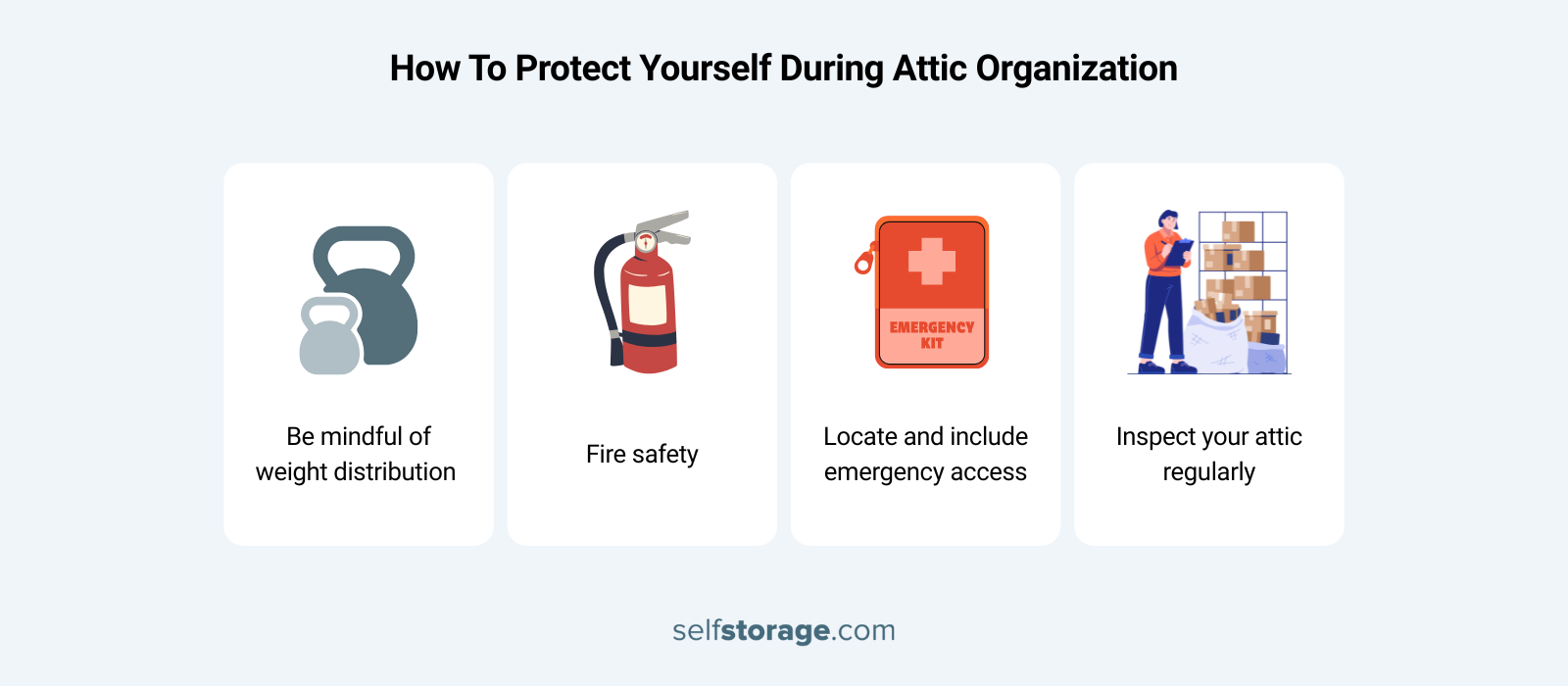
Your attic may be one of the most dangerous spaces in your home, and precaution is a must throughout any attic organization project, as well as during ongoing use of the space. Good lighting will light away shadowy dangers that could literally trip you up, so if your attic is dark, consider installing bright LEDs along your main walkway. Battery-operated varieties are available if your attic does not support hard-wiring them.
- Be mindful of weight distribution when storing heavy items, as these require careful planning in attic organization systems. Know the weight capacity of your attic, and store hefty items on or close to the floor, near load-bearing walls. Avoid the center of the attic floor, where joists have less support.
- Fire safety planning is essential as you build out your attic organization plan. Keep storage containers at least 3 feet away from heat sources like chimneys, furnaces or lighting fixtures that produce heat. Avoid storing hazardous materials in your attic, and install smoke detectors in or near your attic space that you maintain twice a year.
- Locate and include emergency access paths as you establish your storage walkways. If your attic has windows, keep them unblocked and operable. Think about how you would get down from the attic quickly if you need to. A portable window escape ladder may be a worthwhile investment for windowed attics.
- Remember to regularly inspect your attic organization system. Look for water leaks, pest activity, clutter creep, disorganization and structural issues. Addressing these immediately ensures your attic organization and storage system serves you well for years to come.
Stored Up and Away: Creative Attic Organization Ideas to Maximize Space
If you’re using attic storage, you’re already thinking creatively and vertically, so let’s keep going with a few variations on these themes.
Ceiling-mounted solutions and overhead storage platforms are the ultimate space-saving hack, making the absolute most of a seldom-used overhead storage opportunity that frees up valuable floor space for available storage. If the ceiling is of adequate height, install ceiling-mounted racks or pulley systems to hold items such as sporting gear or infrequently accessed storage bins.
Custom-built shelving that follows every angle of the roof can further maximize storage space and support functional attic organization.
Pull-out drawers for eave spaces make excellent use of those awkward, low-ceiling attic areas where the roof meets the floor. You can find drawers designed specifically for eaves, allowing for deep storage without crawling into uncomfortably tight spaces.
Sliding storage systems are mounted on tracks so you can easily slide storage containers in and out of narrow or tight spaces. This helps turn previously unusable space into usable nooks and crannies.
Modular furniture solutions like cube storage systems or configurable shelves with cabinets can be arranged to fit a variety of oddly shaped attic spaces. These are good dual-function options for storing accessible items as well as deep storage items in one zone, if that logic makes sense for your system.
Make Every Square Foot Count: Attic Organization Ideas for Long-Term Home Storage
Successful attic organization relies on several key attic organization principles that work together to transform the unused space into valuable home storage. Start with a thorough safety assessment of your attic, taking into account its weight and size capacity, whether it has or needs climate controls to keep your items protected, and any accessibility issues that may make moving or storing your items a challenge.
Remember that attic organization doesn’t have to happen all at once. Start small with a single zone or a couple weatherproof bins, and build momentum as you need to. If the project feels too daunting, or your attic is especially challenging, a professional home organizer may be able to help.
If you have sensitive or precious items that aren’t suitable for attic storage, or if you simply have more than even your attic can hold, consider nearby self-storage solutions. Off-site storage offers climate-controlled, long-or-short term units in a variety of sizes, from small lockers to spacious room-sized units. Our self-storage unit finder tool can help you locate an affordable storage unit convenient to you.