Article takeaways
- Declutter your book collection before packing — sorting into keep, sell, and donate piles reduces weight, saves money on storage and moving costs, and makes the whole process faster.
- Use small, double-walled cardboard boxes (1.5 cubic feet) and keep weight to 50 pounds or less to protect your back and prevent box damage during a move.
- Pack average-size hardcovers upright with spines facing center, and paperbacks flat in stacks — never pack books spine up or spine down, as this warps bindings.
- For long-term storage, plastic bins with tight-fitting lids protect books better than cardboard, and desiccant packs help prevent moisture and mildew damage.
- Climate-controlled self storage is the best option for book collections — humidity and temperature fluctuations are a book’s biggest enemies in standard storage units.
You’re moving house, doing home repairs, or freeing up a corner of space, and find yourself sizing up your beloved book collection. It’s got you wondering how to ensure your books remain safe and undamaged in storage or in transit from point A to point B. Following the right packing methods and packing hacks can see to it that all book spines (yours and theirs) remain intact, while making the whole process easier and faster for a stress-free move.
Here are some practical tips, moving checklist essentials, and expert guidance for the best way to pack books for moving and self storage.
Declutter Your Book Shelves
Every move or change brings a welcome opportunity to take inventory of our stuff and take a step towards filling our life and space with what we need and love. While you might be tempted to sell it all and start anew, decluttering and flexing your decision making muscles are going to be so worth it!
Book lovers who have lugged a haul back from the local bookstore or library know that these suckers are heavy—especially on moving day and when loading moving trucks. So take a deep breath and systematically work your way through the process. It will help you minimize, lighten your load, and can make your house move and storage more efficient and cheaper, and a far more stress-free move.
Evaluate your book collection: This is the ‘take stock’ step. Size up what you have and start sorting using the keep, sell, donate method. Fill your keep pile with books you genuinely love and those that you’re likely to read again. Be honest with yourself about the books that are just taking up space and those you’re willing to part with. But remember — there’s no shame in keeping those sentimental childhood items!
Sell or donate unwanted books: For the books you’ve decided to part with, you can try to make a little extra cash by selling them in secondhand marketplaces, or you can go ahead and donate the lot. Donations may be readily accepted by your local library, thrift shops or fellow bookworms.
Create a sorting system: Take a moment to decide on a sorting system for the keepers. Sorting by size can make packing easier, and classifying essentials can make them easier to find and access in storage and post move. Create an inventory to know exactly what you have and ensure that nothing gets lost or left behind.
Pick the Right Materials For Packing Books
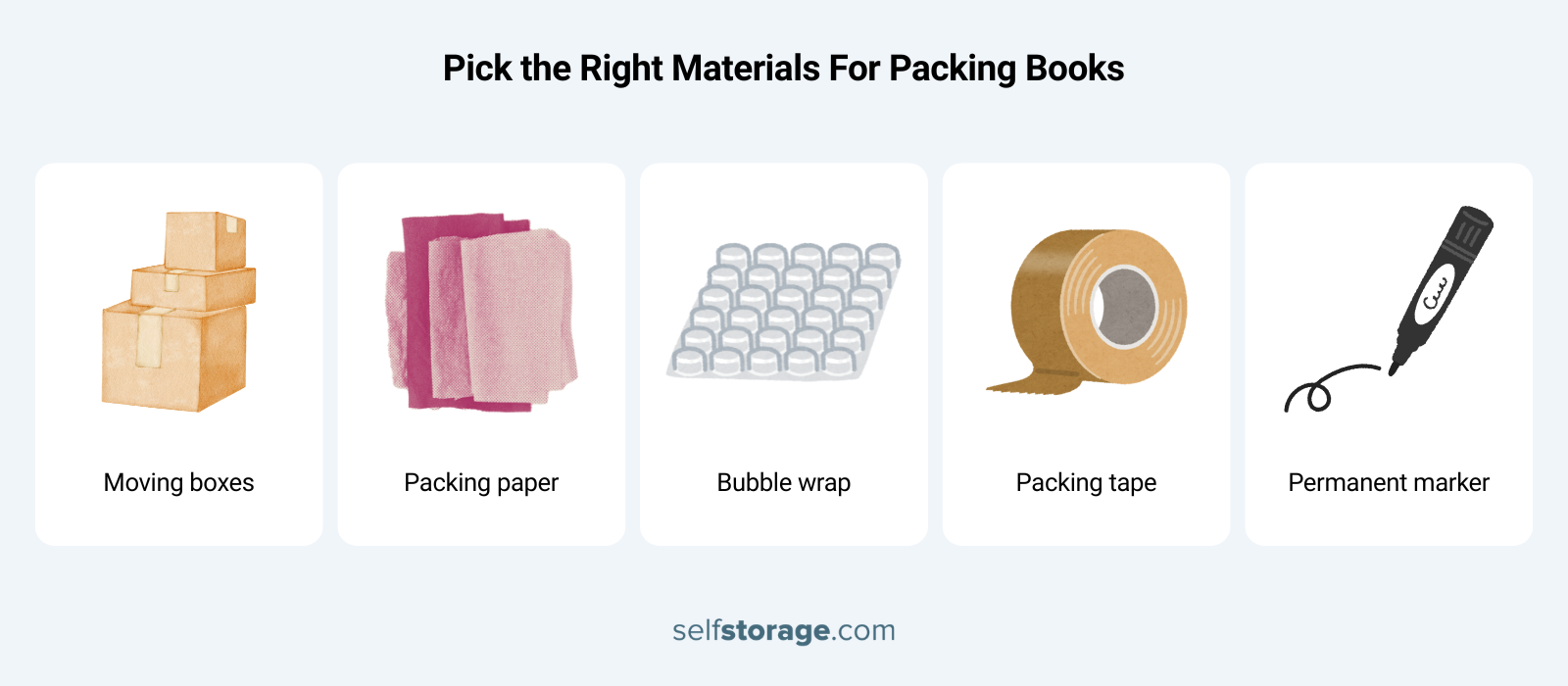
Now that you’re through the weeding process, it’s time to collect supplies, pack them up and get them safely to their destination. Since choosing the right moving supplies and packing supplies is essential to keeping your books in good condition through a house move or in long-term book storage, here’s a quick materials guide to get you started.
Moving Boxes: When it comes to moving boxes, size and strength matters. Master Movers estimate that moving boxes should weigh 50 pounds or less, and suggest using ‘book boxes’ measuring 1.5 cubic feet. Choose double-walled cardboard moving boxes, which are sturdier and offer more protection than single-walled boxes. Similarly sized reusable bins or plastic bins are a more expensive but suitable alternative, and storage bags or rolling carry-on suitcases can be a back-friendly option for easier house moves.
Packing Paper: To ensure your books are secure, use packing paper, unprinted newspaper or acid-free tissue paper, which prevents the paper from yellowing and deteriorating over time. Despite it being cheap and accessible, avoid using newspapers as the ink can transfer to your books.
Bubble Wrap: Valuable or delicate books, especially those with fragile dust jackets, can be wrapped in acid-free tissue paper and bubble wrap for extra protection—one of the best packing hacks for preserving book spines and covers.
Packing Tape: Choose a strong packing tape that is at least two inches wide. Don’t choose masking tape or duct tape because they won’t provide enough support for the job.
Permanent Marker: Label each box for quick reference and easy access.
Just a few choice supplies to pick up, but how much should you buy? It all depends on the size, value and amount of books you have in your collection. A typical book box holds around 20 paperback or average-sized hardcover books, and about 10-15 larger hardcover books. One roll of packing paper or a package of sheets will cover most home libraries with some to spare, but it all depends on what you’re working with!
How to Pack Books in Boxes for Moving
The time has come to box up your books! Here are the do’s and don’ts on how to pack books in boxes for moving and storage.
| Do’s | Don’ts |
|---|---|
| Pack upright or flat: Pack average-size hardcover books upright, the same position they would be in on a shelf, in two rows with their book spines in the center. If a third row fits in the box, separate rows with packing paper. Paperbacks and large hardcover books are often best packed flat in stacks. | Pack spine up or spine down: Packing books spine up or down can cause them to warp and damage their book spines and bindings—avoiding this is one of the most important packing hacks for any house move. |
| Be generous with the packing paper: Create a cushioning layer of packing paper on the bottom, fill all gaps thoroughly to prevent any shifting, and add an extra top layer to have additional protection from dust and damage. | Leave excess space: Leaving excess space around the books can cause them to shift, which can lead to book damage and back injuries. |
| Individually wrap special editions: Valuable or delicate books—especially those with fragile dust jackets—should be individually wrapped in packing paper and bubble wrap, and secured with tape using quality moving supplies. | Cram ’em in: Packing your books in so tight that you cause damage to their covers and spines. |
| Secure the box with tape: Double tape the bottom seam with packing tape for added durability and make sure that all seams of the box are secured with tape. | Over pack: Keep that weight to 50 pounds or less, even if that means less books and more packing paper. |
| Properly label your boxes: Choose a labeling system—part of any good moving checklist—that works for you and then consistently label each box. This can be a color coded system for easy unpacking, where each color denotes a different room, or a numbered system that’s paired with a full inventory sheet, offering easy access to specific books when putting them in storage. And, remember to note fragile contents and which side’s up. | Forget to label your boxes: Even if you don’t label the individual contents, remember to note that the box contains books and may be heavy. |
For more packing methods and tips from moving professionals, head here to see the process in action!
How to Store Books
Is the best way to pack books for moving also the best way to pack books for storage? For the most part, yes.
While your attic or basement may seem like convenient storage spaces, books require special care, so you should opt for climate-controlled storage or a self storage locker rather than a standard storage locker. You must always pay attention to temperature and humidity as mildew is their number one enemy. You may want to wrap every book individually in acid-free tissue paper and opt for reusable bins or plastic bins with tight-fitting lids—and storage bags for smaller paperbacks—to prevent moisture and pests from getting in and causing damage. Add a few moisture-absorbing desiccant packs to keep the air in your bins dry.
Should you store books in plastic containers or boxes?

Cardboard moving boxes are ideal for moving but are more susceptible to humidity long-term. Plastic containers help better protect books from mildew, bugs, and mice. Also, use pallets or shelves to keep the boxes or bins off the floor where they’re more likely to encounter water damage.
Additionally, it’s a good idea to label your storage bins with their contents, the date it was stored, and any other relevant information. This can help you keep track of your items and make it easier to locate what you need, when you need it!
Whether your collection is off to a new pad or a storage facility, place your moving boxes on the floor of the moving trucks or van and stack them with the heaviest boxes on the bottom. Use ratchet straps or bungee cords to secure the boxes to the walls of the vehicle, giving them added protection during transport.
Choose the Right Storage Unit for Your Book Collection
Now that you know what harms books and how to protect them using smart packing methods and moving supplies, it is time to choose a storage space for all those books you want to keep but do not need to access on a regular basis. Your best bet will be a self storage unit with climate control because of all the potential issues with humidity and mildew—a standard storage locker won’t offer the same level of protection. Thankfully, there are plenty of climate controlled facilities near you to choose from, and with the right packing hacks and moving services, you can rest assured that your book collection will live on unharmed.
Onto the Next Chapter
Following these useful packing methods, packing hacks, and moving checklist tips on how to pick and pack your books for a stress-free move or self storage ensures that you keep your home library in great condition—whether you used moving professionals, moving services, or tackled moving day yourself—and carry on with your TBR stack down the road!