
Article takeaways
- Detroit’s housing market is among the most affordable of any major U.S. city, with a median home price a fraction of the national average.
- The Motor City is growing for the first time since the 1950s, with three straight years of population growth caused by an influx of new residents.
- Detroit’s economy has diversified beyond auto into life sciences, tech employment, and advanced manufacturing.
- Neighborhoods from Corktown to Indian Village offer distinct personalities at a wide range of price points.
- The food scene, music festivals, Detroit Institute of Arts, and sports culture give everyday life in Detroit a unique and revitalized flavor.
Detroit is going through a rebirth.
The Motor City is becoming a popular destination for people looking for something different.
The Detroit News reported that the Motor City added roughly 5,000 new residents in 2025, marking its third straight year of growth after nearly seven decades of decline. Detroit draws residents through affordable housing options, a revitalized arts scene, and a job market that now extends beyond the assembly line.
Young professionals like the flourishing tech scene. Families and seniors want supportive and culture-rich neighborhoods and senior living options.
From its roots in the automotive revolution to its current status as a UNESCO City of Design, Motor City offers a unique urban experience that balances classic American grit with ambitious growth.
But there’s always more to the story. Living in Detroit has as many pros as it does cons. If you’re thinking about living in Detroit, Michigan, you’ve come to the right place.
This helpful guide provides real statistics on the cost of living, complete with sources. We’ll cover everything from the weather and education system to the cultural heartbeat of the 313.
And last but not least, we’ll reveal how SelfStorage.com can help you get there.
Detroit At-A-Glance
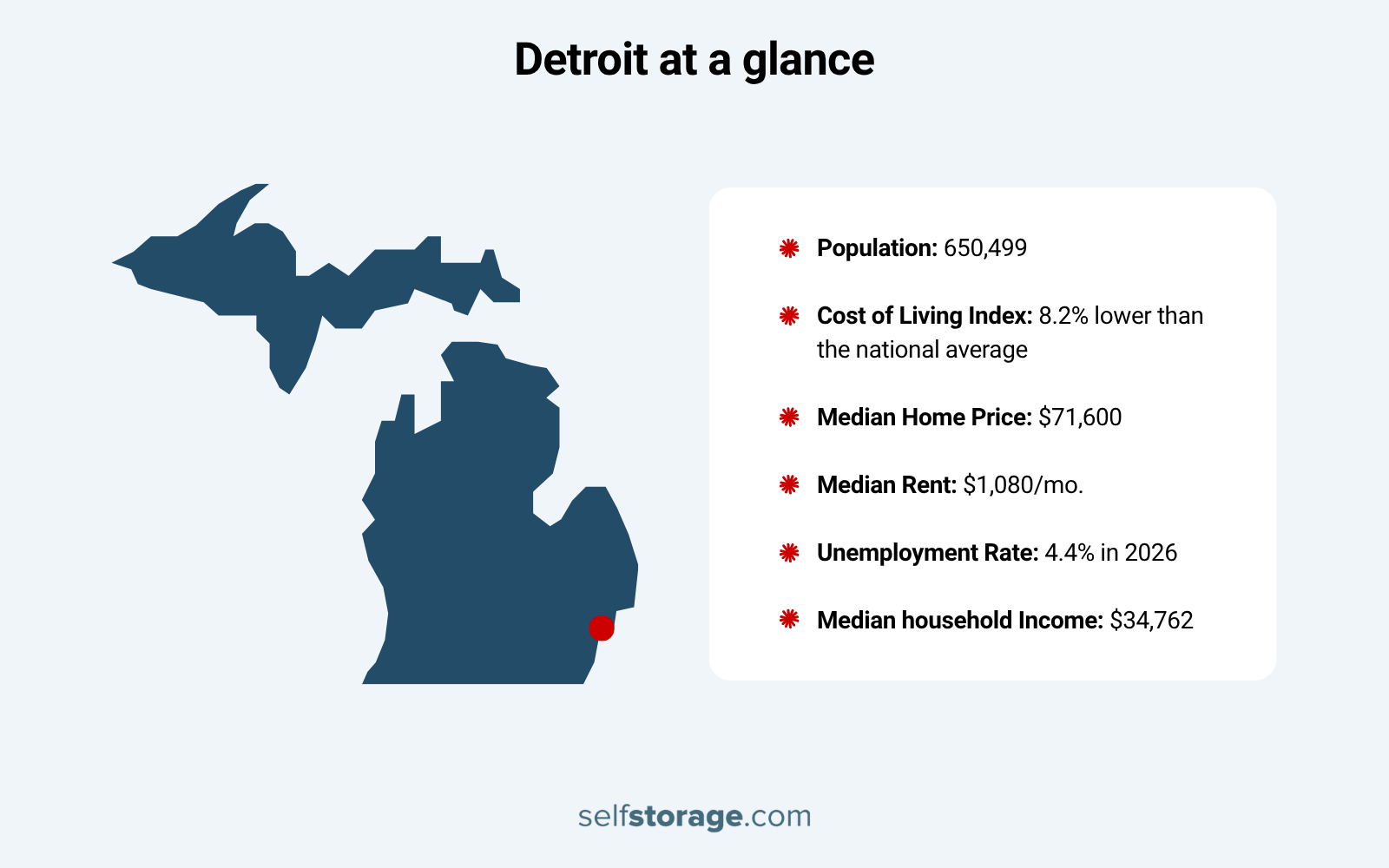
| Population | 650,499 (2026 est.), per World Population Review |
| Cost of Living Index | 91.8 — 8.2% below the national average of 100, per Best Places |
| Median Home Price | $71,600, vs. U.S. median of $338,100, per Best Places |
| Average Rent (2BR) | $1,080/mo — 24.5% below the $1,430 national average, per Best Places |
| Unemployment Rate | 4.4% as of April 2026, per U.S. Bureau of Labor Statistics via FRED |
| Median Household Income | $34,762/yr vs. U.S. average of $69,021, per Best Places |
Cost of Living in Detroit, Michigan
Detroit is one of the most affordable big cities in America. Best Places puts the Cost of Living Index at 91.8, 8.2 points below the national average of 100.
And Detroit’s housing market reflects the affordable cost of living. The median home price sits around $71,600 compared to a U.S. median above $338,000.
That means that homeownership in Detroit is actually achievable. But it also means you might be downsizing your living space, depending on the neighborhood you move into.
Detroit is also quite renter-friendly. A two-bedroom apartment runs about $1,080 a month on average, well below the $1,430 national average. And inflation in the Detroit metro came in at just 1.7% in 2025. That’s lower than the national rate.
The trade-off is a lower median household income of $34,762, below the U.S. average of $69,021. But less inflation means your dollar goes further in Detroit than in most cities.
Jobs and Economy of Detroit, Michigan
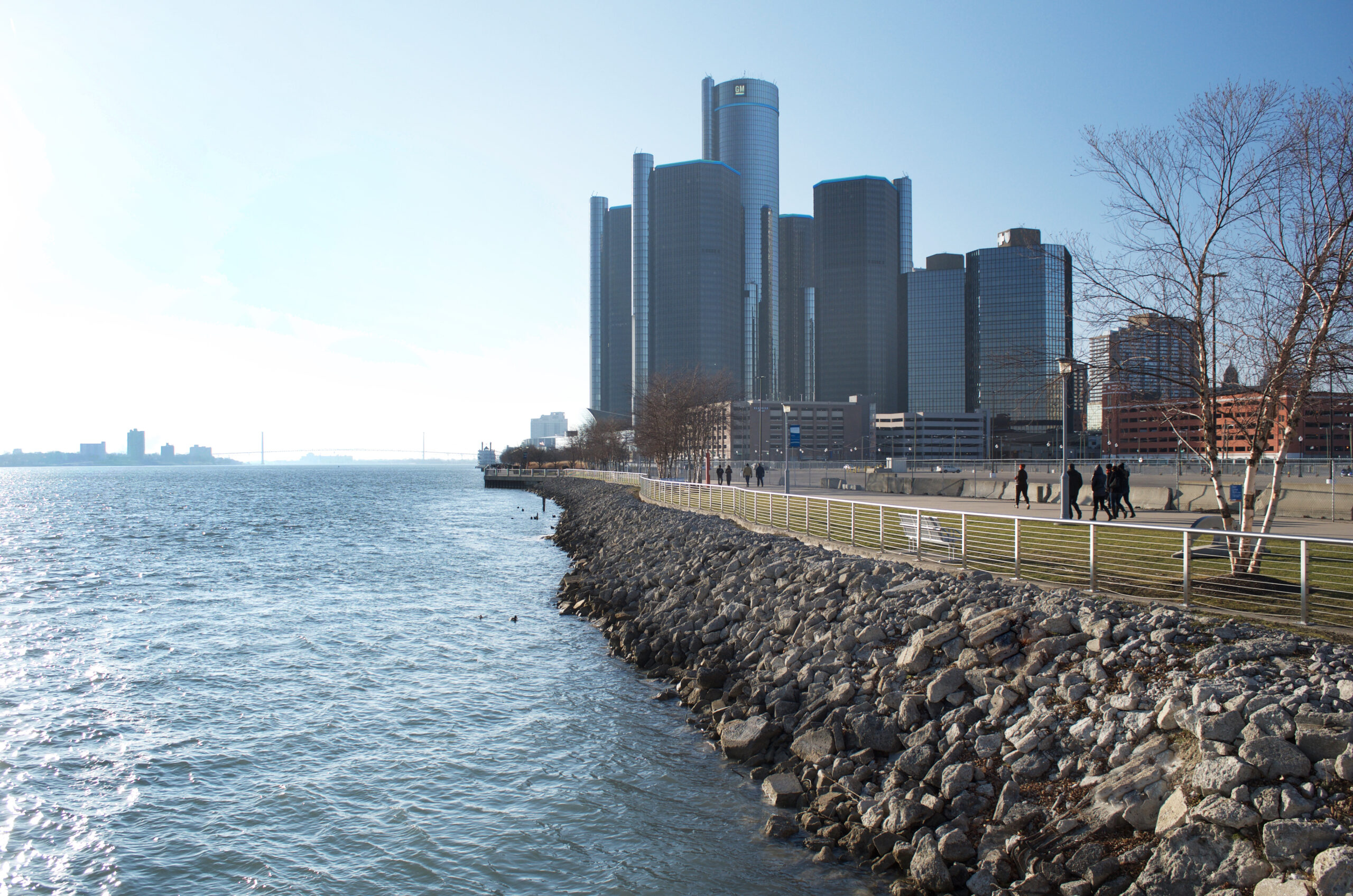
Detroit’s reputation as THE auto industry town started with General Motors and Ford. These major Fortune 500 employers still shape Detroit’s economy, as well as its “Motor City” reputation.
But 2025 marked a period of diversification for the 313. In fact, Detroit saw a 1000% growth in venture capital funding from 2016 to 2020. Back in 2024, CNBC’s 2024 Top States for Business put Michigan in the Top 10, at 9th place.
Wayne State University drives research in medicine, engineering, business, and life sciences. Purpose Jobs reports rapid growth in advanced manufacturing sectors like semiconductors, AI, electric vehicles (EVs), and renewable energy, not just in Detroit, but across the state of Michigan.
The startup community is another site of economic acceleration. Detroit was recently named the #1 emerging startup ecosystem in North America.
But while the metro-area unemployment rate rests low at 4.4% as of April 2026, city-level unemployment runs higher. But University of Michigan economists are projecting steady improvement over the next 5 years as interest rates stabilize and the new industries we mentioned continue to scale up.
Best Neighborhoods for Living in Detroit, Michigan
Living in Detroit, Michigan, is diverse on multiple fronts, including its neighborhoods. The city’s diverse cultural heritage and historic architecture blend with its more modern developments in different ways depending on where you’re at. And the price points vary as well.
Here are a few neighborhoods that make living in Detroit unique:
Corktown
Corktown is Detroit’s oldest neighborhood and currently its hippest. Corktown boasts a mix of Victorian homes, trending restaurants, and the restored Michigan Central Station.
Corktown attracts young professionals, artists, and creatives who want a vibrant and walkable community lifestyle.
Midtown
Midtown is the neighborhood Wayne State University, the Detroit Institute of Arts, and the Detroit Symphony Orchestra all call home. It’s one of the city’s most walkable and bike-friendly pockets.
Midtown, Detroit, has a diverse infrastructure that houses a mix of renters and owners. Ideal for academics and artists, and anyone else looking to mix an urban lifestyle with diverse culture and a taste of Middle Eastern cuisine.
Downtown
Downtown Detroit has made a hard comeback in recent years. Picture high-rise apartments and historic loft conversions. And these trendy living situations all sit within walking distance of Comerica Park, the Detroit Riverwalk, and the Fox Theatre.
You’re also within proximity to the stadiums where the Detroit Pistons and Detroit Lions play their home games. Downtown 313 boasts a blossoming culinary scene and lots of diverse cultures. Finally, Downtown is where public transportation amenities like the QLine light rail connect to other neighborhoods, making car-free weekends a realistic option.
Indian Village
Indian Village is where early-20th-century mansions in the vein of Colonial Revival, Tudor, and Beaux Arts architecture sit on quiet, tree-lined streets. Listed on the National Register of Historic Places, it suits buyers who want architectural character and a calm neighborhood and are able to pay for it.
If you’re looking for a quiet and scenic neighborhood at a more accessible price, Rosedale Park, Sherwood Forest, and Virginia Park offer similar vibes.
Southwest Detroit
Southwest Detroit is a vibrant, majority-Latino neighborhood color-coated by murals. We’re talking about Mexican bakeries along Vernor Highway, and a wide variety of cuisines, from Mexican to Dominican to Venezuelan.
Southwest Detroit is nicknamed Mexicantown, but the term actually limits the true diversity of the neighborhood’s community, which is rich in history and culture.
Weather and Climate to Expect Living in Detroit, Michigan
Detroit has four real seasons, and that includes harsh winters. We’re talking cold and snowy conditions from November through March, with an average of 33 inches of snow per year and a January low averaging around 19°F.
But the summers are warm up to the point of high humidity, with July highs around 84°F. The city gets about 34 inches of rain annually — just below the U.S. average of 38 inches.
But while the brutal winter can surprise newcomers, Detroit still gets 183 sunny days a year. Locals enjoy gorgeous summer days at the Detroit Riverwalk and Belle Isle Park. Ice skating at Campus Martius Park is a winter tradition, drawing in 100,000 visitors each season.
Schools and Education in Detroit, Michigan
The quality and state of schools and education are valid points to raise when assessing living in Detroit, Michigan.
Around 106,000 public school students live in Detroit, though only about 73% attend school within city limits. That leaves roughly 48,000 in the Detroit Public Schools Community District (DPSCD) and 30,000 in Detroit charter schools. The rest either attend suburban districts because they live there, at least part-time, or put in for an inter-district transfer.
Public School Review states that Detroit, MI public schools have an average math proficiency score of 11%, far below even the larger Michigan state public school average of 35%.
Reading proficiency scores 18%, also far lower than the 46% statewide average. Schools in Detroit have an average ranking of 1/10, which is in the bottom 50% of Michigan public schools.
For higher education, Wayne State University is home to 24,000+ students. Wayne State is a staple of both the Midtown neighborhood and Motor City’s rising industry, with a Carnegie research designation and a respectable medical program.
Getting Around While Living in Detroit, Michigan
Detroit is called Motor City for a reason. Its focus was the auto industry for decades, and that includes being a car-centric city. A SEMCOG report published by Michigan Public as recent as January 2026 stated that living in the Detroit, Michigan metro area remains highly car-dependent, and that transit challenges persist.
But public transit is still quite active, depending on the neighborhood. The Detroit Department of Transportation (DDOT) runs 37 bus routes with over 1 million rides per month, hitting 1,037,728 riders in March 2026 alone.
The QLine light rail runs on a 6.6-mile loop track from Downtown through Midtown to New Center. The Detroit People Mover (DPM) is a 2.94-mile elevated automated people mover system that runs around a one-way loop on a single track around downtown. It provides a seven-day schedule, which is free to ride since 2024.
Things to Do while Living in Detroit, Michigan

There’s always something to do in Detroit. Motor City is bursting with a rich musical history and cultural vibrancy, and a variety of attractions and activities. Let’s take a look at some of the things you can do while living in Detroit, Michigan.
- Visit the Detroit Institute of Arts: Home to an extensive collection of art spanning centuries and cultures, the Detroit Institute of Arts holds one of the great American art collections.
- Explore Detroit’s history: Dive into the city’s rich history and heritage through interactive exhibits, artifacts, and multimedia displays at the Detroit History Museum. The Automotive Hall of Fame in nearby Dearborn tells the story that starts with the Model T Ford.
- Catch a Game at Comerica Park or Ford Field: Immerse yourself in the passion of Detroit’s sports culture by attending a Detroit Tigers baseball game at Comerica Park or cheering on the Lions at Ford Field.
- Stroll through the Detroit RiverWalk: Enjoy scenic views of the Detroit River and the skyline while walking, jogging, or biking along the RiverWalk, a beautifully landscaped path connecting various parks and attractions.
- Walk around and look up: Detroit is a rarity in North America, in that it’s considered a UNESCO City of Design. Walk around and take in the unique architecture. You’ll see great works from famous designers, including Eames, Knoll, Saarinen, and Yamasaki.
- Indulge in Detroit’s Culinary Scene: From iconic Coney Island hot dogs to Detroit-style pizza to Middle Eastern cuisine, innovative fine dining, and Mexican bakeries, Detroit boasts a diverse food scene.
- Experience the Motown Museum: Immerse yourself in the history of Motown Records, the legendary label that shaped the sound of American music.
- Attend a Concert at the Fox Theatre: This historic venue hosts a variety of concerts, Broadway shows, and performances in a stunning, opulent setting.
- Shop and Dine in Eastern Market: Explore the vibrant stalls of Detroit’s historic Eastern Market, offering fresh produce, artisanal goods, and a lively atmosphere.
- Detroit Jazz Festival: Detroit is home to one of the largest free jazz festivals in North America, attracting vibrant and diverse crowds of Jazz lovers.
- Discover the Detroit Science Center: Perfect for families and science enthusiasts, the Detroit Science Center features interactive exhibits, planetarium shows, and educational programs.
- Watch the Symphony: The Detroit Symphony Orchestra performs in Orchestra Hall, a world-class acoustic venue.
- Enjoy Belle Isle Park: Escape to this island park in the Detroit River, featuring a zoo, conservatory, and ample green space for picnics, sports, and relaxation.
Pros and Cons of Living in Detroit, Michigan
Like any city, living in Detroit, Michigan comes with its pros and cons.
| Pros | Cons |
|---|---|
| Exceptionally Affordable Cost of Living: A median home price of around $71,600 makes owning a home achievable in a way it isn’t in most major cities. | Income Gap: The compensation for a low cost of living is a median household income of $34,762 that falls below the national average. |
| Ambitious New Energy: With three straight years of population growth, a booming startup community, and major investment in neighborhoods, Detroit is a city that aims to keep growing. | Public School Challenges: While there are lots of alternative schooling options, Detroit’s public school district’s academic metrics lag behind Michigan’s statewide averages. |
| Unique Culture, Food, and Identity: Detroit boasts a combination of musical legacy, culinary richness, and creative infrastructure. There are lots of cities with character, but there’s only one Detroit. | Car Dependency: Outside of Midtown, Corktown, and downtown, daily life without a car can be a challenge. This leaves some Detroit residents budgeting their already low monthly income for vehicle ownership. |
| A City of Style: Detroit’s aesthetic vibe was envisioned by world-famous designers, including Eames, Knoll, Saarinen, and Yamasaki. | Harsh Winters: Detroit averages 33 inches of snow a year, with January lows around 19°F. Lake-effect weather can arrive fast and stay long, surprising Detroit newcomers. |
FAQs
How SelfStorage.com Can Help While Living in Detroit, Michigan
By now, you should have a pretty good idea of what living in Detroit, Michigan, is like. But we wouldn’t be the SelfStorage.com experts we are if we didn’t help you prep for the move itself.
Moving is stressful enough when you’re moving from one rental to another. And whether you’re renting or buying a home in Detroit, there will likely be an adjustment period.
Self storage can play a huge role in easing your transition to your new home. For example, self storage can help you declutter and downsize before your move.
Before you even start packing, take a thorough home inventory, deciding what you don’t need to take with you as you go. Any duplicates or items you don’t use either get tossed, donated, sold, or put in storage.
Since you’re moving, you’re not using storage as a permanent place to keep unwanted items, but as a decision-making tool that buys you time and mental space as you organize and pack.
And once you’ve decided what you’re keeping, pack as much as you can ahead of time and stage your moving boxes in your storage unit.
You can book one storage unit near your current place and rent a second unit at the new home you’re buying. Book these units as close to your old and new addresses as possible.
Pack and stage as many boxes and disassembled furniture into the unit as you can, little by little, during the month leading up to the move.
On moving day, you just pull up to your storage and load up your rental truck. Or have the professional movers meet you there.
Rather than wasting time moving things in and out of your house, you’re simply cross-loading your already packed items from one unit to the other.
Then you move the essentials into your new place and return the truck, or tell the movers goodbye.
Unload from the second unit into your new house, little by little at your convenience, unpacking as you go.
The rest of your stuff can stay in temporary storage, so you don’t live among boxes while you’re getting used to your new place or redesigning it.
But how do you find the ideal storage unit for your belongings, either near your current address or your new home?
First, you can use our self storage size guide to explore different self storage unit sizes, layouts, how many rooms’ worth of stuff they can fit, and common use cases.
Then, you decide on what storage amenities you need. Maybe you need climate control for sensitive items like antiques or electronics, for example.
Punch the zip code you want to find a unit in into our handy self storage search tool, select the size and storage features you need, and we’ll find all the nearby units that have everything you need.
You select your self storage move-in date, and you can book your unit through our platform. And the best part? Our service is free!




![The Best States to Retire: Top Destinations for Every Lifestyle and Budget [2026 Update]](https://www.selfstorage.com/blog/wp-content/uploads/2026/01/old-couple-on-a-boat.png)


