Article takeaways
- Designate a trusted point of contact and share access details with them before anything unexpected happens.
- Include your storage unit details in your estate planning documents to spare your family unnecessary legal hurdles.
- Keep an updated inventory of your stored items to help family members and support any insurance claims.
- Climate-controlled storage protects sentimental and valuable belongings from moisture and extreme temperatures over time.
- If you’ve inherited a loved one’s storage unit, book a nearby climate-controlled unit to use as a home base, so you have a safe place to store keepers, space to sort through everything without rushing, and time to find the right home for each piece.
No matter how many times you go through it, losing a family member or loved one is hard. Having to disentangle a web of passwords, valuable possessions, and open accounts can be overwhelming for a grieving family.
For some family members, this web of sentimentally charged and emotionally heavy tasks includes sorting through a self storage unit.
You might be here because you’ve recently inherited a self storage unit from a family member who has passed. Or maybe you’re preparing your own will and are wondering how your heir will access it in the event of your own passing.
This comprehensive guide covers what happens to a self storage unit after death. We will go into more detail to help you navigate the process of sorting through a loved one’s valuables and to ensure that your own storage unit is protected, no matter what unforeseen circumstances may arise.
From designating a trusted point of contact to incorporating storage unit details into estate planning, these steps will empower you to protect yourself and your loved one’s belongings, regardless of what side of the tragedy you’re on.
What happens to a storage unit when someone dies?
When someone passes away, their storage unit undergoes a process that varies by state. However, the standard procedure often involves the facility securing the unit to prevent unauthorized access.
A facility without information about a tenant’s executor or emergency contact will likely have to restrict access rights to avoid complications related to the will.
- That said, a family member can gain access rights by providing the facility manager with legal documentation.
- Valid legal paperwork includes copies of the death certificate, Letters Testamentary or a Small Estate Affidavit, and a court order stating that the family member seeking access is the legally recognized executor, administrator, or owner of the estate.
- In this case, the estate includes the self storage unit and the personal belongings and stored property contained within it.
Once the family member provides the legal documentation required, they should be able to access the unit. They can then decide between transferring ownership and continuing to rent in the name of the tenant’s estate or ending the rental agreement and removing the items.
In other cases, the self-storage operator never hears from a member of the family, and the storage unit goes to default. The self-storage facility manager will issue lien notices to the address they have on file.
The executor may not even know they had a storage unit until they receive these notices. It’s not that uncommon for people to forget to mention their unit in their will.
If no one contacts the self-storage operator, the contents of unclaimed units can end up at public auction. The timeline for self storage unit auctions depends on your state’s lien process.
If that’s not what you want for the contents of your self-storage unit, we can help.
We’ll cover the steps you should take to protect your storage unit in the event of untimely death.
And if you’re here because you’ve inherited a storage unit, understanding the legal process your family member went through to leave you in charge of their unit can help you decide what to do next. After all, it’s up to the executor to decide what to take home, sell, or keep in storage.

Designate a Trusted Point of Contact
Ensuring the security of your storage unit starts with designating a trusted point of contact. This person is often your next of kin, but you are free to choose whoever seems like the right person for this important job. Consider listing this person on your rental agreement, which will establish them as a key liaison for the self-storage facility.
Whether or not you decide to include another person on your lease, sharing access details like keys or access codes with your designated contact is a critical step in the process of protecting your unit. Be transparent with your point of contact about how to access the unit if necessary to prevent confusion and administrative burden during a difficult time.
Incorporate Storage Unit Information in Estate Planning
Include detailed information about your storage unit in your estate planning documents. This includes the storage facility’s name, location, and any other pertinent details that would assist your family and legal representatives in accessing the contents of your unit. Are there special items in your unit that you want to leave to a particular person or family? Make sure your will and other legal documents make these wishes crystal clear to avoid potential confusion or disagreement as your loved ones figure out how to handle inherited possessions.
Keep Inventory Records Updated
Maintaining an up-to-date inventory of your stored items is a proactive measure that pays big dividends in the long run. It will help family members find specific items, and can even serve as a critical document for an insurance claim in the event your unit is burglarized.
One way to complete an inventory is by using your smartphone to take photos. Just make sure the photos are saved to a folder that can be easily accessed by your point of contact, or use a smartphone inventory app for an even easier process.
Having a clear idea of the contents of your storage unit is not only best practice while you are alive, but it will also contribute to a smoother transition after you pass.
Regularly Review and Update Information
Many storage unit renters keep their units for years or even decades. That’s why it’s so crucial to regularly review all key information related to your self storage space.
Storage unit facilities can have changes in ownership, which may result in different requirements or codes to access the units. You want to make sure that your family has all the correct details to gain access to your storage unit so they can carry out your wishes as you specified.
Opt for Climate-Controlled Storage
Climate-controlled storage offers many advantages for protecting your belongings. By maintaining a consistent temperature and humidity level, this type of storage protects sensitive items such as furniture, electronics, and documents from extreme weather conditions.
Climate control prevents warping, mold, and deterioration, ensuring your possessions remain protected over time. Whether you’re storing sentimental heirlooms or valuable assets, a climate-controlled environment is the best choice to keep your items safe.
Ensure Adequate Insurance Coverage
Insuring the contents of your storage unit is a key step in keeping your valuables safe. Unforeseen events like theft, fire, or natural disasters can pose risks to stored property.
Purchasing storage insurance provides a financial safety net, covering the cost of replacement or repair in case of damage or loss. Make sure you understand the terms and conditions of the insurance policy, and speak with an insurance professional if you need additional guidance.
Keep in mind that you will need to update the terms of your policy as you add and remove items from your unit. All the details of your insurance coverage should be included in the information shared with your designated contact.
A Proactive Approach is a Thoughtful Gift to Loved Ones
No one wants to think about passing on, but taking these steps will lighten the load for your friends and family if anything unexpected happens to you.
By designating a trusted point of contact, incorporating storage unit details into estate planning, and maintaining open communication with your loved ones, you pave the way for a more peaceful transition of responsibility.
Regularly updating inventory records, opting for climate-controlled storage, and ensuring adequate insurance coverage are additional measures that all storage unit renters should strongly consider.
As you implement these proactive steps, consider seeking support from insurance or other professionals to ensure that you’ve taken all the steps necessary to appropriately protect your storage unit.
Remember, safeguarding your legacy is not just about preserving material possessions; it’s about preserving the stories, memories, and connections that define who you are and the impact you’ve had on those around you.
By keeping your storage unit safe, you’re not only protecting your belongings but also keeping stories alive and contributing to the well-being of your loved ones.
Going Through a Loved One’s Self Storage Units using SelfStorage.com
When you’re going through a loved one or family member’s self-storage unit, the key is to take your time. Some items will trigger an emotional response. Others may be intended to pass on to a different family member.
Others still can be trivial, donated or thrown away to clear space or sold to make a little extra money. Remember that your deceased family member put you in charge for a reason, so trust your judgment and do what your heart says is right.
And if you’re preparing your will, choose an executor whose judgment, sensitivity, and willpower you trust.
But you’ll only have so much time to go through the self-storage unit, especially if you’re not authorized to transfer ownership into your name. And the process can be emotionally exhausting.
Give yourself the grace to step away when you need to, and don’t rush decisions about items you’re unsure of.
We suggest booking a climate-controlled self storage unit in a centralized location to give yourself the breathing room you need.
That extra space lets you store everything safely while you take the time to make the right decisions — for yourself, and for your family. The climate control means that valuable art, furniture, and cherished collectibles like comic books and vinyl records are protected from moisture and extreme temperatures, so nothing is lost while you find the right home for each piece.
But not all storage units are created equal. So, how do you find a storage unit with the amenities you need that’s also in the ideal location? Easy. SelfStorage.com is here to help.
For starters, you can use our storage unit size guide to find the storage size you think you’ll need to start flipping through storage units.
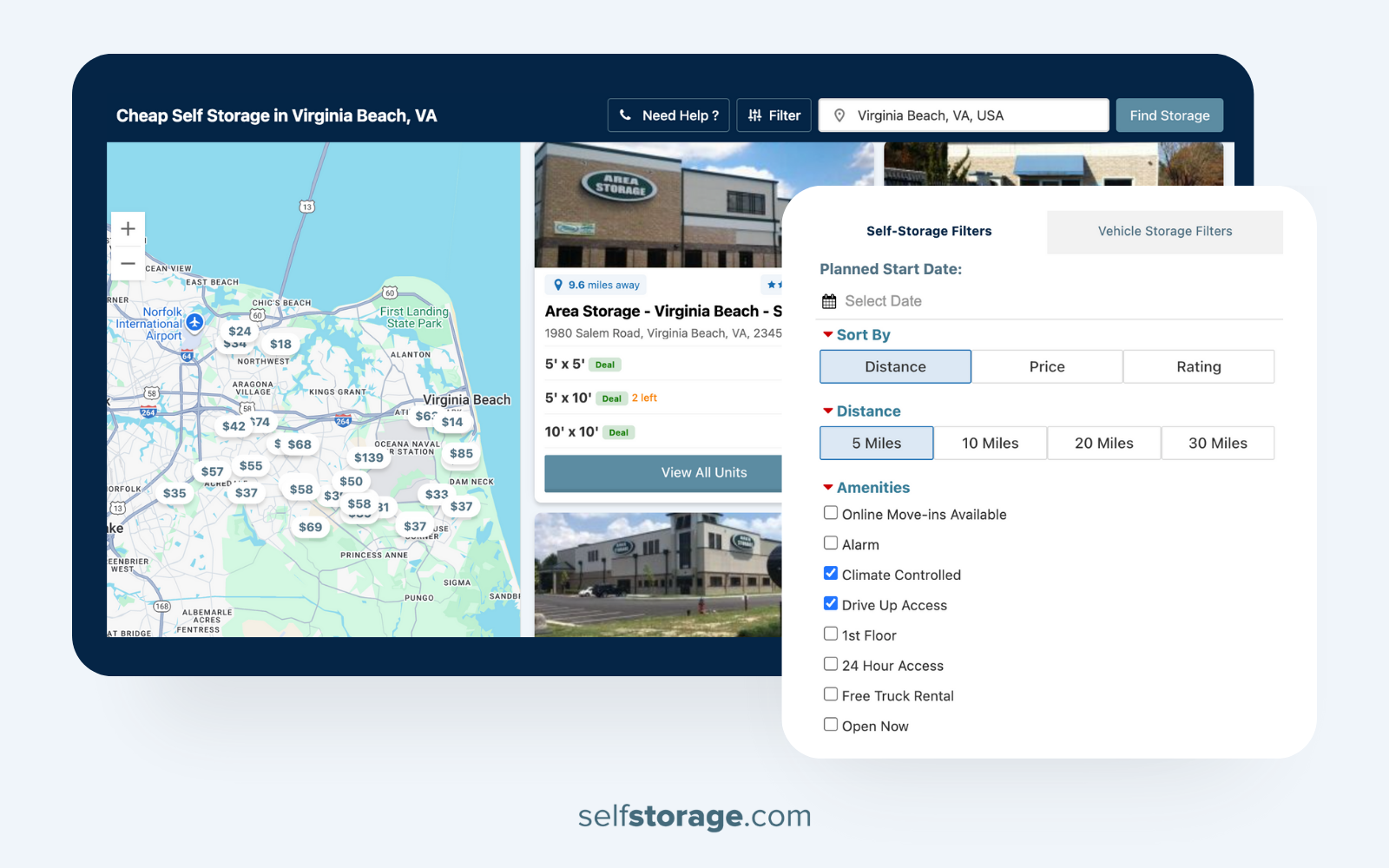
Or, just punch your zip code into our handy SelfStorage.com search tool, and we’ll limit the search results based on the amenities you set. You might need 24/7 access, so you can go visit your loved one’s belongings after dark. Or a drive-up ground-level unit to make unloading furniture easier on your back.
Or maybe you need a storage unit with electricity so you can run lights and power tools to refurbish any inherited furniture you plan to keep, sell, or gift.
Our search tool limits your results using the amenity filters you set. Book a self-storage unit in your area today using selfstorage.com, and give yourself the recovery time you need to process your loved one’s passing and go through their belongings in due time.