Article takeaways
- Safety first: Immediately change the locks, any passcodes and secure all entry points to ensure only you and those you have authorized can access to your home.
- Create a checklist of things to do after moving into your new home. Prioritize critical week-one tasks and chores to mitigate stress.
- Test the utilities. Make sure all home systems you ordered, from water and electric to internet access, have been activated and are functioning correctly.
- Update your address with relevant government agencies, service providers and financial institutions to avoid missed bills, service interruptions, and penalties.
- Get to know the neighborhood. Introduce yourself to your new neighbors, locate area amenities and make a note of available essential services in your area that may come in handy should you need them.
Moving day never fails to pack a punch. The excitement of change and new adventures mingles with a dizzying flurry of activity, creating an exhausting slurry of chaos that can tax everyone, from first-time renters to the most experienced mover.
If you live in the US and are moving soon, you’re in good company. Approximately 27 million Americans moved in 2024, and at least as many are projected to move by the end of 2025. Drivers include job relocations, lifestyle changes and new housing opportunities.
Overwhelm may set in after the movers leave and your relocation is official, and that’s completely normal. You’ve just made a major life change, and may need a little adjustment period to fully settle in. Our after-moving checklist will walk you through things to do after moving into a new house, to help your transition go as smoothly as possible.
Why Your First Week Matters: Setting the Foundation for Long-Term Success in Your New Home
Moving can feel disorienting. Our brains crave stability, and your surroundings may be unfamiliar, your routines are thrown out of whack, and you may feel like a stranger in a strange place. The first week is your kickoff to this next chapter in your life, and getting off to a good start will help you feel more comfortable more quickly.
People frequently underestimate the importance of creating a good after-moving checklist that outlines in detail the critical things to do after moving into a new house. This can help take the burden off task management and keep you organized when you are swimming in a sea of to-dos.
Common moving mistakes include not immediately changing the locks and securing their new home and activating critical utilities and residential services. Other often overlooked necessities include cleaning supplies, having tools on hand for day-one assemblies and repairs, and picking up groceries and snacks to stay fueled and hydrated during and after a long move-in day.
Be sure to budget for essentials you may need to pick up after you move in. Also plan for the unexpected, such as utility failures, unexpected repairs and unforeseen security fixes.
Lock It Down: Secure Your New Home Immediately
Why Lock Changes Are Non-Negotiable
Whether your home is brand new or new to you, when you receive the keys, it’s likely you are not the first person who has access. Previous owners, cleaners, neighbors, inspectors, realtors, and contractors may all have keys to the property, and there is no way to know how many copies of the existing keys to your home are out there.
This is why changing the locks should be a day-one priority for every exterior entry point to your home, and should be completed before you unpack your first box. Make sure to make copies of your new keys to hide away in case of an emergency lock-out, and to hand to family, friends, housemates, or neighbors you have approved.
How to Change Your Locks
You have two primary options for lock changes: DIY or hiring a locksmith.
DIY lock replacement typically costs between $50-$150 for a basic deadbolt and knob set from a hardware store, plus your time and effort. If you’re reasonably handy and can follow manufacturers’ instructions, you should be able to complete a lock swap within an hour or so.
A locksmith is the right call if your doors have unusual specs or you are uncomfortable with or unable to replace the locks yourself. Locksmiths typically cost $100-$250 per door, depending on your location and the complexity of the lock system. The peace of mind a locksmith’s work provides may be worth the expense, because security is priceless.
Consider that if you’re changing your locks, it’s a good time to consider upgrading to smart locks or keyless entry. Either option can be installed by you or a locksmith.
Utilities and Home Services: Don’t Overlook These Critical After-Moving Checklist Essentials
Essential Utilities Checklist
At minimum, electricity, water and sewer, gas if applicable, trash and recycling collection are all activated and functioning as expected within the first 24 hours of your arrival–preferably the day before, just to be safe.
Many utilities can be transferred by phone, but some may require in-person appointments. Keep contact information for all utilities and services easily accessible. List them on your after-moving checklist so they’re readily available if you need them.
Internet and Communications
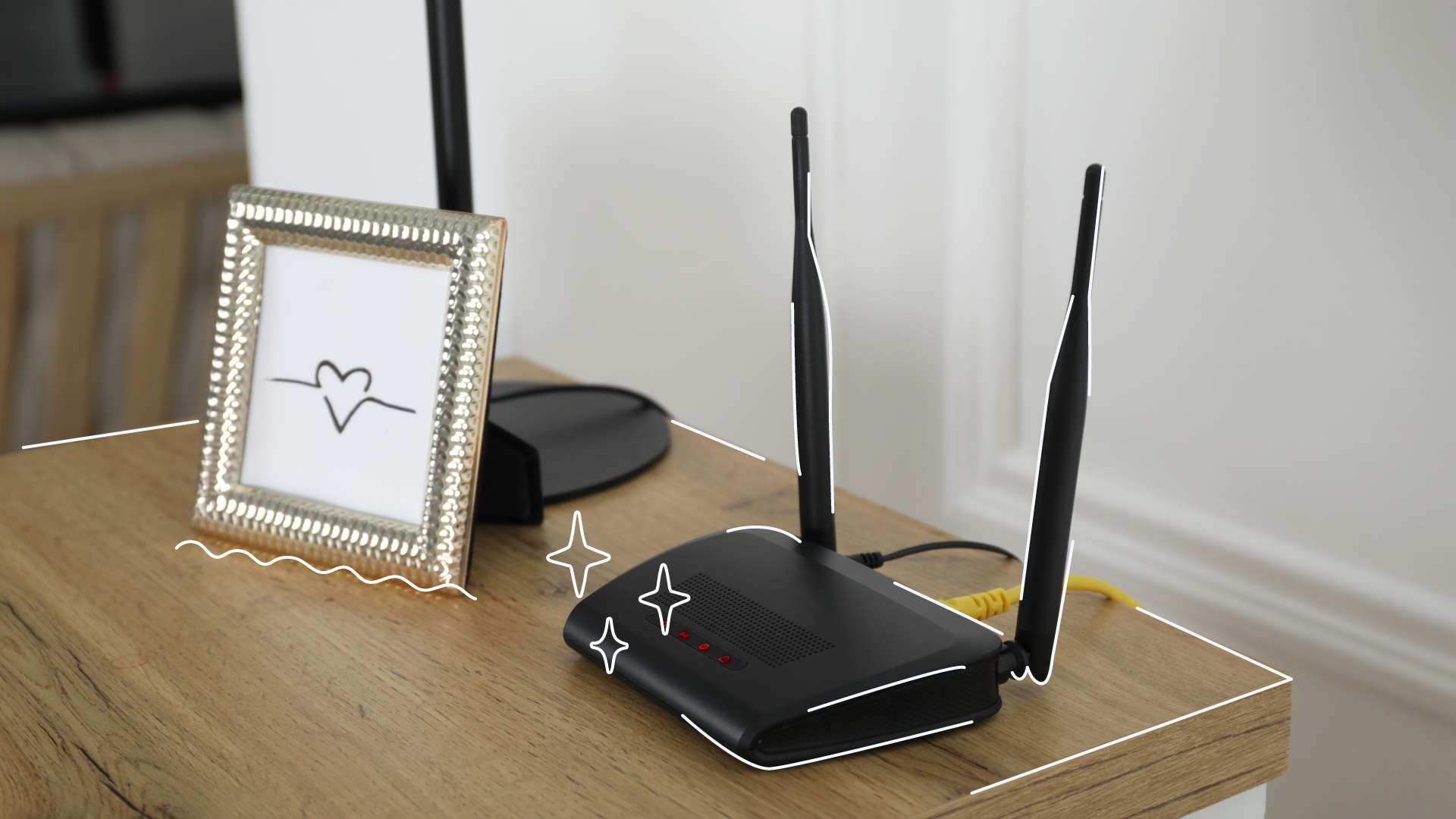
If your home has working internet service, make sure your devices can connect. Remote working, online banking, streaming entertainment and smart home devices all require reliable internet connectivity, so it’s crucial to make sure you have the connectivity you need on day one.
The most successful movers schedule their internet installation 1-2 days before their move-in date, to ensure connectivity is ready when they arrive. Once your internet service is installed, test the wifi coverage throughout your home and update your devices with your new network information.
Timeline for Setup
Best practice dictates arranging utility transfers and internet installation 1-2 days before your actual move-in date, whenever possible. This buffer gives services time to be activated and functioning before you arrive.
Make a list of all utility and residential service contact information, in case there are any issues with unactivated or non-functioning services upon your arrival. Many companies offer expedited or off-hours emergency customer service, sometimes for an additional fee.
Test Everything
Confirm all utilities are operational within the first 24 hours. Walk through your home and actively check the status of each utility or service. Flip every light switch, turn on the heat and air conditioning, and verify gas appliances ignite for cooking and hot water, if applicable. Flush toilets, run all faucets, and pour water into your sump pump to ensure it fills and drains properly.
Finally, locate your circuit breaker and main water shut-off valve, so you’ll know exactly where they are in case of emergencies.
Your Address Update Timeline: The Complete After-Moving Checklist for Updating Your Contact Information
USPS Mail Forwarding
Update USPS immediately to avoid missed payments, deliveries, and communications. You can do this online in just a few minutes, and although you have 30 days after you move to forward your mail, if you are proactive, you can schedule your mail forwarding up to three months in advance to ensure you never miss a mail delivery.
Do not wait to forward your mail, as returned mail from your old address to USPS can take weeks to be re-routed to your new address.
Government Institutions
Your driver’s license and vehicle registration must be updated according to your state’s specific laws–typically within 10-30 days of moving. Some states will allow you to update your information online, so check the requirements in your area and act accordingly and quickly.
Don’t forget to update your voter registration to ensure you can participate in local elections and receive ballot information relevant to your area. Notify the IRS of your address change using Form 8822 to make sure you don’t miss critical tax documents at filing time, and update your Social Security Administration information online or by phone so you don’t miss any payments or information.
Financial Institutions
Financial institutions need your updated address to send statements, cards and security notifications. Insurance providers for auto, health, home and life require current information for coverage and claims processing.
Update your address with your banks, credit unions and credit card companies, investment and retirement accounts and insurance providers. Refer to the table below for a detailed list of common services and companies to contact for address updates.
Who to notify:
| Service | Who to Notify | Urgency | Potential Penalty |
|---|---|---|---|
| Government | DMV IRS Voter registration Social Security Administration |
Within 10-30 days | Fines Legal issues Missed benefits |
| Financial | Banks Credit cards Credit unions Insurance Investment accounts |
Within 2 weeks | Missed bills Fraud risk Claims complications |
| Healthcare | Doctors Specialists Dentists Pharmacies |
Within 1 month | Missed appointments Prescription delays |
| Insurance | Auto Home/renter’s insurance Health insurance Life insurance |
Within 1 week | Coverage issues Policy cancellation |
| Employment | HR Department Payroll |
Within 1 week | Paycheck delays Tax document issues |
| Subscriptions | Utilities Streaming services Delivery services Subscription boxes Magazines |
Before or on move day | Service interruption Missed deliveries |
| Utilities | Electric company Gas company Water & power company Trash & recycling services Internet service provider |
Before move-in date | Service activation delays |
| Professional services | Licensing boards Alumni association |
Within 1-2 months | Missed renewals Missed services and benefits Lost contact |
Settle In Smart: The Strategic After-Move Checklist to Unpacking and Setting Up Your New Home
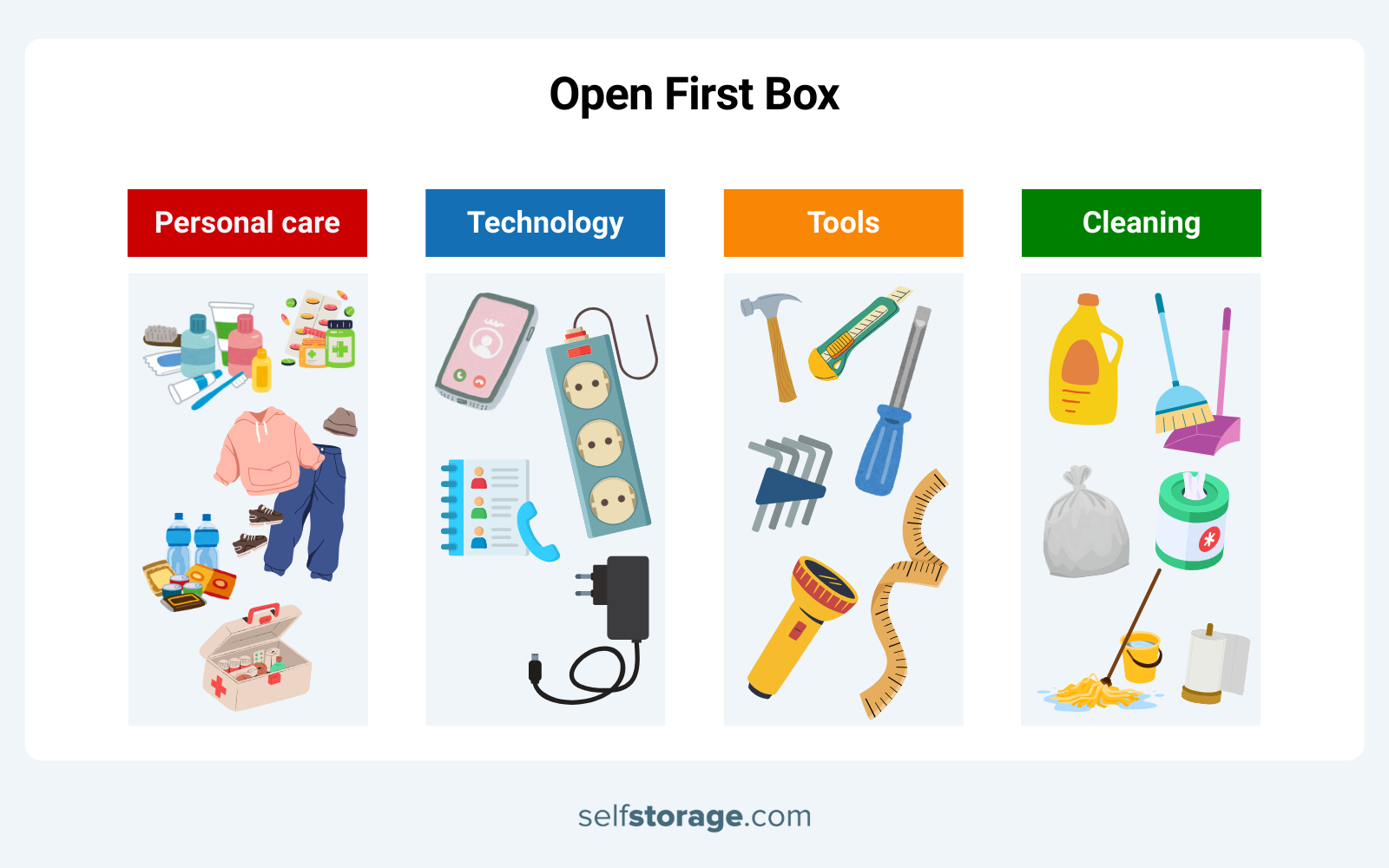
Your Moving Day Essentials Kit
Prep for moving day in advance by preparing a clearly labeled “essentials” bag or box you’ll keep with you during your move. This should be the first thing you reach for when you arrive in your new home, so be sure to carry it with you instead of packing it with your other items in the moving truck, trailer or van.
Don’t forget a ready-to-go cleaning kit, with basic supplies to tidy your new space upon arrival, and a small toolkit for assemblies and repairs.
Priority Room #1: Bedrooms
Start by preparing the bedrooms first, so you can rest properly after an exhausting move. Before tackling other rooms, set up beds completely–frame, mattress, sheets, pillows and blankets. Plug in lamps for lighting, and unpack enough clothes for one week.
Priority Room #2: Kitchen
After the bedrooms are squared away, it’s time to turn your attention to the kitchen. Make sure you set up this space on your first day so you can prepare basic meals, brew coffee and have a place to eat comfortably.
Set up tables and chairs in your dining area. Assign pots, pans and dishes to their cabinets, place utensils in drawers and make a quick grocery run to grab your preferred food and pantry essentials to get you through the week.
Be sure to test your appliances after your move to make sure everything is working and nothing was damaged in transit.
Room-by-Room Approach
The biggest mistake people make when unpacking is trying to tackle everything at once. Save your sanity by creating and closely following an after-moving checklist for unpacking that organizes your tasks by priority, and celebrate small wins as each room is completed.
It can take a couple weeks to fully unpack, depending on the size of your move. A well-thought-out checklist of things to do after moving will also help keep frustration over progress at bay.
Organization Tips During Unpacking
Moving is a fantastic opportunity for decluttering, so as you go through your things for packing, identify items you no longer use or will no longer need that can be discarded or donated.
Flatten each box after you unpack it to prevent your new home from becoming overwhelmed in a sea of cardboard. This will also make it easy to visually see which boxes remain for unpacking, and watching full boxes dwindle and floor space open up can feed a much-needed sense of accomplishment.
Building Community: Socially Rewarding Things to do After Moving into a New House

Making solid new connections creates a much more pleasant transition when adjusting to a new area. When you feel satisfactorily settled in, it’s time to meet the neighbors and explore the neighborhood.
How to Introduce Yourself
Ideally, your neighbors will be as excited to meet you as you are to meet them. If you are the outgoing type and the neighborhood seems friendly, try a few simple doorstep introductions to say hello, exchange names and mention you are new to the area. You may also consider hosting a small, informal housewarming party to give neighbors a welcoming opportunity to meet you.
If you prefer to ease into new social interactions, try a soft launch by joining neighborhood apps like Nextdoor. These apps help you gain a sense of happenings in your area, and what’s important to your neighbors.
Community events or HOA meetings also provide good avenues to get to know your neighbors and your neighborhood. These gatherings can create effortless opportunities to connect and network with neighbors and will inform you of critical issues important to the community.
Explore Your New Area
If your neighborhood is walkable, hit the pavement to explore the area and say hi to passersby. Locate the nearest grocery store, pharmacy, gas station, healthcare services, schools and other essential services important to you.
Try driving to work using different routes to develop a comprehensive mental map of the area, and stop at stores and services along the way to deepen your awareness of the amenities near you.
Look for entertainment venues and nearby restaurants. Check community calendars for local events like farmers’ markets, art events and local fares. If you hit it off with a new neighbor, consider asking them to join you for a bite, a meal or an afternoon outing in your area.
Document Important Local Information
Create a local resources list, either digitally or on paper, of important contacts and information about your new community.
Save emergency numbers beyond 911, including poison control, police, emergency and non-emergency service contacts, and hospitals/urgent care facilities. Make note of any 24-7 services in the area that may come in handy for night owls or emergencies.
Other Things to Do After Moving into a New House: Additional First Week Considerations
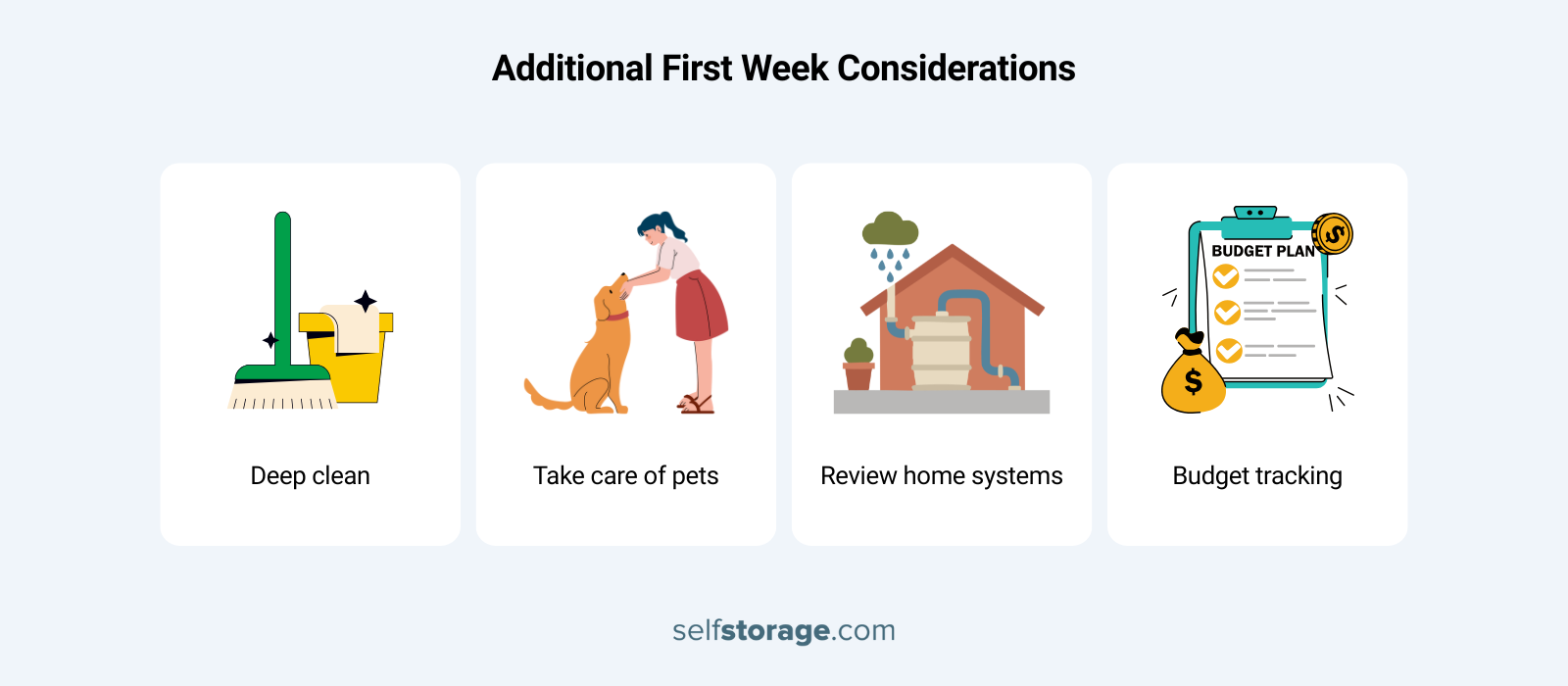
Deep Clean Before Fully Unpacking
Your after-moving checklist should include a line item near the top for cleaning your new home before you unpack. Even if the new house looks spotless, giving it a good cleaning before you unpack is always worthwhile. Previous occupants may have a different standard of cleanliness than you, and areas that may appear clean could be harboring dust or hidden grime in less visible areas, especially in the attic or basement.
Focus your initial cleaning efforts on bathrooms, kitchens and floors. Start with high-touch, high-use areas where cleanliness matters most: countertops, showers, tubs and cooking surfaces. Vacuum closets and wipe down the insides of cabinets and drawers. Disinfect handles, handrails, and light switches.
Take Care of Pets During Transition
Moving is always stressful for pets because they thrive on routine, familiarity and predictability. Lavish them with extra attention during this time, and give them time on their own to explore their new home and establish new favorite spaces.
If you have pets, one of your day-one move-in tasks should be setting up designated pet areas for dining and sleeping with familiar toys and bedding, to create safe areas and retreats for them within their new environment.
Update your pet’s microchip registration with your new address and contact information, and research veterinarians in your new area so you’ll have some ready options should you need emergency pet care.
Review Home Systems
During your first week, familiarize yourself with all home systems and safety features. Locate and clearly label your electrical panel, noting which breakers control which areas of your home. Find the main water shut-off valve so you know exactly where it is in case of an emergency. Test the garage door openers and safety sensors.
Don’t forget to program your thermostats to your preferences, and read any appliance manuals to learn how to operate and maintain them over time.
Budget Tracking
Expect the unexpected in your first week in your new home. Budget for emergency supply and food runs, utility deposits, and even overlooked tasks that may result in surprise penalties and fees.
Be sure to meticulously track your moving expenses. Keep your receipts in case you incurred any tax-deductible moving expenses.
Beyond the First Week: Ongoing After-Moving Checklist for Settling In & Home Organization
Research shows it can take 2-3 months to feel truly settled in after moving into a new home. This timeline comprises the gradual process of building routines, learning your space, establishing new relationships and developing a connection to your new space that transforms it from a house into a home. During your first few months, be patient with yourself if things feel unfamiliar and chaotic. This feeling is temporary, and each day brings you closer to feeling truly comfortable in your new home.
As seasons change, you’ll discover new things about your home: how well it’s insulated, where ice forms in winter, which rooms get the most sun or shade, and when your garden gets the best light if you have one. Start a maintenance checklist that documents seasonal tasks such as cleaning gutters, changing A/C filters, servicing heating and cooling units, and winterizing or de-winterizing indoor and outdoor faucets.
After living in your new home for a few weeks, you’ll have a better sense of your storage and organizational needs. What made sense during your initial move-in and unpacking may no longer work in daily practice. A checklist makes sense here as well: Note what is not working, and plan for solutions such as shelves, storage bins and specially-designed organizers to correct problem areas and improve functionality.
From House to Home: Your Comprehensive 5-Point Checklist of Things to Do After Moving
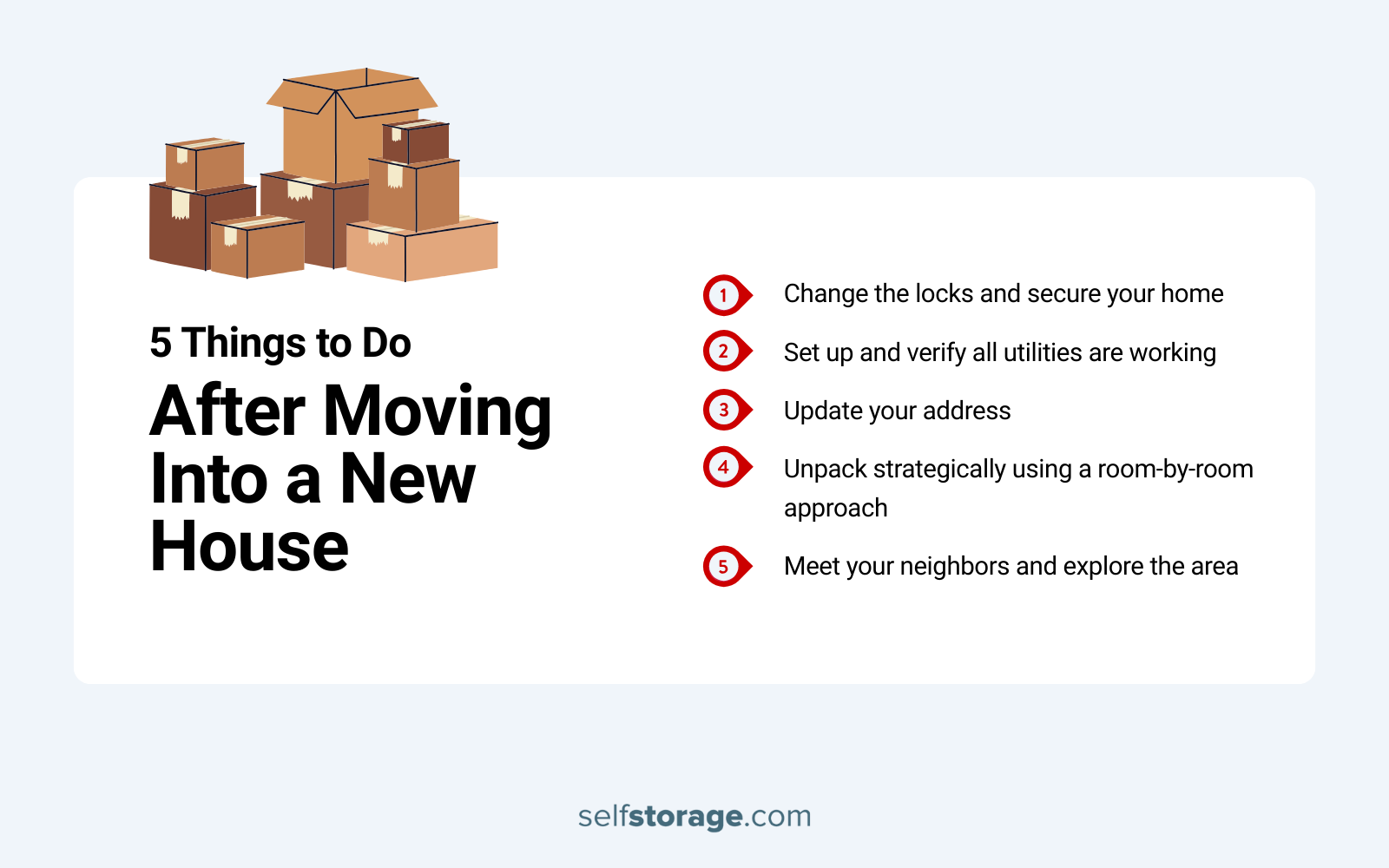
The five most crucial things to do after moving into a new house bear repeating:
- Change the locks and secure your home immediately to ensure you control who has access to your space.
- Set up and verify all utilities are working. Test every system right away, before you need it or wish you had done so in an emergency.
- Update your address everywhere–government agencies, financial institutions, USPS, employers, healthcare providers, subscription and delivery services, and others you want to know where you live. This will help you avoid costly penalties, fees and other unpleasant consequences for missed payments and communications.
- Unpack strategically, using a room-by-room approach. Prioritize bedrooms, bathrooms and the kitchen first so you can rest, refresh and eat comfortably. Once those rooms are sorted, start working methodically through the rest of the house.
- Meet your new neighbors and acquaint yourself with your new community. Explore your new area–on foot, if doable, locate area amenities and focus on building relationships with people you’ll be seeing on the regular.
Remember that moving is inherently both stressful and exciting, but a well-thought-out after-moving checklist can cut back dramatically on the friction of relocating. Pace yourself and take your time. Perfection isn’t the goal–progress is.
A final note: If you find yourself accumulating items that don’t fit your new space, or if you need to store some things while transitioning between homes, consider renting a self-storage unit near your new home to help make your move smoother. Our self-storage finder tool can help you locate a unit that’s affordable, convenient and right for you.
FAQs
Check the utilities and any residential services you have ordered to ensure everything has been turned on and is working as expected.
Make a list of everyone who needs your new address, and reach out to them within the first week to ensure there are no gaps in communications.
Make your bed, organize bathroom soaps, towels and toiletries, and unpack enough kitchen utensils to prepare and eat a meal. After these critical areas are sorted, begin unpacking using a room-by-room approach to stay organized.