Article takeaways
- Count your collection, measure your tallest bottle, and identify actual usage patterns before investing in any storage solutions.
- Storing bottles upright prevents rolling chaos and maximizes cabinet space efficiency better than horizontal storage.
- Your storage location should match your daily routine, with proximity to dishwashers and exit points mattering more than visual appeal.
- Large Stanley cups require reinforced storage with wide slots because they weigh over 3 pounds when full.
- Separating lids from bottles in dedicated organizers prevents moisture buildup while improving space efficiency.
You reach for the cabinet door, and suddenly it’s raining water bottles. Your Stanley Cup collection tumbles down in a colorful avalanche, followed by that random sports bottle from 2019. Meanwhile, you’re wondering how you accumulated seventeen water bottles when you live alone.
This scene plays out in kitchens across America. The explosion of water bottle ownership has turned kitchen cabinets into chaotic storage nightmares. Between Stanley tumbler crazes, eco-conscious habits, and the tendency to collect “just one more” in a cute color, most people are drowning in drinkware.
Your water bottle storage chaos is fixable. This guide will help you transform that jumbled mess into an organized system that makes sense. You’ll find Stanley Cup storage solutions, small kitchen strategies, and budget-friendly hacks.
Why Your Current System Isn’t Working
The Real Problem With Water Bottle Storage
Today’s water bottles aren’t simple drinking glasses that stack neatly. They create storage challenges.
Height is the main issue. Kitchen cabinets predate 40-ounce tumblers; your Stanley towers over regular shelves. Smaller bottles have awkward in-between heights, too tall for one shelf, wasting space on another. Rolling creates chaos. Store bottles horizontally, and they shift every time you open the cabinet.
The variety creates countless problems: stainless tumblers, handled bottles, sports bottles with flip-tops, protruding straws, catching handles, disappearing lids…
Stanley cups complicate water bottle storage even more. These statement pieces get collected in multiple colors and sizes. These trendy, fashion-forward bottles need functional display storage.
(And on top of that!) Different family members prefer different bottles. Your teenager wants the trendy Stanley, your spouse prefers that reliable Nalgene, you grab whatever’s clean. Traditional “stack and hope” storage fails.
Start Here: Getting Your Collection Under Control
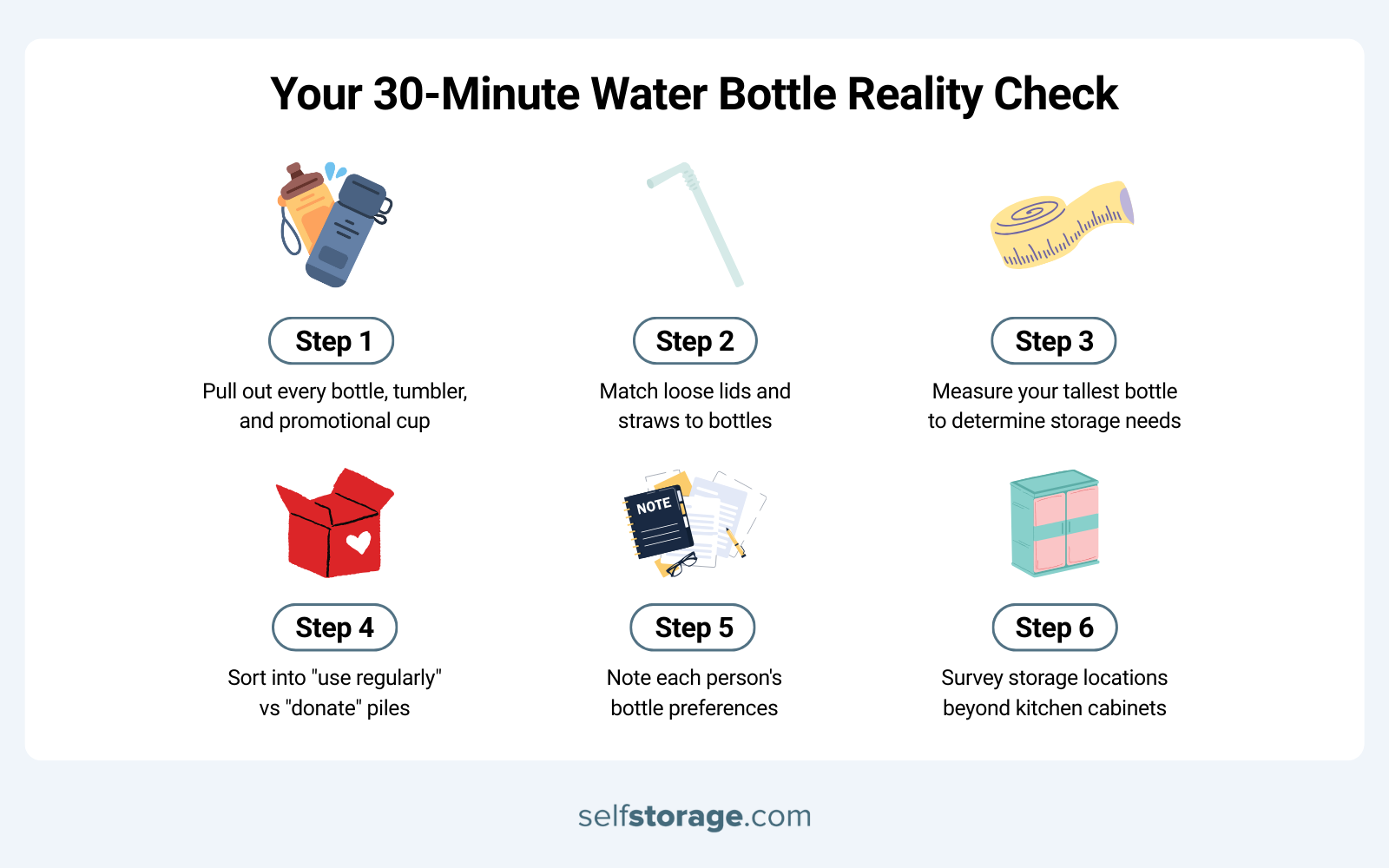
Assess your water bottle and Stanley Cup collection before buying organizers.
Your 30-Minute Water Bottle Reality Check
Step 1: Pull out every bottle, tumbler, and promotional cup
Step 2: Match loose lids and straws to bottles
Step 3: Measure your tallest bottle (determines storage needs)
Step 4: Sort into “use regularly” vs “donate” piles
Step 5: Note each person’s bottle preferences
Step 6: Survey storage locations beyond kitchen cabinets
You’ll be shocked by what emerges. That free gym bottle? The wedding tumbler? Be realistic about what you actually use.
Loose lids and straws scatter EVERYWHERE. Take any unmatched pieces and send them off for donation (if they’re not too beat up, old, or moldy) or take a freethrow and swoosh that recycling bin.
Consider the patterns. How do you use each type of cup or bottle? Where do you take them? Are certain bottles used for certain beverages? Teenagers (and moms) want Stanley cups, kids need manageable sizes, and adults want different bottles for gym versus work.
The Best Place to Store Water Bottles
Where Should Water Bottles Live?
The location of your water bottle storage can make or break your organizational system. Pick wrong, and you’ll be fighting an uphill battle every day. Pick right, and maintaining organization becomes almost effortless.
Quick Storage Location Guide
| Location | Best For | Main Advantage | Watch Out For |
|---|---|---|---|
| Kitchen cabinets | Daily bottles | Easy access | Limited height |
| Pantries | Large collections | Lots of space | Distance from routine |
| Mudrooms | Sports/seasonal | Near outdoor gear | Temperature swings |
Kitchen cabinets work well for daily bottles. They’re convenient and near dishwashers for cleanup. Upper cabinets work if deep enough, but overhead reaching gets tiring. Lower cabinets with pull-out organizers work better.
Pantries offer more space and flexible shelving. They allow dedicated hydration zones for bottles, plus water filters and cleaning supplies. This pantry organization keeps everything centralized. Downside: distance from daily routines means forgotten bottles.
Mudrooms or garages suit seasonal bottles. Sports bottles, camping containers, and party backups work well near outdoor gear. Watch out for temperature changes! Extreme heat or cold can damage the materials of your beverage containers. Mudrooms or garages are also great places to consider vertical storage strategies due to the tight or limited spaces in these areas.
The “One-Spot” Rule:
When everyone in the household knows exactly where water bottles live, they’re more likely to put them back correctly. Multiple storage locations can work, but each should have a clear purpose that everyone understands.
Match storage to your routine
Morning coffee-and-go? Store those travel mugs near your door. Those bottles you fill at the sink before hitting the gym? Keep them close. Proximity to the dishwasher matters for regular cleaning (and let’s be honest, you’ve definitely lost a water bottle or two from cleaning neglect, so let’s avoid losing one from your prized collection!).
Cabinet Storage That Works
How to Organize Water Bottles in Kitchen Cabinets
Work with gravity, not against it. Vertical storage keeps bottles stable—horizontal storage creates rolling chaos.
Give each bottle its own designated space to prevent domino effects when removing one bottle.
Cabinet Storage Solutions (Ranked by Effectiveness)
1. Deep Drawers → Convert lower cabinets if possible. Deep drawers let you see everything at a glance and eliminate reaching into dark cabinet depths. Pull-out drawers work especially well for tall bottles like Stanley cups because you can access them from above rather than reaching around other bottles. If converting existing cabinets, ensure drawer slides can handle 50+ pounds when loaded with full bottles.
2. Pull-Out Organizers → Retrofit existing cabinets with sliding shelves that bring bottles to you. These work like deep drawers but can be added to existing cabinets. Look for organizers with dividers specifically designed for bottles to prevent shifting during pull-out motion.
3. Shelf Risers → Double storage space by creating additional levels. Choose adjustable risers to accommodate different bottle heights and ensure they’re sturdy enough for filled bottles.
4. Over-the-Door Racks → Instant extra storage without modifications. Perfect for frequent-use bottles, but check weight capacity—some door organizers can’t handle multiple full bottles.
5. Tension Rods → Budget solution creating compartments and preventing rolling. Install vertically to create bottle slots or horizontally to prevent bottles from rolling forward.
Stanley Cup Alert!
40oz tumblers weigh 3+ pounds when full. They need reinforced storage with wide slots. Skip lightweight organizers.
Lid strategy: Designate spots for lids and straws. Store lids with bottles or centrally, pick what works for your household.
Handling Stanley Cups and Large Tumblers
Stanley Cup Storage Ideas for Big Collections
Stanley cups and oversized tumblers have changed water bottle storage needs. What started as functional drinkware has become collectible lifestyle accessories requiring specialized storage.
The Collection Reality
Unlike traditional bottles (1-2 per person), Stanley enthusiasts often own 6-10+ tumblers in multiple sizes, colors, and seasonal releases. This isn’t just storage anymore—it’s display and curation.
Weight matters: A 40oz Stanley filled with ice weighs over 3 pounds. Flimsy organizers will absolutely fail under this type of load.
Stanley Cup Storage Solutions That Actually Work
- Wine Racks → Individual slots keep cups secure and handles accessible. Many wine racks are perfectly sized for large tumblers.
- Horizontal Wire Shelves → Lay cups on their sides with each getting its own lane. Prevents the tipping issues you get with vertical storage.
- Mug Trees → Look for adjustable versions with extended arms that can handle the extra height and handle clearance.
- Open Shelving Display → Turn your collection into kitchen décor. Arrange by color gradients for serious visual appeal.
Keeping the Collection From Taking Over
Stanley collections can quickly overwhelm available space. Implement a collection cap: decide on a maximum number that fits your storage and stick to it. When new seasonal releases tempt you, follow the “one in, one out” rule. Consider storing off-season colors in less accessible areas, rotating them based on holidays or personal preferences.
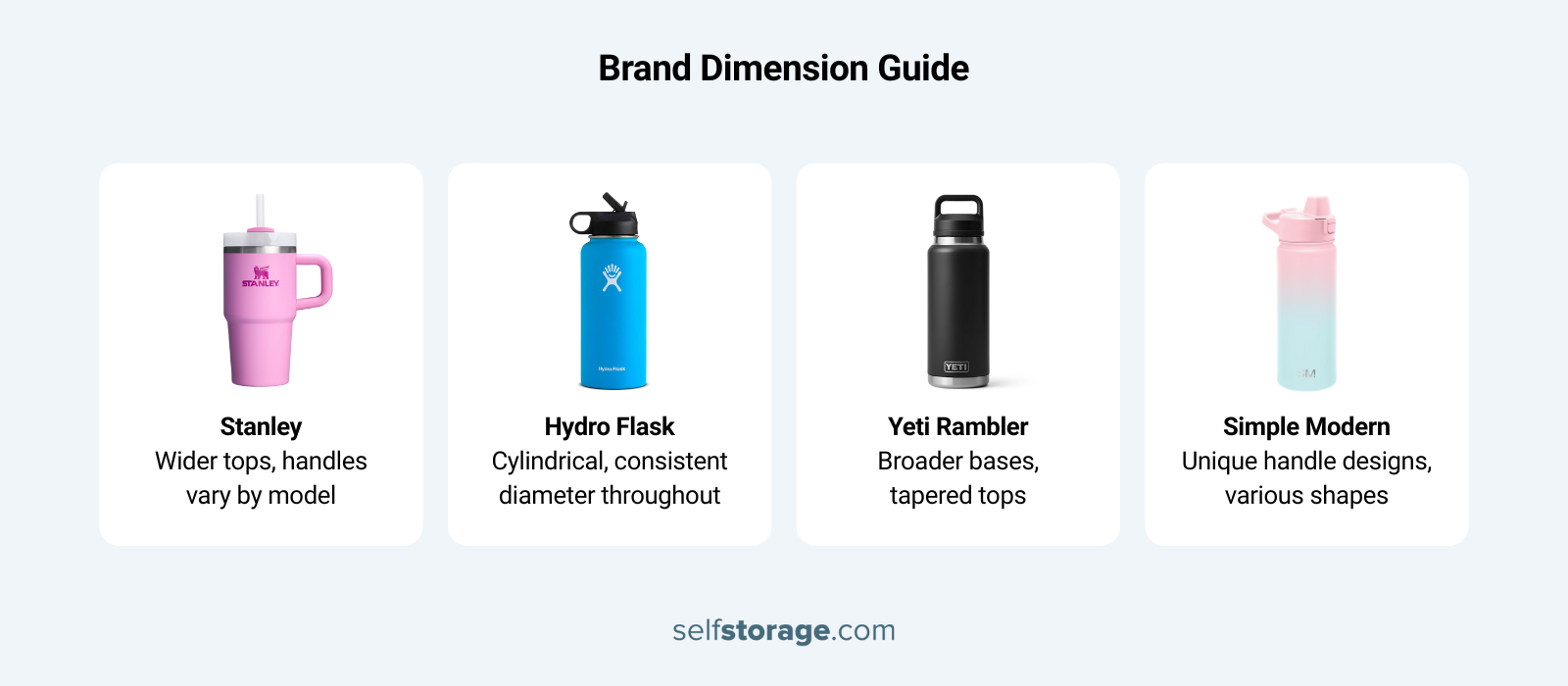
Brand dimension guide:
- Stanley: Wider tops, handles vary by model
- Hydro Flask: Cylindrical, consistent diameter throughout
- Yeti Rambler: Broader bases, tapered tops
- Simple Modern: Unique handle designs, various shapes
Collection Management Tips
- Rotation System: Keep 3-4 cups accessible, store the rest elsewhere
- Family Assignment: Designate specific colors/sizes per person to avoid fights
- Seasonal Swaps: Rotate limited-edition colors in and out based on the time of year
Pro Tip: accessories matter. Straws and lids are essential but easy to lose. Create a dedicated accessories station near your cup storage for better organization and ease of access.
Small Kitchen Solutions
Water Bottle Storage for Limited Space
Small kitchens demand creative solutions where every storage idea works double-duty. When space is precious, water bottle organization requires strategic thinking.
Small Kitchen Mantra: Think UP, not OUT
Vertical space is your best friend. Hidden spaces are goldmines. Multi-functional solutions are mandatory.
Small Kitchen Water Bottle Storage HackS
1. Under-Sink Storage That Works Around Plumbing: Use specialized organizers or stackable bins designed for plumbing obstacles. Best for backup bottles and seasonal containers. Keep bottles elevated off cabinet floors with risers to avoid moisture. Store away from cleaning supplies. Some organizers feature sliding drawers that work around P-traps and disposals.
2. Cabinet Door Magic: Transform door interiors with over-the-door organizers, magnetic strips, or hooks. Keeps bottles hidden while using wasted space. Ensure doors close properly.
3. Wall-Mount Everything: Free cabinet space with wall-mounted racks, magnetic organizers, or hooks. Perfect for daily-use bottles you want visible and accessible.
4. Rolling Cart Mobility: Slim carts fit between appliances and provide mobile storage during food prep. Look for multiple tiers with bottle dividers.
5. Vertical Tower Systems: Maximize height, minimize footprint. Require careful loading but hold multiple bottles in minimal space.
The “One In, One Out” Rule
Essential for small kitchens: When you acquire a new bottle, something else leaves the rotation. Consider seasonal rotations, donations, or storing surplus with camping/gym gear.
These small apartment storage strategies can be adapted for any compact living situation where space efficiency determines organizational success.
The Lid and Straw Dilemma
Keeping Lids and Straws Together
The relationship between water bottles and their accessories is frustrating. Lids disappear, straws vanish, and you end up with more orphaned accessories than complete sets.
Keep lids and bottles stored separately most of the time. This might seem counterintuitive at first, but keeping the lids attached can make bottles bulkier, harder to organize, and they can also trap moisture, leading to moldy bottles.
Small drawer organizers work well for lid collections. Use divided organizers with compartments for different lid types. Clear containers near the bottle storage keep lids visible and portable for cleaning. The same principles for organizing plastic containers apply to lid storage.
Dedicate a specific drawer or container exclusively to bottle accessories so everyone knows where to look. Keep the system simple enough that family members will actually use it.
Budget-Friendly Options
Organize Water Bottles Without Spending Much
Smart water bottle organization doesn’t require expensive specialty products. Some of the most practical solutions use items you might already have or can pick up for under $15.
BUDGET-FRIENDLY WINS
- Magazine Holders – The tall, narrow design creates perfect individual bottle slots. Go for sturdy cardboard or plastic versions for heavier bottles.
- Office File Organizers – Desktop versions accommodate different bottle heights beautifully. Wire styles offer good ventilation for damp bottles.
- Shoe Organizers – Over-the-door versions with clear pockets hold numerous bottles while keeping everything visible.
- Cardboard Box Dividers – Create custom solutions sized for your specific bottles and cabinet dimensions. Perfect for testing layouts before investing in permanent solutions.
- Tension Rods – Use as cabinet dividers, hanging organizer supports, or rolling prevention barriers. Surprisingly versatile.
Start with temporary solutions while figuring out your needs. Once you know what works, invest in permanent solutions for better durability.
Making It Stick
How to Keep Water Bottles Organized
Creating organized systems is half the battle. Maintaining organization requires habits that work with your lifestyle.
The Golden Rule: Wash → Dry → Store
This routine prevents accumulation that breaks down storage systems. The daily habit that prevents chaos is simple: never leave clean bottles sitting on counters or in dish drainers. As soon as the bottles are dry, they go directly to their designated storage spot.
Maintenance Strategies
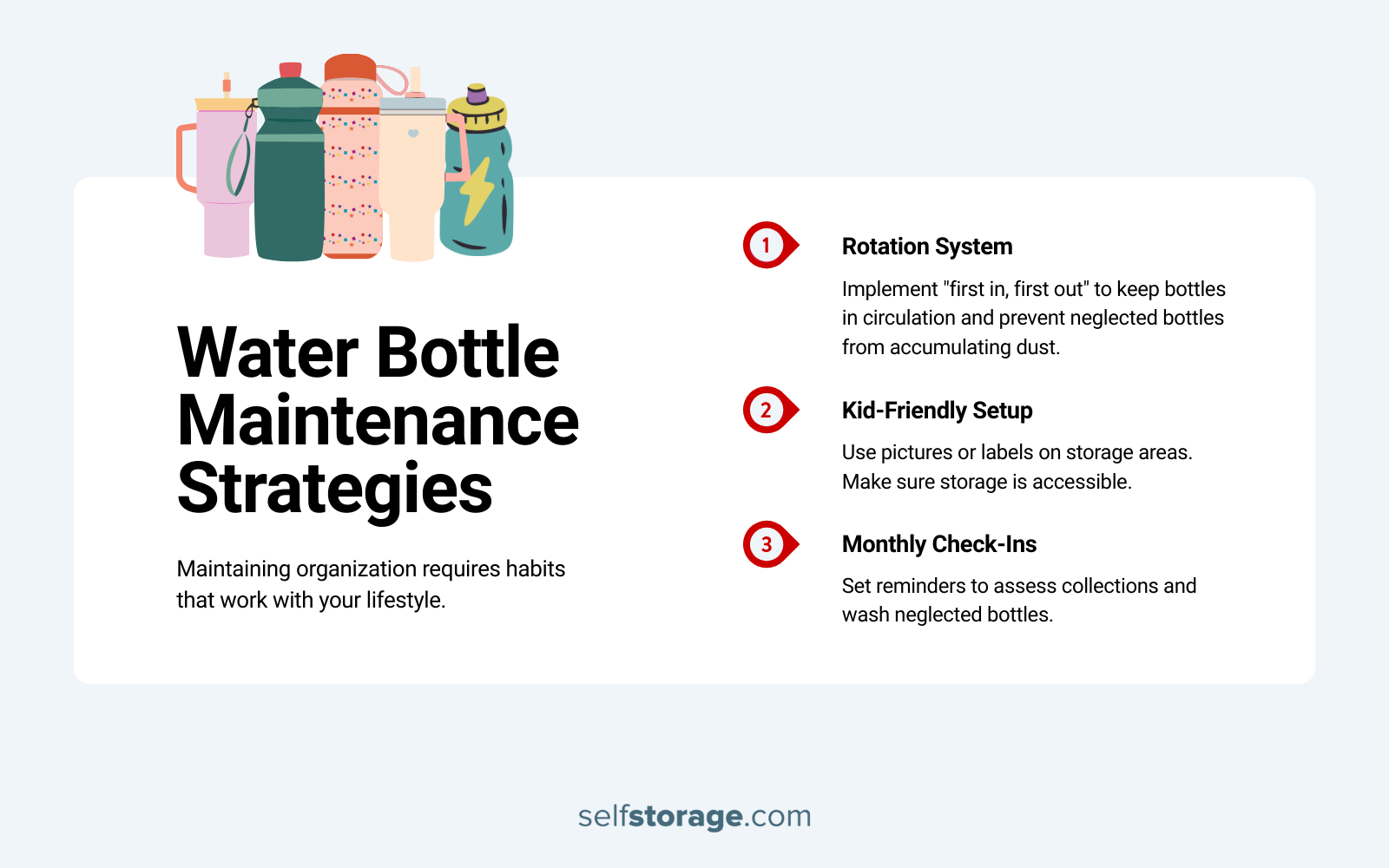
Rotation System: Ensure regular bottle use rather than permanent storage. Implement “first in, first out” to keep bottles in circulation and prevent neglected bottles from accumulating dust.
Kid-Friendly Setup: Young children need visual cues showing where bottles belong. Use pictures or labels on storage areas. Make sure storage is accessible without adult help; kids won’t maintain systems they can’t use independently.
Monthly Check-Ins: Set reminders to assess collections and wash neglected bottles. During check-ins, decide if any bottles should leave the rotation permanently.
Signs You Need Changes
- Bottles are consistently left out due to no storage room
- Family members can’t find any clean bottles
- Storage areas are too crowded for organization
- Storage requires excessive daily maintenance
When to Reassess Your System
Life changes, household composition shifts, and new acquisitions all impact storage needs. Reassess when kids leave for college (fewer bottles needed), when you move homes (different cabinet configurations), or when you find yourself fighting your system daily instead of maintaining it easily.
Signs You Need More (or Different) Storage
If you’re constantly struggling to fit bottles in designated spaces, it’s time to expand storage or reduce the collection. Sometimes the problem isn’t organization, it’s volume. Consider whether you actually need 15 water bottles or if 8 would serve your household just as well.
Your Water Bottle Storage Success Story Starts Today
The best water bottle storage system is one you’ll maintain consistently. Start with one designated spot and build from there. Whether it’s a cabinet shelf with dividers or a full pantry station, establish the habit first.
Your collection will evolve, so build flexibility into your system. Take action today, gather your water bottles, Stanley Cups, tumblers, travel mugs, EVERYTHING, all in one place, and match lids to partners. Small steps create momentum for bigger improvements.
For extensive collections that overwhelm kitchen storage, consider outdoor gear storage solutions for seasonal bottles or affordable storage options for bulk emergency water supplies. Sometimes the best strategy is recognizing when you need more space than your current setup provides.
Whether organizing five bottles or fifty, create a system that works with your family’s habits rather than against them. Start today, stay flexible, and enjoy opening cabinets without triggering avalanches.