Article takeaways
- Hazardous materials like paint, gasoline, propane tanks, explosives, and chemicals can’t be stored in a storage unit due to fire risks, explosion dangers, and legal liability concerns for both you and the facility.
- Living things and perishables like plants, animals (living or dead), or perishable food items can NOT be stored in storage units, as they attract pests, create mold, and pose health hazards.
- While it’s legal to store priceless heirlooms, cash, and important documents, standard storage insurance offers limited coverage on high-risk items, while government-backed bank safety deposit boxes can insure cash and valuables more securely.
Self storage units are a fast and easy solution for decluttering your home, managing a move, or keeping business inventory safe.
From large 10×20 units with climate control to affordable and easily accessible storage lockers, renting a storage space offers a flexible, secure solution for all your storage needs, from holiday decorations to antique furniture.
But like all conveniences, renting a storage unit comes with some vital responsibilities. To ensure the safety of you and your belongings, other tenants, and the facility staff, all storage companies have a list of things you can’t store in a self-storage unit.
It’s not that storage facilities want to micromanage and control your business–customer satisfaction and privacy are always a top priority. The reasons there are things that you can NOT store in a storage unit include preventing fires, pest infestations, and legal complications.
This helpful guide provides a comprehensive overview of what you can NOT store in a storage unit. While the specific list of prohibited items changes based on regional laws and the storage company, our guide lists items that are either almost always prohibited.
We’ll also cover a few items that may be allowed, but that you shouldn’t store in a storage unit for your own peace of mind.
And last but not least, we’ll reveal how SelfStorage.com can help you find a storage facility set up with the security measures required to support your specific storage needs.
Things You Can’t Store in a Storage Unit
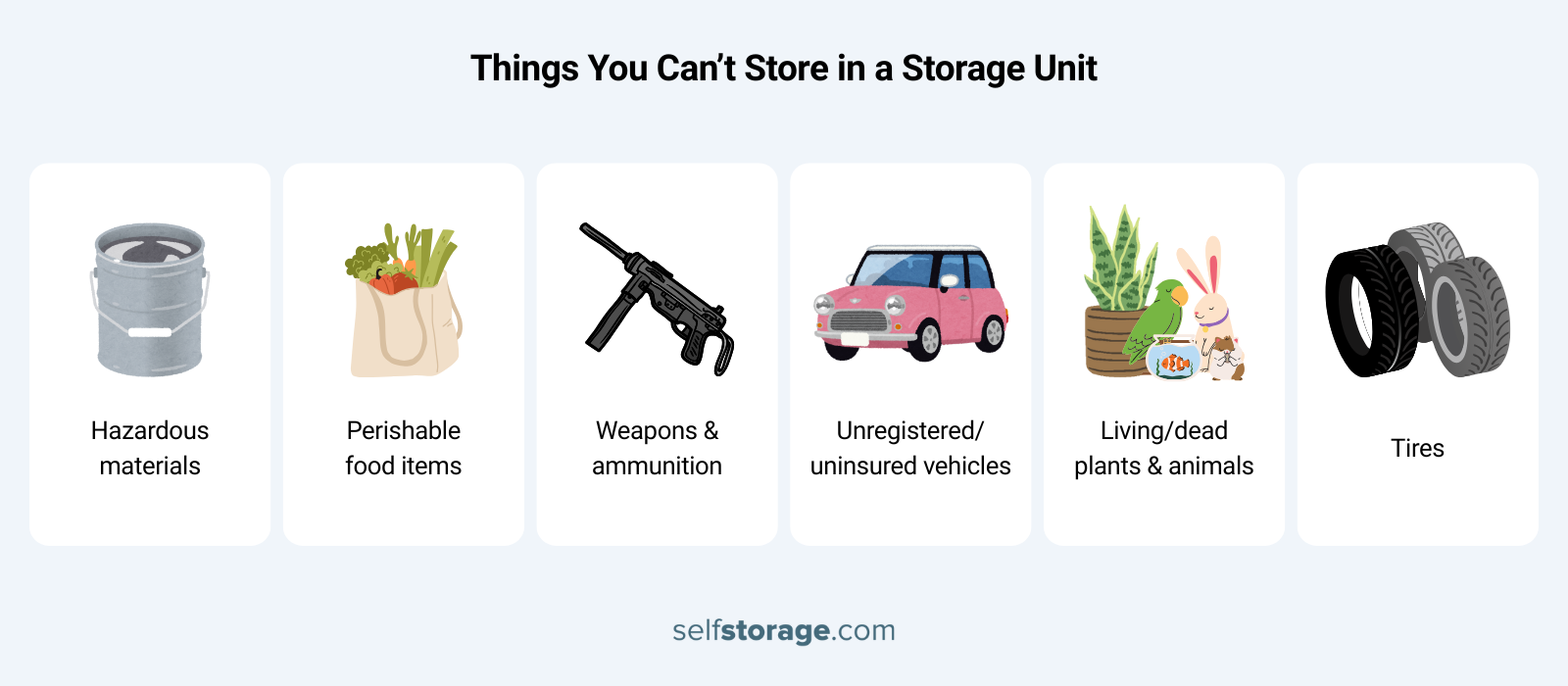
Hazardous Materials
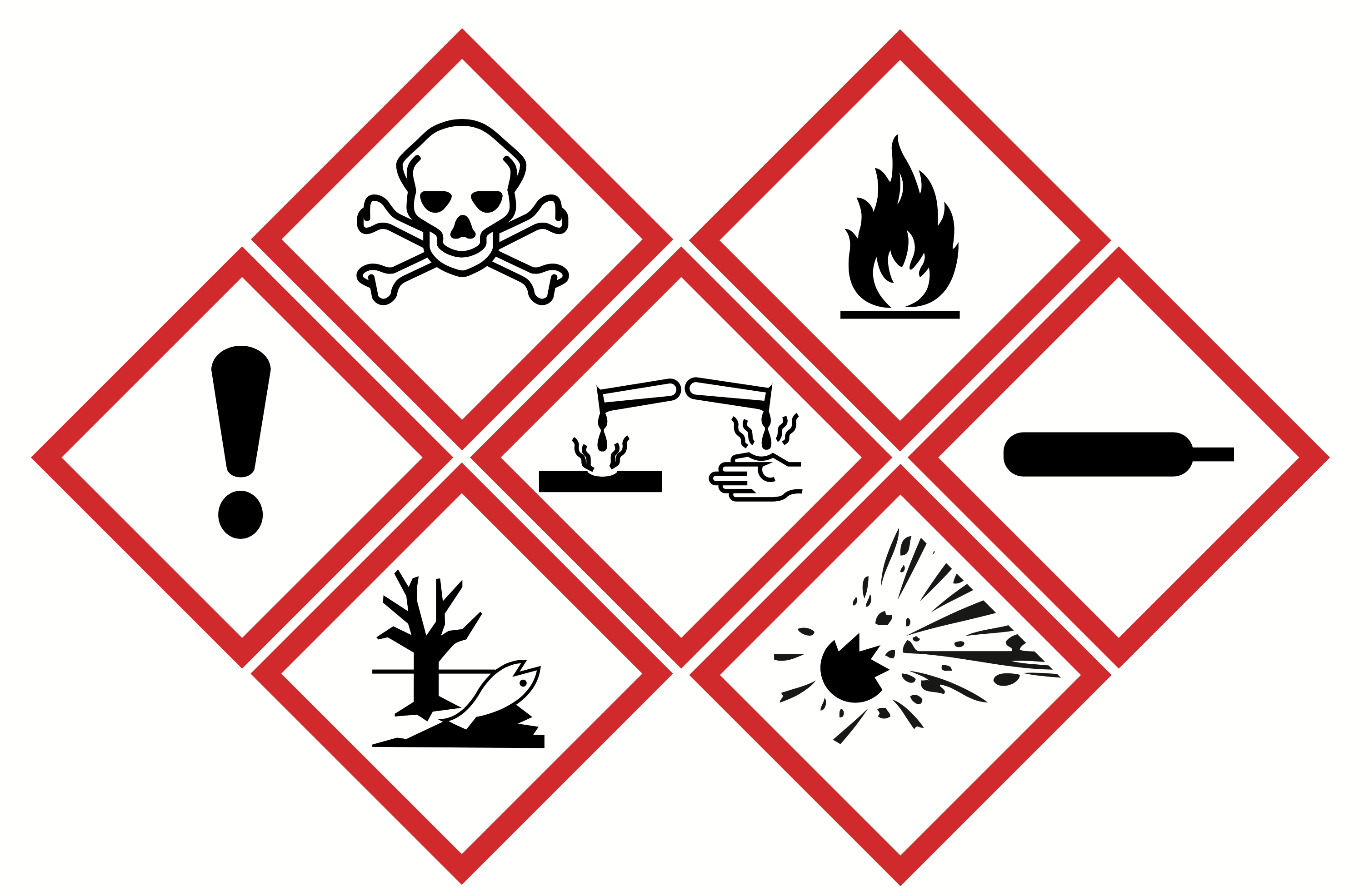
Hazardous materials are the typical category that comes to mind when asking what you canNOT store in a storage unit. The category of hazardous materials includes corrosive items and anything toxic, flammable, or combustible.
The risk of fire, explosions, or chemical leaks makes storing these items against the storage facility’s rules, and in some cases, illegal. So if you get caught storing any of the items on this list, it violates your rental agreement and risks not only eviction but also legal consequences.
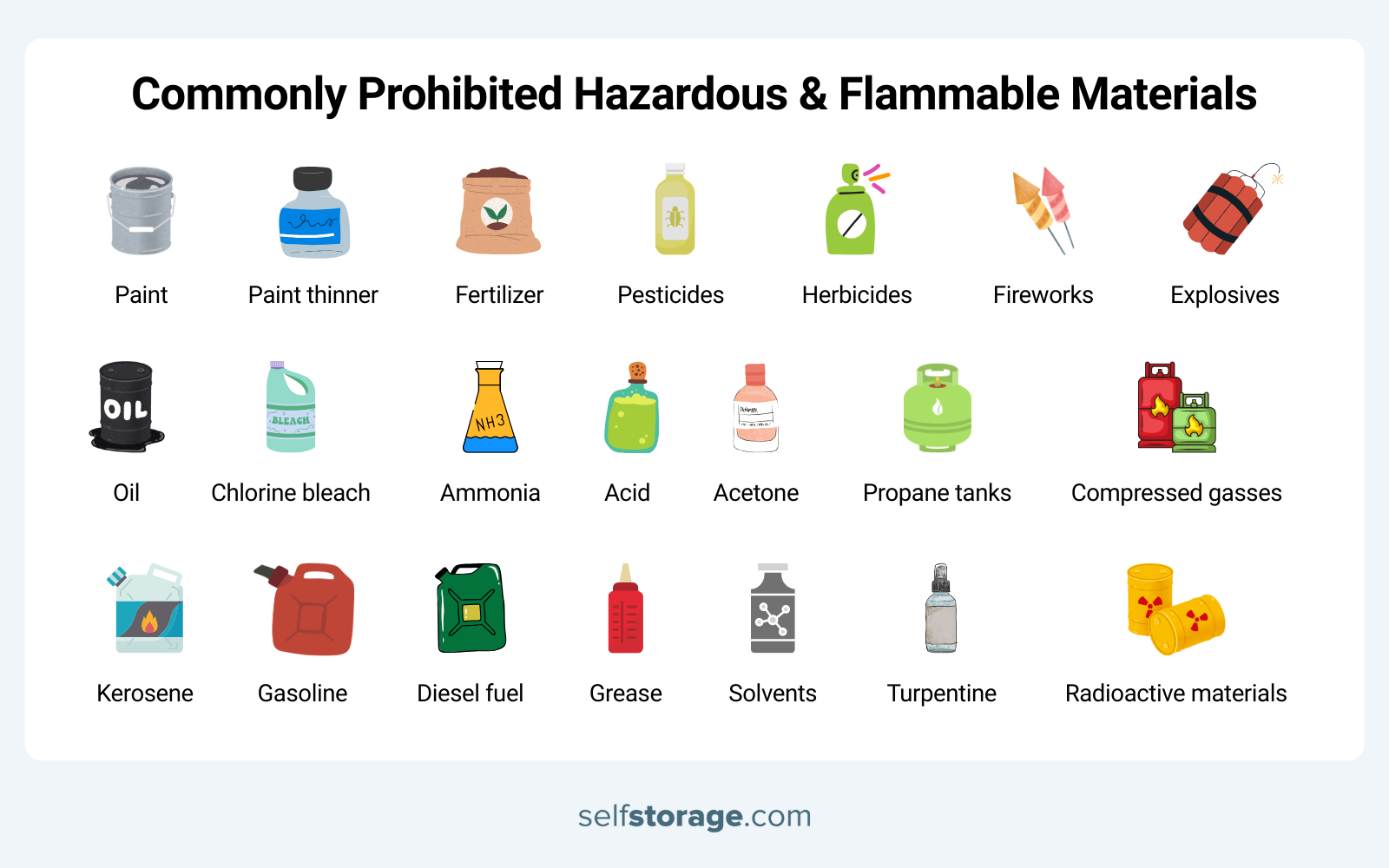
Commonly prohibited hazardous and flammable materials include:
- Paint
- Paint thinner
- Fertilizer
- Pesticides
- Herbicides
- Fireworks
- Explosives
- Oil
- Chlorine bleach
- Ammonia
- Acid
- Acetone
- Propane tanks
- Compressed gasses
- Kerosene
- Gasoline
- Diesel fuel
- Grease
- Solvents
- Turpentine
- Radioactive materials
Perishable Food Items
While all perishable items are forbidden at storage facilities, people often ask if you’re allowed to store food in a storage unit nonetheless.
- Some facilities may permit commercially sealed, non-perishable canned goods, especially climate controlled facilities.
- Other storage facilities prohibit you from storing any food items.
Regardless of their non-perishable food items and canned goods policy, nearly all storage facilities agree that you can NOT store fresh fruits and vegetables, meats, dairy, and any other perishable food that can spoil.Fresh produce, meats, and dairy provide a breeding ground for mold and mildew, even in climate-controlled units.
Firearms: Weapons and Ammunition
Gun owners are often disappointed when they find out that weapons and ammunition are on the list of things you can’t store in a storage unit for many of the major storage companies.
That said, there is such a thing as armory-specific storage units that allow gun storage and have dedicated vaults for storing and protecting firearms.
- Ammunition and gunpowder are highly combustible, creating a fire risk not just for your unit, but for all units.
- Guns (loaded or unloaded), ammunition, or any explosive devices will always be on the list of items that can’t be stored for safety and liability reasons.
- Not to mention, if your unit ever goes to auction due to non-payment, firearms and ammunition can create some other legal hurdles.
Check with the storage facilities in your area to see if you’re allowed to store a gun or if they have special gun storage vaults.
And just because you can’t store your firearms in a standard storage unit doesn’t mean you can’t keep your other hunting or shooting accessories in storage.
Unregistered or Uninsured Vehicles
Lots of storage facilities offer indoor and outdoor vehicle storage spaces, not just for cars and trucks, but also for RVs, ATVs, boats, motorcycles, jet skis, etc.
That said, all the vehicles you’re storing at a storage facility, as long as they’re properly registered and insured by the renter of the unit or parking space.
You’ll likely be asked to provide proof of registration and insurance before leaving it at the facility. This requirement protects the facility from liability, ensuring they aren’t unknowingly storing stolen items.
Living or Dead Plants and Animals
Living or formerly living items are high on the list of things you can’t store in storage units, and for good reason. First of all, it’s more than just illegal, but cruel to lock up a living animal in a storage unit. And dead animals will attract insects, vermin, mold, and diseases.
Plants are also on that list of living things not allowed because they will die, and the soil attracts moisture, becoming a breeding ground for mold, mildew, and pests.
And before you ask, yes, this includes people. It is illegal to live in a storage unit, and you will be evicted and maybe even fined.
Tires
You may be surprised to learn that most storage facilities do not allow you to store tires, which is disappointing if tires are part of your seasonal items rotation.
Most storage facilities don’t allow tires to be stored for a couple of reasons:
- Tires present a serious fire risk. Tire fires are incredibly difficult to extinguish and produce toxic smoke.
- There are significant environmental fees associated with tire disposal. If your unit were to be abandoned or auctioned, the facility would be responsible for these high costs.
Things You Shouldn’t Store In a Storage Unit
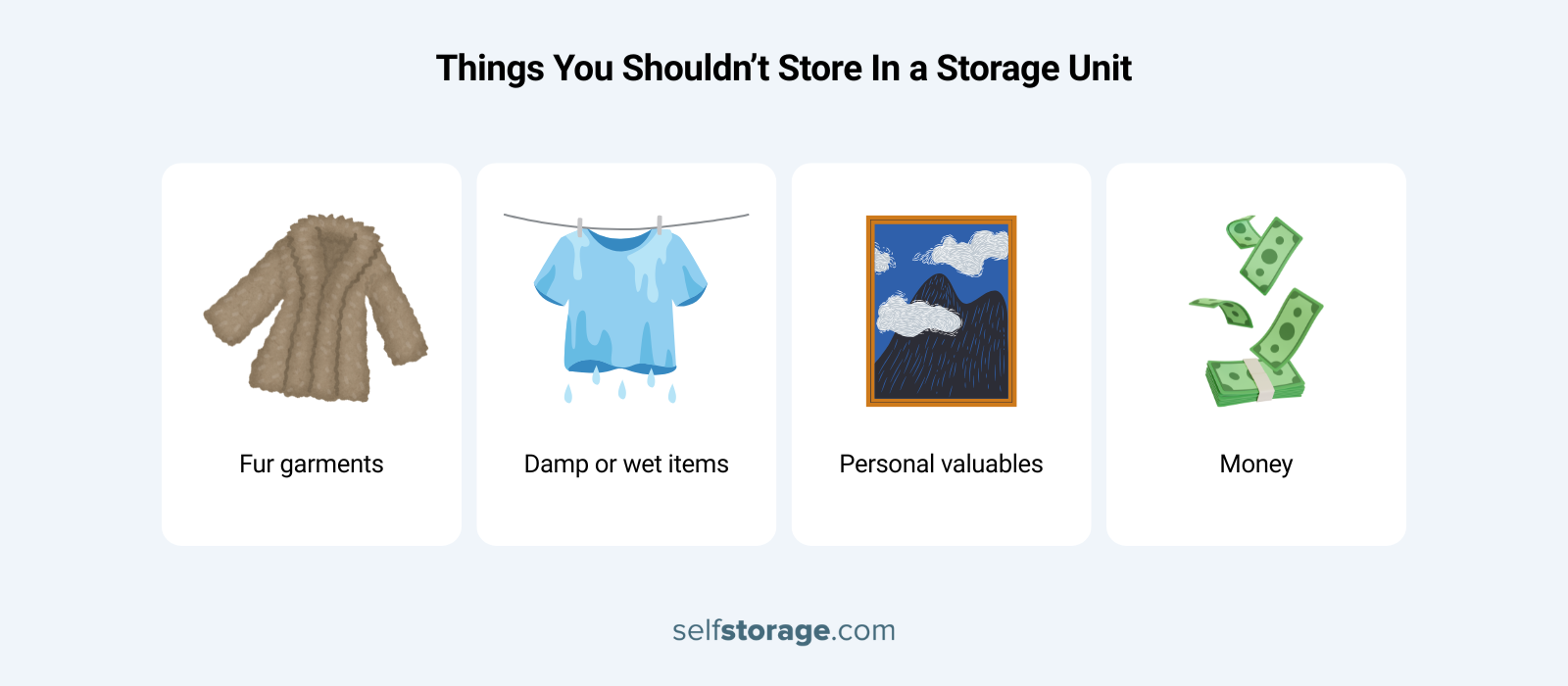
Fur Garments
Another surprising answer storage tenants get when asking what can you NOT store in a storage unit is furs. It’s not always that storage units don’t have rules against furs. Sometimes they do, sometimes they don’t. But not all storage facilities are set up to store furs properly.
To properly store fur garments, you have to follow strict temperature and light requirements to prevent them from drying out and deteriorating.
They need a temperature-controlled environment with consistent humidity levels, something a standard or even a typical climate-controlled storage unit is not always equipped to provide.
If you need to store fur, check with a climate-controlled storage unit to ensure that the climate and humidity will be maintained for proper storage and preservation.
Damp or Wet Items
We suggest cleaning and thoroughly drying wet or damp items before storing them in your storage unit. A dark, enclosed space with moisture is the perfect breeding ground for mold and mildew.
Mold and mildew can grow on clothes, kayaks, sporting equipment, tents, or even moving blankets that got caught in the rain and haven’t been thoroughly dried.
The mold can also spread to your other belongings, creating a foul odor and causing irreversible damage, regardless of whether you’re putting it in short-term or long-term storage.
Priceless Irreplaceable, and Personal Valuables
While a modern self-storage unit offers robust security features like on-site security, gated access, and surveillance cameras, it’s not a bank vault or a museum.
Storing priceless and irreplaceable items like unique family heirlooms, original artwork pieces, collectors’ items, and fine art is certainly allowed, but we suggest considering the risk beforehand.
Beyond the obvious risks of theft and vandalism, there are less common events, such as fire, tornadoes, or even flooding, that can occur and destroy your priceless items.
Standard storage unit insurance policies offer limited coverage for the things kept in your storage unit. We highly recommend taking out a larger insurance policy that covers valuable items.
That said, high-risk items like important documents, personal information, financial records, and personal valuables like jewelry and precious metals aren’t always covered.
Money
Storing cash, currency, stocks, and bonds in a self-storage unit is just as risky as storing irreplaceable heirlooms. There is no way for a storage facility to insure cash. In fact, some homeowners and renters insurance plans won’t even cover it.
Cash and other types of currency should be kept in a safe deposit box at a bank, where it will actually be covered by government-backed deposit insurance.
Will My Items Be Safe?
Security-focused storage facilities invest heavily in security to protect your belongings. Standard security features often include perimeter fencing, electronic gate access, video surveillance, and strong locks, like a disc lock on your unit door.
That said, you’re responsible for what you store inside your unit. The rules and laws that prevent tenants from storing items like flammable materials or perishable goods exist to protect both your property and the entire storage facility.
Items That Are Illegal to Store in a Storage Unit
Beyond just the facility rules and our preventive suggestions about what not to store, there are laws to consider. It’s against the law to use a storage unit to house any illegal items. This includes illicit drugs, drug paraphernalia, stolen property, or any other form of contraband.
Storage companies are legally obligated to cooperate with law enforcement, and if they suspect illegal activity, they can grant authorities access to your unit. Storing stolen items or other illegal goods can lead to severe criminal charges.
Another thing to consider is that a storage unit cannot be used for residential purposes. That means you’re not allowed to live in a storage unit for any amount of time or keep any animals in your unit, alive or dead.
Is there a Difference Between What you Can Store in Outdoor and Indoor Storage Units?
If you’re storing items in an outdoor storage unit that’s not climate-controlled, there are a few things that you’ll want to consider.
As extreme temperatures on either side of the thermometer can damage and degrade plastics, leather, and other materials, you should avoid storing things like artwork, musical instruments, appliances, electronics, and antiques in outdoor units.
If you wish to store these items, you should look into a climate-controlled indoor storage unit.
What Can You NOT Store in a Storage Unit? How SelfStorage.com Can Help You Find the Ideal Unit For Your Storage Needs
By now, you should have a pretty good idea of the things you can’t store in a storage unit. A good rule of thumb is to avoid anything hazardous, perishable, illegal, or irreplaceable.
Refrain from storing hazardous materials like paint thinner and propane tanks, perishable items like pet food, and high-value assets better suited for a safety deposit box.
Beyond the commonly prohibited items covered in this guide, it’s always possible that your storage company may have a specific policy for their units that goes beyond this particular list.
For example, they may have had something come up in the past that was a particular problem item for their area and is not prohibited by either local laws or the storage facility’s policies.
The rental agreement you sign is the definitive source of what you can NOT store in your storage unit. We suggest reading your contract carefully. If you have any questions about storing a particular item, speak directly with the facility manager and ask them about it ahead of time.
But what if the items you’re storing aren’t illegal or prohibited? Is it safe to store artwork and important documents? How to find the ideal storage unit that will keep your personal valuables safe?
But don’t fret–SelfStorage.com is here to help.
If you’re storing temperature-sensitive items vulnerable to moisture damage, like furniture, art and canvas paintings, vinyl records, or documents, susceptible to damage, book a climate-controlled storage unit.
A climate-controlled self-storage unit creates the ideal environment, protecting your belongings against pests, moisture, corrosion, and the dramatic temperature changes that can cause damage to wood, paper, and even cotton.
But not all storage units are created equal. Some aren’t climate-controlled, and others add amenities such as security cameras or 24-hour access.
Storage units also come in various sizes, with the smaller storage unit sizes being quite affordable. Plus, if you’re still deciding between short-term vs long-term storage, most storage facilities have short-term leases, sometimes even month-to-month.
SelfStorage.com can help you select the ideal storage space. Just punch your zip code into our handy storage search tool to find a storage unit near you that has exactly what you need.
Our site searches through over 20,000 storage facilities nationwide. The search tool lets you filter your results based on the search parameters you set. Narrow your results based on location and amenities, such as climate control and 24-hour access.
SelfStorage.com lets you compare prices and unit sizes and reserve your storage unit for free in minutes. No commitment and no credit card required!